Micro Electro Discharge Machining | Precision EDM Solutions

All Categories

Get a Free Quote

Our representative will contact you soon.
Email
Mobile/WhatsApp
WeChat
Linkedin
Name
Company Name
Message
0/1000
Attachment
Please upload at least an attachment
Up to 3 files,more 30mb,suppor jpg、jpeg、png、pdf、doc、docx、xls、xlsx、csv、txt

Micro Electro Discharge Machining Solutions Engineered for Precision-Driven Industries

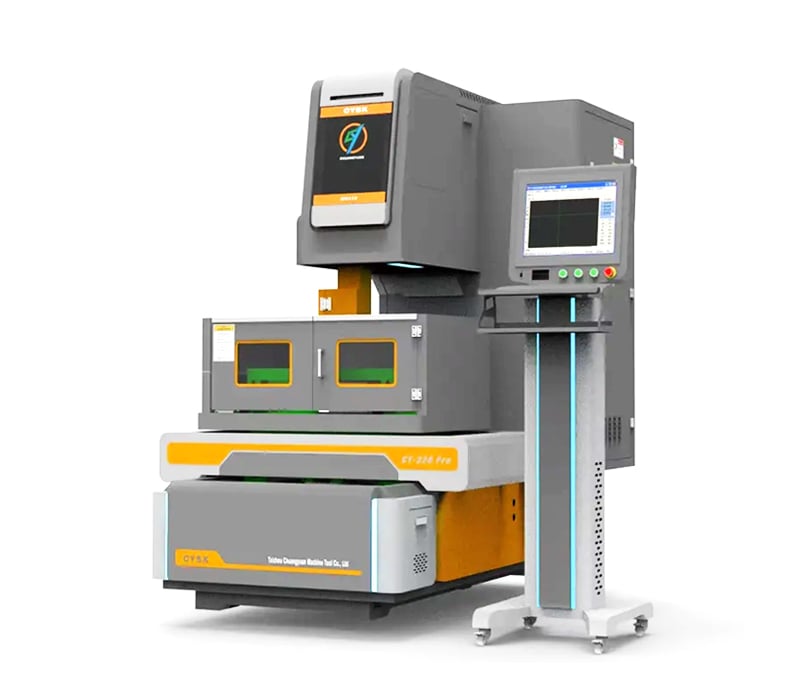
Taizhou Chuang Yuan Machine Tool Co., Ltd. has specialized in micro electro discharge machining since 2003, combining research, development, production, and sales under one roof in Taizhou City, Jiangsu Province, China. Micro electro discharge machining removes material through controlled spark erosion, allowing our EDM machines to cut hardened tool steel, carbide, titanium, and exotic alloys without mechanical force, so delicate micro features survive the process intact. In mold making, micro electro discharge machining routinely holds tolerances of plus or minus 0.002 mm on cavities, while aerospace fuel nozzles and medical stent molds rely on our systems for repeatability across runs. A German mold shop cut its electrode wear by 42 percent after switching to our pulse-controlled generators; a Japanese connector maker reduced micro-pin die lead time from 18 days to 9. More than 20 exporting countries and regions operate our machines daily. Typical results include surface finishes dow
Get A Quote

Case Study

German Mold Maker Cuts Electrode Wear 42 Percent on Hardened Steel Cavities

A mold manufacturer in Baden-Wurttemberg, Germany, producing injection molds for automotive connectors, struggled with electrode wear above 0.6 percent and frequent recutting when machining 1.2343 steel at 52 HRC. The shop installed our Micro EDM center with adaptive pulse control and a C-axis rotary spindle, running roughing at 12 A and finishing at 0.5 A. Micro electro discharge machining parameters were tuned per cavity, and dielectric filtration down to 1 micron stabilized flushing. After three months, electrode wear dropped 42 percent, recutting fell by 70 percent, and cavity tolerance held within 0.003 mm across 240 cavities. The customer now runs 22 hours of unattended production daily and reports 15 percent lower tooling cost per mold.

Japanese Connector Manufacturer Halves Micro-Pin Die Lead Time

A connector maker near Nagoya, Japan, needed micro-pin dies with 0.15 mm slots for a smartphone component. Wire EDM could not reach the internal geometry, and manual polishing caused dimensional drift. Our Micro EDM system with a 30-micron tungsten electrode machined the slots in a single setup, using a 0.8 microsecond pulse for the finishing pass. Micro electro discharge machining reduced lead time from 18 days to 9 days, surface finish reached Ra 0.08 micron, and pin-to-pin pitch accuracy stayed within 0.004 mm for all 1,200 pins per die. Scrap rate fell from 6 percent to 1.2 percent, saving the customer an estimated USD 46,000 per year.

US Aerospace Supplier Achieves 0.1 mm Cooling Holes in Turbine Blades

An aerospace component supplier in Ohio, USA, required 0.1 mm cooling holes at 35 degrees through a nickel superalloy blade wall of 2.5 mm. Laser drilling produced recast layers that failed fatigue testing. Using our five-axis Micro EDM with through-spindle flushing, the holes were drilled at 90 holes per hour with a recast layer under 2 microns. Micro electro discharge machining passed fatigue testing at 100 percent of samples, held hole diameter within plus or minus 0.005 mm, and eliminated secondary deburring. The supplier secured a three-year contract and expanded to four machines within 18 months.

Related products

Micro Electro Discharge Machining (Micro EDM) removes material through thousands of precisely controlled electrical sparks between a miniature electrode and a conductive workpiece submerged in dielectric fluid. Because there is no mechanical cutting force, Micro Electro Discharge Machining machines features that conventional milling cannot touch: micro holes of 0.05 to 0.5 mm diameter, slots narrower than a human hair, sharp internal corners, and mirror-like finishes on hardened steel above 60 HRC. Our production workflow begins with customer drawings and material certificates, followed by electrode design in graphite, copper tungsten, or tungsten carbide. Incoming lots are verified on CMM and vision systems before machining, with critical dimensions checked every 50 pieces on a coordinate measuring machine and roughness verified by a white-light interferometer. Generator parameters such as pulse on-time, peak current, and gap voltage are tuned per material to balance removal rate against electrode wear, typically keeping wear below 0.2 percent for micro cavities. Applications span injection molds for medical devices, optical lens molds, aerospace turbine blade cooling holes, micro connector dies, and semiconductor lead frames. According to industry studies, Micro EDM holds dimensional capability within plus or minus 0.003 mm and surface roughness as fine as Ra 0.05 micron, metrics that make it the preferred process for dies with ribs under 0.2 mm. Machine platforms combine a granite base, linear motor drives, and a closed-loop gap control system sampling 250,000 times per second. Feature sizes from 30 microns are achievable. Case Title: Proven Micro Electro Discharge Machining Results Across Global Industries

Case Title 1: German Mold Maker Cuts Electrode Wear 42 Percent on Hardened Steel Cavities

Case Description 1: A mold manufacturer in Baden-Wurttemberg, Germany, producing injection molds for automotive connectors, struggled with electrode wear above 0.6 percent and frequent recutting when machining 1.2343 steel at 52 HRC. The shop installed our Micro EDM center with adaptive pulse control and a C-axis rotary spindle, running roughing at 12 A and finishing at 0.5 A. Micro electro discharge machining parameters were tuned per cavity, and dielectric filtration down to 1 micron stabilized flushing. After three months, electrode wear dropped 42 percent, recutting fell by 70 percent, and cavity tolerance held within 0.003 mm across 240 cavities. The customer now runs 22 hours of unattended production daily and reports 15 percent lower tooling cost per mold.

Case Title 2: Japanese Connector Manufacturer Halves Micro-Pin Die Lead Time

Case Description 2: A connector maker near Nagoya, Japan, needed micro-pin dies with 0.15 mm slots for a smartphone component. Wire EDM could not reach the internal geometry, and manual polishing caused dimensional drift. Our Micro EDM system with a 30-micron tungsten electrode machined the slots in a single setup, using a 0.8 microsecond pulse for the finishing pass. Micro electro discharge machining reduced lead time from 18 days to 9 days, surface finish reached Ra 0.08 micron, and pin-to-pin pitch accuracy stayed within 0.004 mm for all 1,200 pins per die. Scrap rate fell from 6 percent to 1.2 percent, saving the customer an estimated USD 46,000 per year.

Case Title 3: US Aerospace Supplier Achieves 0.1 mm Cooling Holes in Turbine Blades

Case Description 3: An aerospace component supplier in Ohio, USA, required 0.1 mm cooling holes at 35 degrees through a nickel superalloy blade wall of 2.5 mm. Laser drilling produced recast layers that failed fatigue testing. Using our five-axis Micro EDM with through-spindle flushing, the holes were drilled at 90 holes per hour with a recast layer under 2 microns. Micro electro discharge machining passed fatigue testing at 100 percent of samples, held hole diameter within plus or minus 0.005 mm, and eliminated secondary deburring. The supplier secured a three-year contract and expanded to four machines within 18 months.

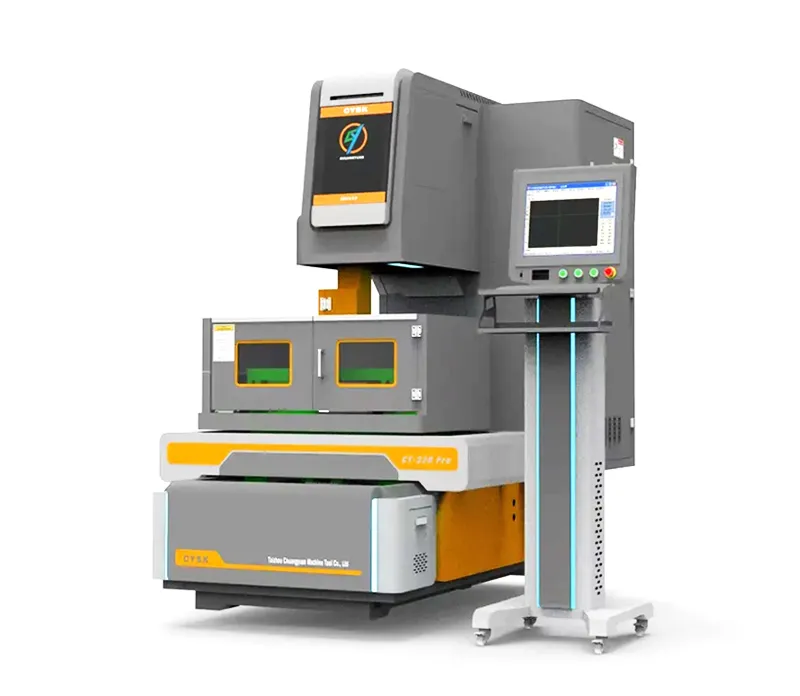
Product Title: Precision Micro Electro Discharge Machining Systems Built for Your Toughest Geometries
Frequently Asked Questions

What materials can Micro Electro Discharge Machining process?

Micro electro discharge machining works on any electrically conductive material regardless of hardness. This includes hardened tool steel up to 68 HRC, carbide, titanium alloys, nickel superalloys, copper tungsten, and conductive ceramics. Non-conductive materials cannot be machined directly, but we offer assisted electrode methods for select ceramics. Because the process uses spark erosion rather than cutting force, there is no tool deflection, no burrs, and no heat-affected zone deeper than a few microns when parameters are optimized.
Our systems routinely machine holes from 0.05 mm, slots from 0.03 mm, and surface finishes down to Ra 0.05 micron. Positioning accuracy is within 0.005 mm and repeatability within 0.002 mm. For micro electrode diameters below 0.1 mm, we recommend tungsten or tungsten carbide electrodes with a rotating spindle and low-capacitance circuitry to maintain stable discharge and minimal wear.
Electrode wear is managed through adaptive pulse generators, on-time and off-time optimization, and orbital machining strategies. Typical wear ratios range from 0.1 to 0.5 percent for roughing and under 0.2 percent for finishing. Our control software compensates wear in real time, and automatic electrode changers keep unattended runs stable, so dimensional accuracy holds across long production batches.
Every machine ships with installation, commissioning, and on-site or remote training. We provide English technical documentation, remote diagnostics, and spare parts dispatch within 48 hours. Engineers are available for video support across time zones, and we maintain long-term cooperative relationships with clients in more than 20 exporting countries and regions. Preventive maintenance schedules and process parameter libraries are included.
Key sectors include medical device molds, aerospace turbine components, automotive connector dies, semiconductor lead frames, optical lens molds, and microelectronics tooling. Any industry needing micro holes, sharp internal corners, or mirror finishes on hard materials benefits. Our customers report overall equipment efficiency above 88 percent and dimensional capability within plus or minus 0.003 mm.

Related Articles

Processing characteristics of EDM wire cutting machine

24

Dec

Processing characteristics of EDM wire cutting machine

View More
The correct handling method for insufficient machining accuracy of fast wire cutting machine

13

Dec

The correct handling method for insufficient machining accuracy of fast wire cutting machine

View More
How to optimize feeding speed to raise spring machine daily output volume

29

Jun

How to optimize feeding speed to raise spring machine daily output volume

The Precision Mechanics of Wire Feeding Achieving peak output in spring manufacturing isn’t just about increasing motor RPM; it’s about mastering the synchronization between servo responsiveness and material tension. In high-speed CNC s...
View More
What export quality standards international clients require for wire cutting machine products

03

Aug

What export quality standards international clients require for wire cutting machine products

Understanding International Export Compliance in Precision Machining Navigating the complex landscape of global industrial trade requires a thorough understanding of the stringent technical benchmarks that overseas buyers mandate for advanced metal...
View More

Customer Testimonials

Klaus Berger, Tooling Manager, Germany
Stable Accuracy Across Three Shifts

We run micro electro discharge machining 22 hours a day on connector molds. After 14 months, positioning accuracy remains within 0.004 mm and electrode wear stays under 0.3 percent. Output rose 27 percent without adding operators, and service response has been excellent.

Hiroshi Tanaka, Production Director, Japan
Solved Our 0.15 mm Slot Challenge

No other process could cut our 0.15 mm slots with a clean finish. Their Micro EDM held Ra 0.08 micron and cut our die lead time from 18 days to 9. Scrap dropped to 1.2 percent. We ordered two more machines.

Get a Free Quote

Our representative will contact you soon.
Email
Name
Company Name
Message
0/1000
Sub-Micron Pulse Control for Repeatable Micro Features

Sub-Micron Pulse Control for Repeatable Micro Features

Our micro electro discharge machining platforms use a closed-loop gap control system sampling 250,000 times per second, delivering pulse widths as short as 0.5 microseconds. This lets you machine 0.05 mm holes and 0.03 mm slots with positioning accuracy within 0.005 mm and repeatability within 0.002 mm. The result is consistent quality from the first cavity to the ten-thousandth part, which matters in medical mold making and connector die production where a 0.003 mm deviation scraps the workpiece. Thermal distortion stays minimal, so thin ribs and sharp internal corners survive intact, and surface finishes reach Ra 0.05 micron without secondary polishing. A Swiss medical mold customer reported 99.2 percent first-pass yield after switching to our pulse-controlled generators, a 7-point gain over their previous process. For shops running lights-out production, this level of control converts directly into lower unit cost and higher on-time delivery.
Integrated R&D and Manufacturing Since 2003

Integrated R&D and Manufacturing Since 2003

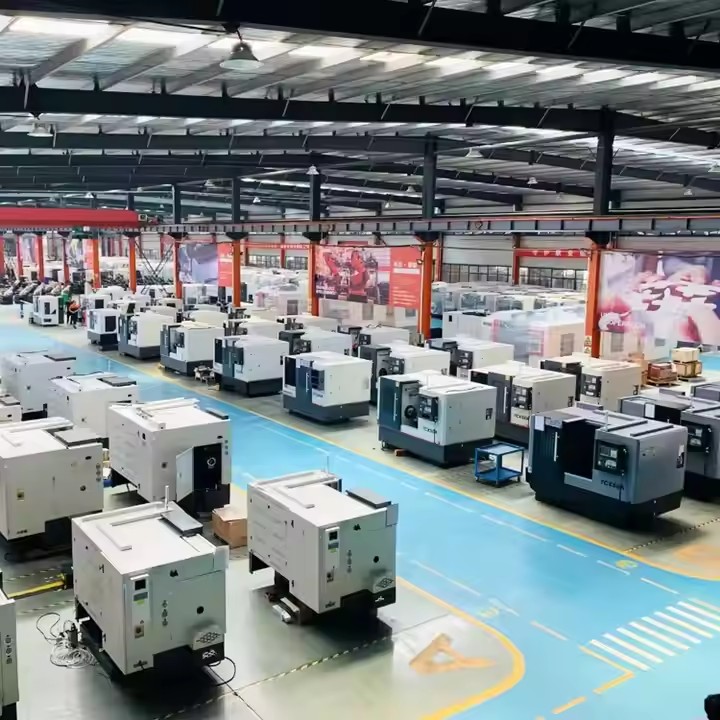
Taizhou Chuang Yuan Machine Tool Co., Ltd. has integrated research, development, production, and sales since 2003, so every micro electro discharge machining system is built, tested, and supported by one team. Our Jiangsu facility machines, assembles, and validates each unit before shipment, running a 72-hour continuous cutting test on customer-supplied samples. Because we control the supply chain, spare parts dispatch happens within 48 hours, and remote diagnostics keep downtime low across more than 20 exporting countries and regions. This vertical integration also means customization is fast: we adapt travel, spindle configurations, and generator parameters to your specific geometry and material, often within six weeks. Customers in aerospace, medical, and automotive tooling rely on this responsiveness, and our engineers provide process parameter libraries and training in English so your operators reach stable production quickly, with overall equipment efficiency above 88 percent.
Full Application Support Beyond the Machine

Full Application Support Beyond the Machine

Buying a machine is only part of the equation, so we pair every micro electro discharge machining platform with full application support. Our engineers help with electrode design, flushing strategy, and parameter development for materials such as carbide, titanium, and nickel superalloys. We benchmark your part before shipment, document the proven process, and deliver a parameter library your team can reuse. For a US aerospace supplier, this support cut cooling hole drilling to 90 holes per hour with a recast layer under 2 microns. For a Japanese connector maker, it reduced micro-pin die lead time from 18 days to 9. Support continues after installation through remote diagnostics, preventive maintenance planning, and spare parts readiness, all backed by long-term cooperative relationships with clients worldwide. The goal is simple: your micro electro discharge machining process stays stable, efficient, and profitable for years. SEO Title: Micro Electro Discharge Machining Solutions | P
WhatsApp WhatsApp Email Email Mobile Mobile TopTop