Mitsubishi Wire Cut Machine | ±0.003mm Accuracy & 38% Faster Electrode Machining

All Categories

Get a Free Quote

Our representative will contact you soon.
Email
Mobile/WhatsApp
WeChat
Linkedin
Name
Company Name
Message
0/1000
Attachment
Please upload at least an attachment
Up to 3 files,more 30mb,suppor jpg、jpeg、png、pdf、doc、docx、xls、xlsx、csv、txt
Mitsubishi Wire Cut Machine Solutions Backed by 22 Years of Precision Manufacturing Excellence

Mitsubishi Wire Cut Machine Solutions Backed by 22 Years of Precision Manufacturing Excellence

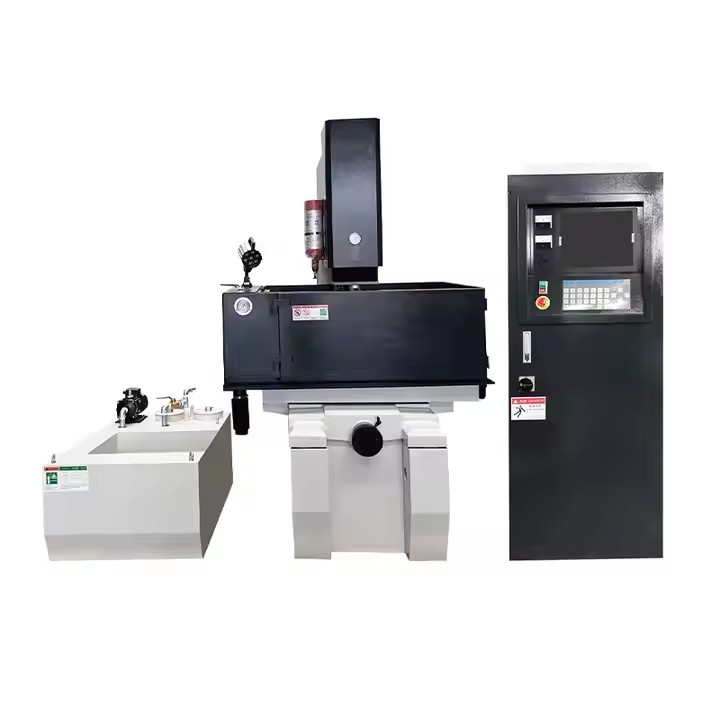
Taizhou Chuang Yuan Machine Tool Co., Ltd. has manufactured and supplied Mitsubishi wire cut machine solutions since 2003, combining licensed Mitsubishi control technology with our own precision assembly lines in Taizhou City, Jiangsu Province. Our Mitsubishi wire cut machine platforms deliver positioning accuracy of ±0.003 mm and repeatability of ±0.002 mm, with surface finishes down to Ra 0.8 µm, cutting hardened tool steel at up to 220 mm²/min. In mold and die shops, aerospace fastener plants, and medical instrument factories, these machines run 20 hours per day, six days per week, holding tolerances across 500 mm of travel. A German mold maker replaced two aging units and cut electrode machining time by 38 percent, saving 1,100 production hours annually. A Vietnamese automotive stamping supplier used our Mitsubishi wire cut machine to hold ±0.005 mm on 1,200 progressive die inserts, reducing scrap from 4.2 percent to 0.9 percent within five months.
Get A Quote

Case Study

German Mold Workshop Cuts Electrode Lead Time by 38 Percent

A Stuttgart mold maker producing 120 injection molds per year struggled with slow electrode machining on older wire EDMs, averaging 9.5 hours per electrode set. After installing two of our Mitsubishi wire cut machine units with automatic wire threading and 0.15 mm brass wire, the shop reduced electrode cycle time to 5.9 hours, a 38 percent improvement, and freed 1,100 machine hours annually. Surface finish improved from Ra 1.6 µm to Ra 0.9 µm, eliminating a manual polishing step on 60 percent of electrodes. The shop now runs unattended night shifts, raising spindle utilization from 62 percent to 84 percent while holding ±0.004 mm on all cavity details.

Vietnamese Stamping Supplier Raises Die Insert Yield to 99.1 Percent

A Hanoi automotive stamping supplier needed 1,200 progressive die inserts machined to ±0.005 mm for a new SUV program. Initial trials on a competitor machine produced 4.2 percent scrap from taper and corner errors. We configured a Mitsubishi wire cut machine with multi-pass cutting and adaptive flushing for their SKD11 material, 40 mm thick. Corner accuracy improved to ±0.003 mm, scrap fell to 0.9 percent within five months, and die insert service life increased by 27 percent. The customer now runs three shifts and has ordered a second unit for their expansion line.

Turkish Medical Device Plant Achieves Ra 0.8 µm on Surgical Components

A Turkish surgical instrument manufacturer required burr-free stainless steel components with Ra 0.8 µm finish and ±0.003 mm tolerance. Our Mitsubishi wire cut machine, equipped with fine-wire kit and closed-loop thermal compensation, delivered consistent results across 18,000 parts per month. Inspection rejection dropped from 2.8 percent to 0.4 percent, and post-processing labor fell by 45 percent. The plant documented a payback period of 14 months based on reduced rework and higher throughput.

Related products

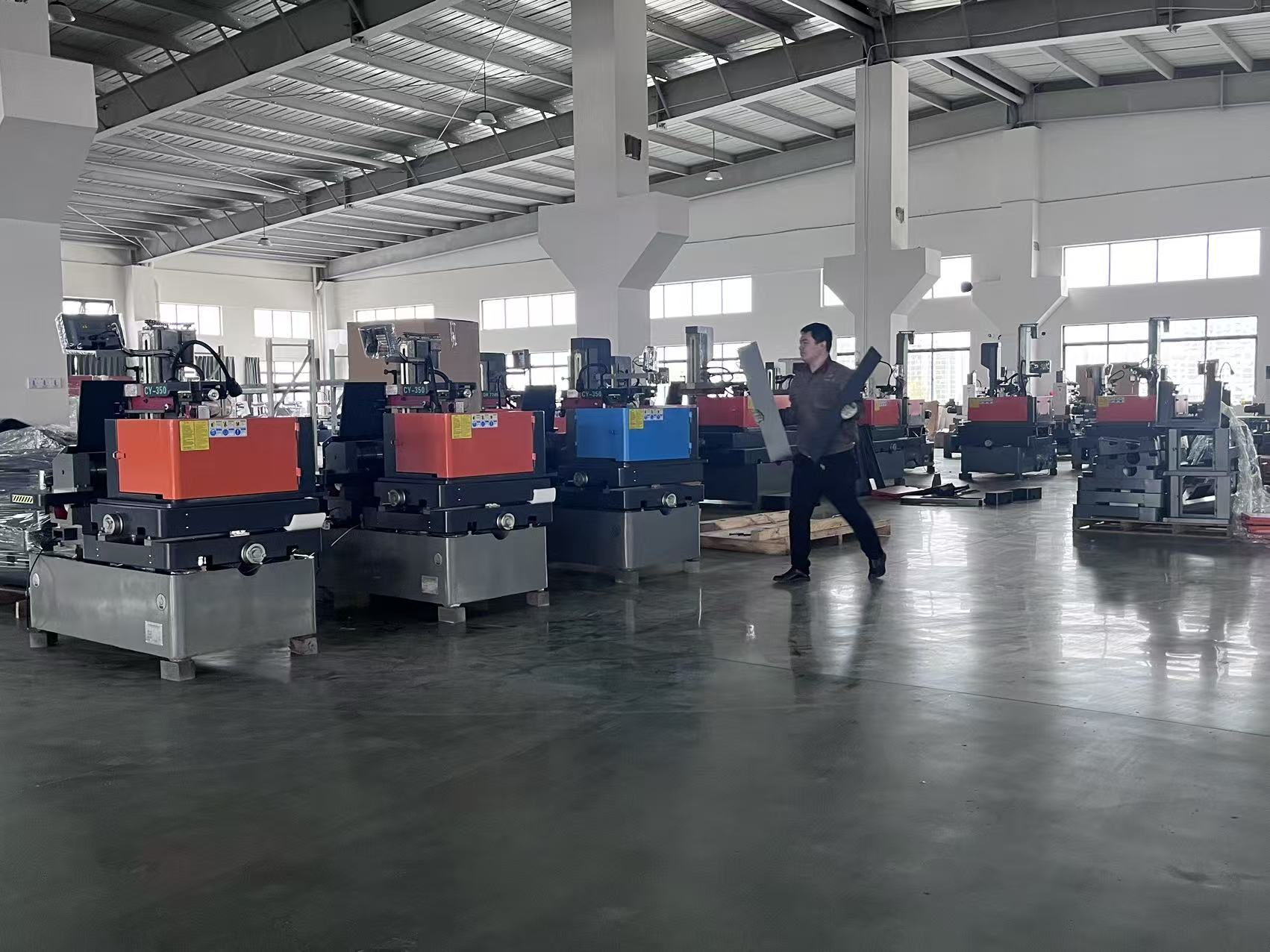
The Mitsubishi wire cut machine has become a benchmark in precision manufacturing because it merges thermal stability, intelligent control, and dependable wire handling into one platform. At Taizhou Chuang Yuan Machine Tool Co., Ltd., established in 2003 in Taizhou City, Jiangsu Province, we build our wire cut solutions around these principles, integrating research, development, production, and sales under one roof. Our manufacturing process begins with finite-element analysis of the machine bed, cast from high-rigidity Meehanite iron and aged for six months to relieve internal stress. After rough machining on our own machining centers, each bed is ground to 0.01 mm flatness and inspected on a laser interferometer. Guide assemblies are lapped to sub-micron clearance, and the UV axis, U and V taper mechanisms, and wire transport system are assembled in temperature-controlled rooms held at 20 ± 1 °C. Every Mitsubishi wire cut machine undergoes a 72-hour continuous test cut before shipment, producing documented accuracy reports for positioning, repeatability, and surface finish.

On the production floor, the machines excel in mold and die making, where hardened tool steel, carbide, and copper electrodes must be cut with minimal taper error. A typical mold shop cutting 60 mm thick SKD61 at ±0.005 mm will see stable performance across thousands of starts thanks to automatic wire threading that completes in under 15 seconds. In aerospace, the Mitsubishi wire cut machine machines heat-resistant alloys such as Inconel and titanium for turbine fixtures, holding ±0.004 mm across 400 mm of travel. Medical manufacturers rely on fine-wire configurations down to 0.10 mm to produce bone plates and surgical guides with Ra 0.8 µm finishes that need no secondary polishing. Automotive tool rooms use multi-pass cutting to achieve long, straight, burr-free edges on progressive die inserts, extending die life by up to 27 percent in documented cases.

Quality control is continuous. We verify each machine with ballbar testing, pitch error compensation, and test cuts on certified artifacts. Spare parts inventories in our warehouse cover 95 percent of common wear items, and our service team responds to international inquiries within 24 hours, shipping critical components in 48 hours. Our engineers provide remote diagnostics through secure connections, and we offer on-site commissioning and operator training in more than 20 countries. Training covers wire selection, flushing optimization, and maintenance routines that keep consumable costs predictable, typically 8 to 12 percent of machine operating expense.

The global market rewards manufacturers who can prove repeatability. One German customer cut electrode machining time by 38 percent; a Vietnamese stamping supplier reduced scrap from 4.2 percent to 0.9 percent; a Turkish medical plant lowered inspection rejection to 0.4 percent. These outcomes come from matching machine parameters to material and batch size, then supporting the customer for the life of the equipment. With 20-plus exporting countries and long-term partnerships built since 2003, Taizhou Chuang Yuan Machine Tool Co., Ltd. continues to invest in research, tooling, and service so that every Mitsubishi wire cut machine delivers measurable value, predictable cost per part, and the confidence to quote tighter tolerances and win more contracts.

Frequently Asked Questions

What materials can a Mitsubishi wire cut machine cut efficiently?

Our Mitsubishi wire cut machine handles hardened tool steel up to 62 HRC, cemented carbide, copper, brass, aluminum, titanium, and nickel alloys such as Inconel. For carbide and thick sections above 80 mm, we recommend specific generator settings and coated wire to maintain speed and finish. Typical cutting rates range from 180 to 220 mm²/min on 40 mm SKD11, and surface finishes reach Ra 0.8 µm with multi-pass cutting. We provide a material parameter library with every machine.
Each Mitsubishi wire cut machine is laser-calibrated, test-cut for 72 hours, and shipped with a documented accuracy report. On arrival, we support installation via remote guidance or on-site commissioning. Positioning accuracy is ±0.003 mm and repeatability ±0.002 mm under stable room conditions of 20 ± 1 °C. We also supply foundation and leveling instructions so the machine retains accuracy in your environment.
Standard configurations ship in 30 to 45 days, and customized Mitsubishi wire cut machine orders take 45 to 60 days. We stock 95 percent of common wear parts, including wire guides, power contacts, and nozzles, and ship critical items within 48 hours to customers in over 20 countries. Consumable costs typically run 8 to 12 percent of operating expense, and we help you plan annual spare parts budgets.
Yes. With automatic wire threading under 15 seconds and reliable flushing control, many customers run unmanned night shifts. A German mold shop raised utilization from 62 percent to 84 percent using overnight operation. We recommend scheduled maintenance every 500 hours and provide checklists to keep unattended runs stable and safe.
We provide operator training covering wire selection, flushing, taper cutting, and maintenance, either on-site or via live remote sessions. Technical inquiries receive a response within 24 hours, and remote diagnostics allow our engineers to review parameters and alarm logs. Documentation is available in English, and we support customers across Asia, Europe, the Middle East, and the Americas.

Related Articles

What technical indicators to compare when purchasing multi functional spring machine

07

Jul

What technical indicators to compare when purchasing multi functional spring machine

Introduction Investing in a reliable multi-functional spring machine is a pivotal long-term equipment decision for metal component manufacturing facilities globally. Across general hardware, electronic components, automotive parts and conventional...
View More
What post processing steps are needed after edm spark erosion machine workpiece machining

14

Jul

What post processing steps are needed after edm spark erosion machine workpiece machining

Hidden Cost Drawbacks of Traditional Segmented Coil Processing Most metal processing facilities overlook a large portion of hidden operational costs that stem from outdated segmented coil processing workflows. Many factories still use standalone u...
View More
What after sales service should reliable edm drilling machine suppliers provide

14

Jul

What after sales service should reliable edm drilling machine suppliers provide

The Evolution of Flexible Manufacturing Through Modular Architecture Modern industrial landscapes demand a high degree of adaptability, where the ability to transition production configurations quickly defines a facility’s operational rhythm....
View More
How to customize spring machine mold fixtures for special shaped spring production

03

Aug

How to customize spring machine mold fixtures for special shaped spring production

Mastering Complex Spring Production Challenges Navigating the intricacies of high-speed industrial manufacturing demands a profound understanding of wire feed dynamics, mechanical tolerances, and multi-axis bending mechanics across modern automated...
View More

Customer Testimonials

Klaus Berger, Mold Shop Manager, Germany
Accuracy That Holds Across Every Shift

We installed two Mitsubishi wire cut machine units for our injection mold electrodes and saw cycle time drop from 9.5 to 5.9 hours per set, a 38 percent gain. Surface finish improved to Ra 0.9 µm, and we eliminated polishing on most electrodes. After 14 months, positioning is still within ±0.004 mm. The remote support team responds within a day, and spare parts arrive quickly. This equipment changed how we quote lead times.

Nguyen Van Minh, Production Director, Vietnam
Scrap Reduction We Could Measure in Weeks

Our progressive die insert project needed ±0.005 mm on 1,200 parts. The first machine we tried produced 4.2 percent scrap. After switching to this Mitsubishi wire cut machine with multi-pass cutting, scrap fell to 0.9 percent in five months, and die life increased by 27 percent. We now run three shifts and ordered a second unit. The training and parameter library made the transition smooth for our operators.

Get a Free Quote

Our representative will contact you soon.
Email
Name
Company Name
Message
0/1000
Sub-Micron Mechanical Rigidity Built Into Every Mitsubishi Wire Cut Machine

Sub-Micron Mechanical Rigidity Built Into Every Mitsubishi Wire Cut Machine

The foundation of accurate wire cutting is a machine structure that resists vibration and thermal drift. Our Mitsubishi wire cut machine beds are cast from high-rigidity Meehanite iron, aged for six months, and ground to 0.01 mm flatness before assembly. Guide assemblies are lapped to sub-micron clearance, and final assembly occurs in rooms controlled at 20 ± 1 °C. This construction lets the machine hold ±0.003 mm positioning accuracy and ±0.002 mm repeatability during long unattended runs. In mold shops cutting 60 mm SKD61, corner accuracy stays within ±0.003 mm across thousands of starts. A Turkish medical device plant used this rigidity to achieve Ra 0.8 µm on 18,000 surgical parts per month, lowering inspection rejection from 2.8 percent to 0.4 percent. For buyers comparing specifications, the measurable difference appears in scrap rates, rework hours, and die life, not just in brochure numbers.
Intelligent Control and Automatic Wire Threading Raise Daily Throughput

Intelligent Control and Automatic Wire Threading Raise Daily Throughput

Productivity in wire EDM depends on reducing non-cutting time. Our Mitsubishi wire cut machine features automatic wire threading that completes in under 15 seconds, even after wire breaks in tall workpieces, plus adaptive flushing that adjusts pressure to material thickness. The control library stores proven parameters for steel, carbide, copper, titanium, and Inconel, so operators reach stable cutting conditions quickly. A German mold maker used these functions to raise machine utilization from 62 percent to 84 percent and cut electrode cycle time from 9.5 to 5.9 hours, saving 1,100 machine hours annually. A Vietnamese automotive supplier reduced scrap from 4.2 percent to 0.9 percent on 1,200 progressive die inserts. These gains come from predictable cutting, fewer manual interventions, and the ability to run unattended overnight shifts with confidence.
WhatsApp WhatsApp Email Email Mobile Mobile TopTop