EN
EN

Introduction
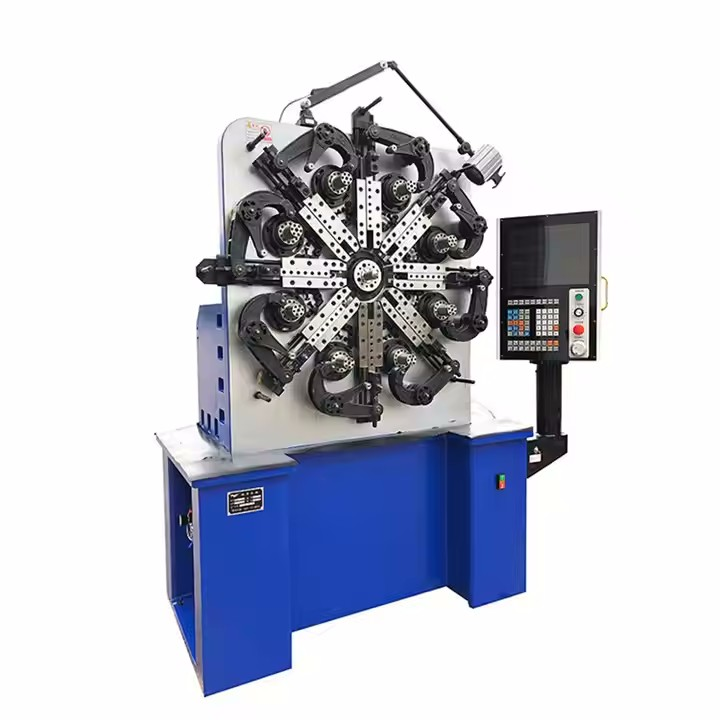
Investing in a reliable multi-functional spring machine is a pivotal long-term equipment decision for metal component manufacturing facilities globally. Across general hardware, electronic components, automotive parts and conventional mechanical supporting fields, manufacturers consistently face similar equipment selection challenges. Most procurement teams focus excessively on upfront purchase pricing while overlooking core technical specifications and structural design standards, which gradually leads to unstable product consistency, inconsistent dimensional accuracy and poor equipment compatibility in daily production.
Based on decades of industry research and verified practical experience with global mechanical processing equipment, mainstream machinery industry authoritative institutions point out that scientific matching of equipment technical parameters is the core premise of stable and sustainable production. Unlike single-function spring processing equipment that can only complete basic forming work, modern multi-functional spring machines integrate diversified structural designs and universal processing capabilities. Conducting in-depth comparison of key technical indicators before procurement helps manufacturers avoid equipment mismatch risks, stabilize overall production quality, and lay a solid foundation for standardized factory operation. This article systematically sorts out the key technical evaluation dimensions for multi-functional spring machine selection, providing objective, professional and practical reference standards for global manufacturing buyers.
Core Servo Axis Configuration and Functional Compatibility Performance
Servo axis configuration is one of the most fundamental technical indicators to distinguish ordinary spring machines from standardized multi-functional spring processing equipment, and it is also a core evaluation dimension recognized by the global precision machinery manufacturing industry. Entry-level basic spring machines mostly adopt simple 3 to 4-axis structural design, with relatively single functional boundaries, only capable of completing conventional compression spring forming work. When facing diversified product structures such as tension springs, torsion springs and special-shaped 3D wire forming parts, basic equipment needs frequent manual mold replacement and parameter adjustment, resulting in poor production continuity and limited product coverage.
Standardized multi-functional spring machines adopt modular multi-servo axis layout, with independent drive and control structure for each axis. The independent operation of each axis avoids mutual structural interference during processing, realizing integrated one-time forming of various complex spring structures without repeated mold replacement and parameter debugging. Verified by long-term equipment application cases in European and Southeast Asian manufacturing bases, standardized servo control configuration can achieve ultra-precise fine-tuning effects, with stable wire feeding stepping increment and accurate rotation angle control. This universal structural design enables the equipment to adapt to most conventional spring processing needs on the market, bringing stronger production flexibility for factories with diversified product structures and standardized production lines.
Machining Precision Stability and Repeatability Standards
Precision stability and dimensional repeatability are basic industrial standards that qualified multi-functional spring machines must meet, which directly affect product consistency and standardized production levels. According to the statistical analysis data of international machinery manufacturing industry associations, unstable mechanical structure and insufficient precision retention are common causes of unqualified products in long-term batch processing. Many low-cost devices can meet basic precision requirements in short-term trial production, but continuous cyclic processing will gradually amplify structural errors, resulting in obvious deviations in wire feeding size, outer diameter forming and positioning angle.
Universal industrial manufacturing specifications clearly define the precision tolerance range for multi-functional spring machine batch processing. Standard models maintain stable wire feeding tolerance and angle repeatability in long-term operation, while high-precision models for fine spring processing can achieve more rigorous dimensional control standards. The key to long-term precision retention of equipment lies in high-quality structural accessories, including high-rigidity roller guide rails and high-lead precision ball screws. Optimized structural accessories can effectively offset mechanical vibration and operational wear during equipment operation, avoid precision attenuation in long-cycle processing, and maintain consistent product dimensional standards for large-batch standardized production, effectively reducing overall product defect rate.
Wire Diameter Adaptability and Material Compatibility Capacity
Excellent material adaptability and specification compatibility are important manifestations of the comprehensive performance of modern multi-functional spring machines, and also a key dimension that many procurement teams ignore in the selection process. In actual industrial production, spring processing involves a variety of metal raw materials, including conventional carbon steel, high-tensile alloy steel, stainless steel and copper wire. Different metal materials have unique physical characteristics such as toughness, hardness and springback coefficient, which put forward higher requirements for equipment parameter adaptation capability.
Traditional single-function spring machines have relatively single material adaptation logic, without professional material parameter database support. When switching different processing raw materials, operators need to manually adjust and calibrate parameters repeatedly, which affects production continuity and standardization. In contrast, standardized multi-functional spring machines are pre-installed with professional material springback compensation algorithms and multi-specification adaptation programs, covering ultra-fine wire to heavy-duty wire processing range, with extremely wide application coverage. Senior industry technical researchers suggest that manufacturers reserve reasonable parameter tolerance during equipment selection according to conventional processing materials and specifications, which can effectively improve equipment versatility and meet the iterative production needs of different products in factory standardized operation.
Stable Operation Logic and Continuous Production Adaptability
Equipment operation stability and continuous processing adaptability are important guarantees for factory standardized and large-scale production. The theoretical parameter data marked in equipment manuals is only for reference, and the stable performance in actual industrial scenarios is the core basis for procurement evaluation. Qualified multi-functional spring machines have scientific mechanical operation logic and stable transmission structure, which can maintain stable working state in long-term continuous processing, whether it is conventional standard spring forming or complex special-shaped spring multi-process processing.
The overall matching degree of equipment units determines the stable operation level of the production line. Reasonably matched wire loading structures and supporting auxiliary equipment can reduce equipment shutdown and debugging frequency, ensure continuous and orderly progress of batch processing, and maintain stable and standardized production rhythm. For manufacturing enterprises with stable production scales, excellent equipment operation stability can effectively optimize workshop production rhythm, maintain consistent production standards, and create stable operational advantages for factory standardized management.
Intelligent Control System and Operational Usability
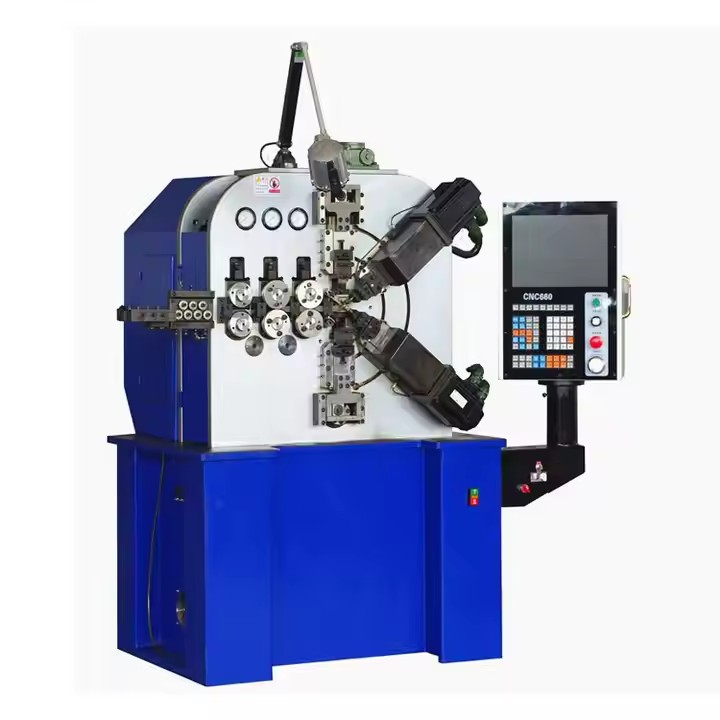
The CNC intelligent control system is the core control unit of multi-functional spring machines, which determines equipment operability, parameter standardization and fault self-checking capability. Modern industrial-grade control systems focus on standardized operation logic and universal application performance, supporting multi-language switching, mass production program storage, real-time fault feedback and automatic parameter compensation. These basic functions are essential for modern factories to realize standardized and unified processing standards.
High-quality control systems can store a large number of mature forming programs, realizing rapid calling of repeated production schemes and maintaining consistent processing parameters for batch products. In terms of daily operation and maintenance, standardized systems support remote technical diagnosis and online problem solving, which can timely eliminate equipment operation faults and ensure the continuity of production work. Equipment with humanized and standardized operation logic can reduce operational difficulty, unify operation standards for different operators, and help factories form standardized production management procedures, which is suitable for popularization and application in global manufacturing scenarios.
Structural Rigidity and Long-Term Operational Reliability
Mechanical structural rigidity is the basic guarantee for long-term stable operation of multi-functional spring machines, and an important indicator to measure equipment quality and service stability. Spring forming belongs to continuous mechanical processing work, and the equipment will bear cyclic mechanical impact force during operation. Equipment with simple welding structure and unreasonable structural design is prone to obvious vibration during long-term operation, accelerating the wear of transmission parts and forming accessories, affecting structural stability and long-term service cycle.
Industrial standardized multi-functional spring machines adopt integrated cast machine base molding process and professional vibration reduction structural design. The overall structure has strong stability and impact resistance, which can effectively resist mechanical vibration generated during processing and maintain structural stability under long-term high-intensity operation. Each functional axis is equipped with matched power drive components, which can balance the mechanical tension generated by wire processing and ensure stable positioning accuracy and consistent processing effects in cyclic production. This standardized structural manufacturing process is the core support for equipment to maintain long-term reliable performance.
Conclusion
The selection of high-quality multi-functional spring machines requires comprehensive evaluation from multiple dimensions including servo axis configuration, precision stability, material compatibility, operational stability, intelligent control system and structural reliability, instead of simply measuring equipment value by initial procurement cost. Reasonable matching of equipment technical parameters with factory production standards is the key to maintaining long-term stable production and realizing standardized operational benefits.
With more than two decades of standardized mechanical equipment manufacturing experience, Chuangyuan Machine Tool has established complete R&D, production and global supply chain service systems. Always adhering to strict industrial manufacturing standards and standardized quality control procedures, the brand delivers stable, high-quality multi-functional spring machine equipment for manufacturing enterprises in over 20 countries and regions around the world. Relying on mature manufacturing technology, standardized production processes and systematic global technical support, Chuangyuan Machine Tool consistently helps global manufacturing clients stabilize production quality, optimize factory operation systems and build solid industrial production foundations.
Table of Contents
- Introduction
- Core Servo Axis Configuration and Functional Compatibility Performance
- Machining Precision Stability and Repeatability Standards
- Wire Diameter Adaptability and Material Compatibility Capacity
- Stable Operation Logic and Continuous Production Adaptability
- Intelligent Control System and Operational Usability
- Structural Rigidity and Long-Term Operational Reliability
- Conclusion