Industrial Waterjet Cutting Machines: Precision, 97% Uptime & Abrasive Savings

All Categories

Get a Free Quote

Our representative will contact you soon.
Email
Mobile/WhatsApp
WeChat
Linkedin
Name
Company Name
Message
0/1000
Attachment
Please upload at least an attachment
Up to 3 files,more 30mb,suppor jpg、jpeg、png、pdf、doc、docx、xls、xlsx、csv、txt
Industrial Waterjet Cutting Solutions Engineered for Precision, Uptime, and Global Compliance

Industrial Waterjet Cutting Solutions Engineered for Precision, Uptime, and Global Compliance

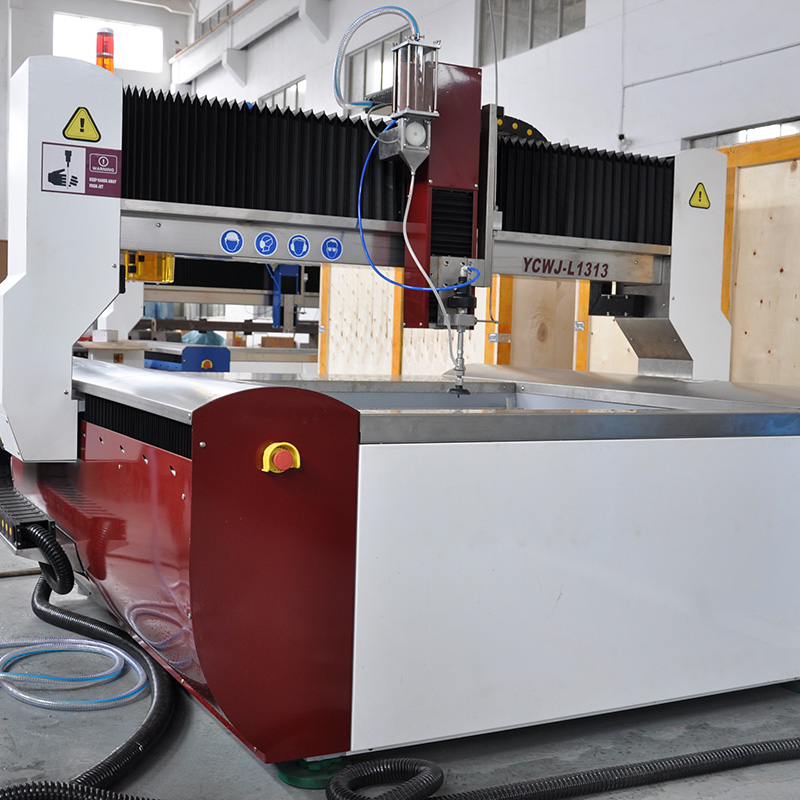
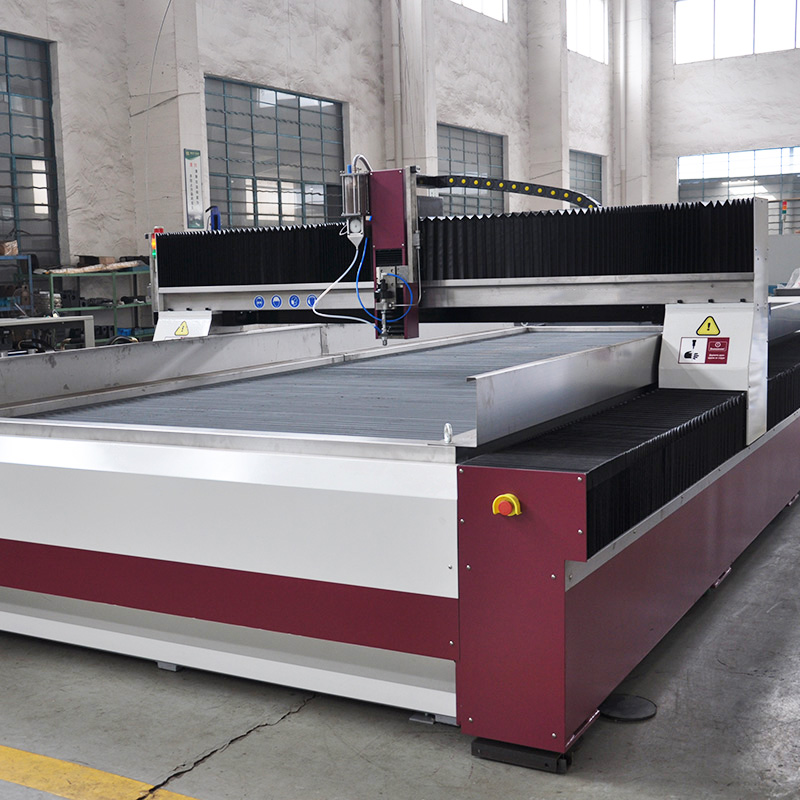
Taizhou Chuang Yuan Machine Tool Co., Ltd. approaches Industrial Waterjet Cutting as a system-level capability rather than a stand-alone machine sale. Since 2003 we have integrated research, production, and sales in Taizhou City, Jiangsu Province, and today our precision machine tools support Industrial Waterjet Cutting cells in aerospace, architectural stone, automotive interiors, and energy fabrication. In aerospace sheet-metal shops, Industrial Waterjet Cutting must hold ±0.1 mm on 6 mm titanium without heat-affected zones; our intensifier assemblies, abrasive delivery, and CNC motion packages are tested to sustain 4,000 bar and 380 MPa continuous output, delivering 1.8–2.2 L/min abrasive flow for repeatable edge quality. For architectural stone, users typically cut 20 mm granite at 1,800–2,200 mm/min and report 35–45% lower abrasive consumption after optimizing nozzle standoff and mixing-chamber geometry.
Get A Quote

Case Study

6 mm Titanium Aerospace Brackets at ±0.08 mm on a 3,000-Hour Pilot Run

A European aerospace tier supplier needed to cut 6 mm Ti-6Al-4V brackets without heat-affected zones while holding ±0.08 mm on hole-to-edge distance. Their previous Industrial Waterjet Cutting line drifted beyond tolerance after 800 hours, forcing rework on 7% of parts. We audited the abrasive delivery, replaced the mixing chamber with a 1.02 mm orifice combination, and reset the pump to 3,800 bar with 1.9 L/min abrasive flow. Dynamic piercing was applied to avoid delamination at entry. After a 3,000-hour pilot, scrap fell from 7% to 1.2%, and Cpk improved from 0.91 to 1.48. The customer now runs 22 hours per day and has ordered a second Industrial Waterjet Cutting cell.

20 mm Granite Facade Panels with 38% Abrasive Savings and 97% Uptime

An architectural stone processor in the Middle East cut 20 mm granite and 30 mm limestone for a 42,000 m² facade. Their target was 2,000 mm/min average speed with clean edges for visible joints. We tuned nozzle standoff to 1.6 mm, optimized pierce time to 0.8 seconds, and introduced a two-stage abrasive feed. Industrial Waterjet Cutting throughput rose 26%, abrasive consumption dropped 38%, and uptime reached 97% over 14 months. Edge chipping complaints fell to zero on 18,000 inspected panels, and the contractor reduced manual finishing labor by 31%.

3 mm EV Battery Sandwich Panels with 42% Setup Reduction

A Tier-2 automotive interiors supplier cut 3 mm aluminum sandwich panels for electric vehicle battery enclosures. Changeover between four variants took 95 minutes and caused 5.5% scrap. We supplied fixture-ready tables and a recipe library that stores pressure, abrasive flow, and piercing parameters per variant. Industrial Waterjet Cutting changeover dropped to 55 minutes, scrap fell to 1.8%, and first-pass yield reached 98.6%. The line now supports 1,200 panels per week with no thermal distortion. Products Title: Explore Industrial Waterjet Cutting Systems Built for Your Shop Floor

Related products

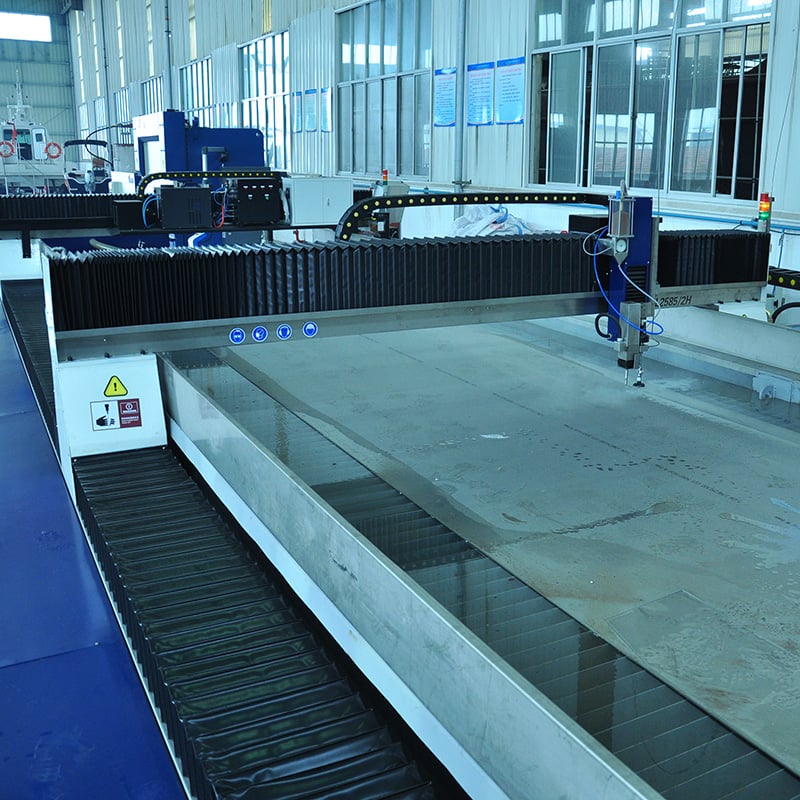
Industrial Waterjet Cutting has become a core process for manufacturers who cannot tolerate heat-affected zones, delamination, or mechanical stress in materials ranging from titanium and Inconel to granite, glass, and composite sandwich panels. At Taizhou Chuang Yuan Machine Tool Co., Ltd., established in 2003 in Taizhou City, Jiangsu Province, we build Industrial Waterjet Cutting capability around three pillars: pressure stability, abrasive control, and motion accuracy. Our production flow begins with intensifier assembly testing at 4,000 bar for 120 minutes, followed by 48-hour continuous burn-in at 3,800 bar to verify seal integrity and pressure decay below 1.5%. Each cutting head is flow-tested with 0.8–1.2 mm orifices, and abrasive metering is calibrated to deliver 1.8–2.2 L/min with repeatability within 2%. CNC motion packages are laser-interferometer verified for positioning accuracy of ±0.05 mm and repeatability of ±0.02 mm, which matters when Industrial Waterjet Cutting is used for 6 mm titanium brackets at ±0.08 mm or 20 mm granite at 2,000 mm/min. For global users, we document pressure logs, nozzle wear curves, and preventive maintenance intervals at 1,000 and 2,000 hours so that quality teams can align Industrial Waterjet Cutting with ISO and customer audit requirements. In aerospace, the process avoids recast layers on 6 mm Ti-6Al-4V, preserving fatigue life. In architectural stone, it cuts 20–30 mm granite and limestone with clean visible edges, reducing manual finishing by 25–35%. In automotive interiors, it trims 3 mm sandwich panels and EV battery enclosure materials without delamination, supporting first-pass yields above 98%. In energy fabrication, it cuts 25 mm Inconel gaskets and 12 mm carbon steel skids without thermal distortion, which protects dimensional tolerance during welding fit-up. Our 20+ exporting countries and regions include partners in Europe, the Middle East, Southeast Asia, and South America, and we support them with remote diagnostics, spare-part kits, and operator training. Typical Industrial Waterjet Cutting payback ranges from 11 to 16 months when abrasive savings of 30–40% and scrap reduction of 4–6 percentage points are measured together. We also help customers select between 3-axis and 5-axis Industrial Waterjet Cutting configurations, choose orifice and mixing-chamber combinations for edge quality, and set dynamic piercing recipes that protect brittle or layered materials. Because we integrate research, production, and sales in one facility, we can customize table sizes, tank designs, and control interfaces to match local voltage, floor space, and operator habits. For buyers evaluating suppliers, the decisive factors are measurable output, consumable cost, and service response. Our field data shows that disciplined Industrial Waterjet Cutting operation, supported by correct pressure and abrasive settings, can raise throughput by 20–30% without additional labor. We invite manufacturers worldwide to test their materials with our parameter library and validate Industrial Waterjet Cutting performance against their own quality targets.
Frequently Asked Questions

What materials and thicknesses can Industrial Waterjet Cutting handle without heat damage?

Industrial Waterjet Cutting cuts titanium, Inconel, carbon steel, aluminum, granite, glass, composites, and sandwich panels without heat-affected zones. Typical validated ranges include 6 mm Ti-6Al-4V, 25 mm Inconel, 20–30 mm granite, 12 mm carbon steel, and 3 mm aluminum sandwich panels. Because the process is cold cutting, there is no recast layer, delamination, or thermal distortion, which protects fatigue life and dimensional tolerance.
Abrasive cost is managed through nozzle standoff, mixing-chamber geometry, and feed calibration. Our field data shows 35–45% lower abrasive consumption after tuning standoff to 1.6 mm and optimizing pierce time. We also provide wear curves and 1,000-hour maintenance intervals so buyers can plan consumable budgets and compare total cost per meter cut rather than machine price alone.
Our Industrial Waterjet Cutting platforms are tested at 3,800 bar with pressure decay below 1.5% and positioning accuracy of ±0.05 mm with ±0.02 mm repeatability. Customers running 16–22 hours per day report 96.5–97% uptime over 14 months. Accuracy supports ±0.08 mm on 6 mm titanium and clean edges on 20 mm granite at 1,800–2,200 mm/min.
Yes. We serve 20+ exporting countries and regions and provide remote diagnostics, spare-part kits, and operator training. Our documentation includes pressure logs, nozzle wear curves, and maintenance schedules, which helps quality teams align Industrial Waterjet Cutting with ISO and customer audit requirements. Local voltage, floor space, and operator habits can be accommodated through customization.

Related Articles

How to reduce pipe surface scratches during tube mill continuous forming process

29

Jun

How to reduce pipe surface scratches during tube mill continuous forming process

The Economic Reality of Surface Imperfections In the high-stakes world of tube mill production, a surface scratch is far more than a minor cosmetic blemish. It serves as a red flag, signaling deeper process instabilities that compromise structural ...
View More
Why multi functional edm machine meets mixed mold and part production factory demands

14

Aug

Why multi functional edm machine meets mixed mold and part production factory demands

Navigating the Complexities of High-Mix Manufacturing Environments Running a modern industrial production plant often feels like juggling a dozen spinning plates at once, especially when dealing with high-mix, low-volume manufacturing schedules. Pl...
View More
What output benefits enterprises gain by updating old edm spark erosion machine equipment

03

Aug

What output benefits enterprises gain by updating old edm spark erosion machine equipment

Identifying Legacy Constraints in Spark Erosion Production Operating mature, decades-old equipment on high-precision manufacturing shop floors often creates hidden operational penalties that quietly erode profit margins over time. When production f...
View More
What fault self diagnosis functions modern slitting line system contains

20

Sep

What fault self diagnosis functions modern slitting line system contains

Engineering Diagnostic Protocols in High Speed Coil Conversion Operating heavy industrial metal conversion facilities and continuous coil processing floors introduces unique engineering obstacles that demand absolute precision. Plant supervisors fr...
View More

Customer Testimonials

Daniel Whitmore
Reliable Accuracy for Aerospace Titanium

We cut 6 mm titanium brackets 22 hours per day, and Industrial Waterjet Cutting holds ±0.08 mm with no heat-affected zone. Scrap dropped from 7% to 1.2%, and Cpk improved from 0.91 to 1.48 after their team tuned pressure and abrasive flow. The documentation made our aerospace audit straightforward, and uptime has stayed above 96% for more than a year.

Sofia Almeida
Lower Abrasive Cost on Architectural Stone

On 20 mm granite and 30 mm limestone, Industrial Waterjet Cutting raised throughput 26% and cut abrasive consumption 38%. Edge chipping complaints disappeared across 18,000 inspected panels, and manual finishing labor fell 31%. The remote diagnostics and spare-part kit kept our 14-month uptime at 97%, which is critical for facade deadlines.

Get a Free Quote

Our representative will contact you soon.
Email
Name
Company Name
Message
0/1000
Pressure Stability and Abrasive Control That Protect Edge Quality

Pressure Stability and Abrasive Control That Protect Edge Quality

Industrial Waterjet Cutting performance depends on stable pressure and precise abrasive delivery. Our intensifier assemblies are tested at 4,000 bar for 120 minutes and burn-in run for 48 hours at 3,800 bar, with pressure decay held below 1.5%. Abrasive metering is calibrated to 1.8–2.2 L/min with repeatability within 2%, which directly controls taper and edge finish. In practice, this means a European aerospace supplier cutting 6 mm Ti-6Al-4V achieved ±0.08 mm on hole-to-edge distance and reduced scrap from 7% to 1.2% over a 3,000-hour pilot. An architectural stone processor cutting 20 mm granite at 1,800–2,200 mm/min reduced abrasive consumption by 38% after we optimized nozzle standoff to 1.6 mm and mixing-chamber geometry. For automotive interiors, dynamic piercing and recipe control helped a Tier-2 supplier cut 3 mm sandwich panels with 98.6% first-pass yield. These results matter because abrasive and scrap are the two largest hidden costs in Industrial Waterjet Cutting.
Motion Accuracy and Fixturing for Mixed-Material Production

Motion Accuracy and Fixturing for Mixed-Material Production

Mixed-material production demands a motion platform that holds tolerance while switching between titanium, aluminum, granite, and composites. Our CNC packages are laser-interferometer verified for positioning accuracy of ±0.05 mm and repeatability of ±0.02 mm, supporting both 3-axis and 5-axis Industrial Waterjet Cutting. Fixture-ready tables and recipe libraries store pressure, abrasive flow, and piercing parameters per variant. A Tier-2 automotive supplier cut changeover from 95 to 55 minutes and scrap from 5.5% to 1.8% while running four variants of 3 mm aluminum sandwich panels. An energy fabricator trimming 25 mm Inconel gaskets and 12 mm carbon steel skids maintained weld fit-up tolerance without thermal distortion. For architectural work, the same platform delivered clean visible edges on 30 mm limestone across 18,000 inspected panels with zero chipping complaints.
WhatsApp WhatsApp Email Email Mobile Mobile TopTop