EN
EN

The Economic Reality of Surface Imperfections
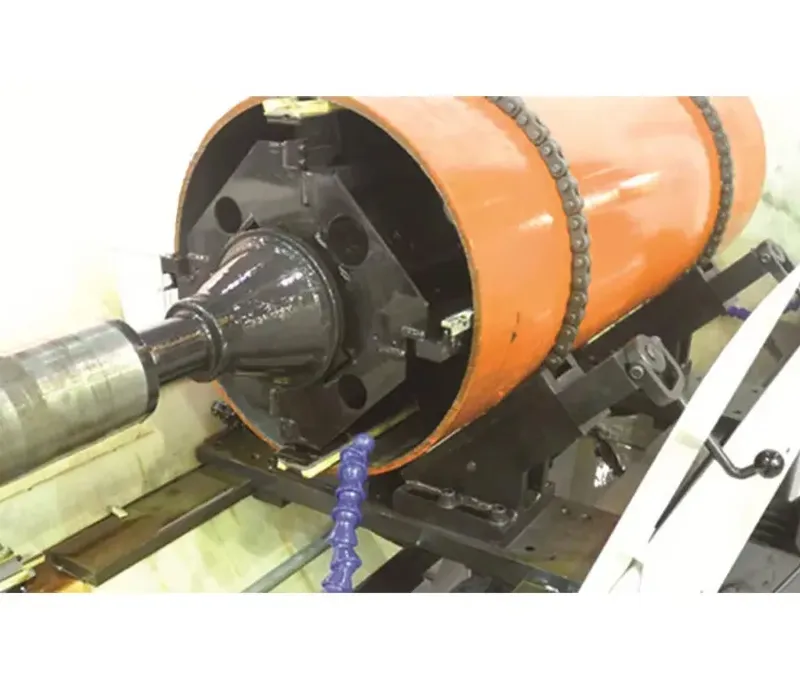
In the high-stakes world of tube mill production, a surface scratch is far more than a minor cosmetic blemish. It serves as a red flag, signaling deeper process instabilities that compromise structural integrity and significantly erode market value. Based on extensive shop-floor experience and industry-wide observation, even the most microscopic friction marks generated during continuous forming can lead to premature failure in critical downstream applications, such as automotive components or high-pressure piping. Manufacturers often find that the quest for a flawless finish is less about reactionary polishing and more about systematically eliminating the mechanical and chemical conditions that trigger defects. Achieving a scratch-free output demands a comprehensive understanding of the complex synergy between raw material behavior, lubrication dynamics, and mill mechanical precision.
Analyzing the Physics of Contact Friction
Surface scratches typically originate at the precise point of contact between the steel strip and the forming rolls. When friction forces exceed the shear strength of the tube’s outer layer, metal-on-metal dragging becomes inevitable. Deep technical expertise in mill operation confirms that this phenomenon is almost always triggered by non-uniform deformation distribution. If a single forming stand is forced to perform significantly more work than its adjacent neighbors, the resulting stress spikes inevitably create deep, longitudinal grooves. By employing advanced finite element analysis to balance strain distribution across the entire forming line, operators can effectively mitigate the concentrated contact pressure that causes surface marring. Reducing these stress concentrations is the fundamental first step in maintaining material surface integrity throughout the cold-forming process.
Strategic Material and Coating Optimization
The selection of tooling plays a paramount role in long-term scratch prevention. Traditional steel rolls, while popular for their initial cost-effectiveness, are notoriously prone to metallic pickup and accelerated wear. Upgrading to sophisticated materials, such as tungsten carbide inserts or high-chromium forged steel rolls, dramatically reduces the intensity of surface interactions. Beyond the base material, the application of specialized physical vapor deposition coatings can substantially lower the coefficient of friction between the roll surface and the moving strip. When these high-performance materials are paired with high-pressure, synthetic-based coolants, they create a robust protective barrier. This barrier successfully prevents micro-welding during the high-heat, high-pressure forming stages, effectively shielding the tube from damage before it even occurs.
Precision Alignment and Rigorous Mill Maintenance
Even the most expensive, technologically advanced tooling will inevitably fail if the mill's fundamental geometry is misaligned. A common, experience-based production failure is roll misalignment, which forces the tube to track or drift abnormally, resulting in distinct, diagonal scratch patterns. Maintaining a scratch-free line requires strict, laser-based roll alignment protocols and consistent check-ups on bearing clearances. Maintenance teams should treat the tube mill as a high-precision instrument rather than just a piece of heavy industrial machinery; even a minor deviation of 0.05 millimeters in a single stand can lead to a cumulative, destructive pattern that ruins entire production batches. Consistent, data-driven maintenance is the primary defense against the wear-and-tear that leads to surface quality degradation over time.
Advanced Monitoring and Integrated Automation
The modern manufacturing paradigm is shifting from reactive error correction to proactive defect prevention. Integrating inline surface monitoring sensors allows the mill to detect initial friction patterns or vibration anomalies long before they manifest as visible, permanent scratches. By utilizing automated tension control systems and continuous vibration analysis, the mill can adjust its operational parameters in real-time to compensate for subtle variations in material thickness or temper. These digital integrations provide the transparency required for high-quality certification, ensuring that every meter of pipe leaving the facility consistently meets the stringent requirements demanded by today’s competitive global markets. Proactive monitoring turns the forming process into a predictable, stable environment where quality is built-in rather than inspected after the fact.
Elevating Production Capabilities with CHUANG YUAN
Preventing scratches is a continuous engineering journey that successfully combines proactive machine maintenance, sophisticated process design, and the right strategic partnerships. CHUANG YUAN understands that a tube mill is only as efficient and reliable as its weakest component. Through comprehensive supply chain solutions and specialized expertise in high-performance machinery, CHUANG YUAN empowers manufacturers to consistently push the boundaries of quality and production speed. Whether a facility requires customized tooling solutions, advanced mechanical upgrades, or a complete overhaul of the forming section, CHUANG YUAN provides the industry-leading support necessary to maintain a scratch-free, high-output production environment. Collaborating with CHUANG YUAN ensures that tube mill operations reflect the highest global manufacturing standards and remain competitive in an increasingly demanding industrial landscape.