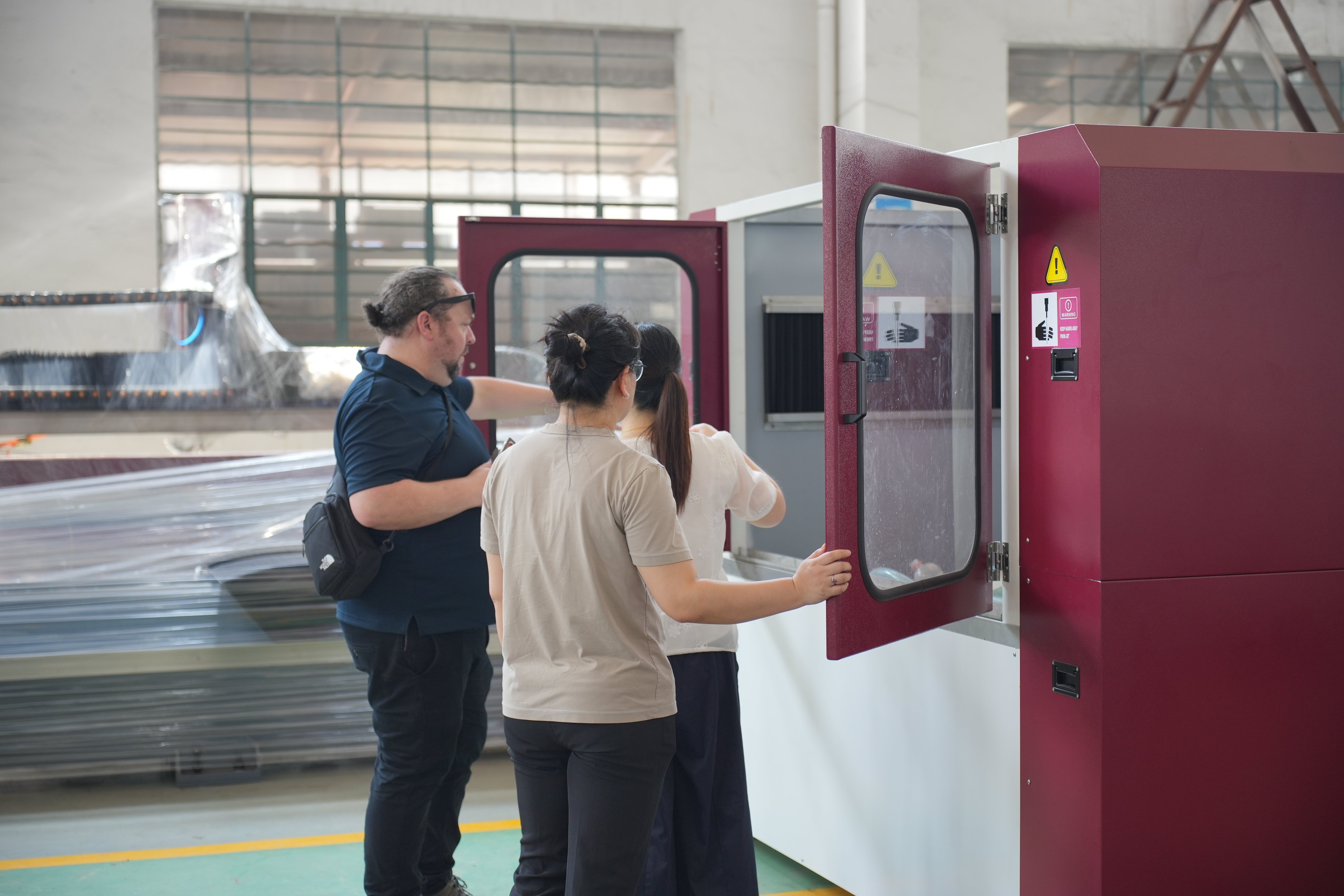
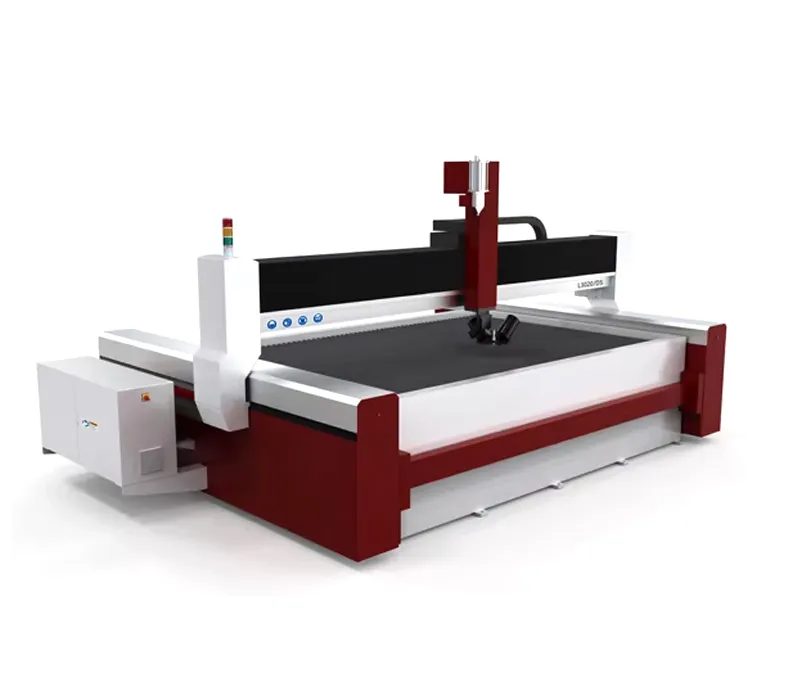
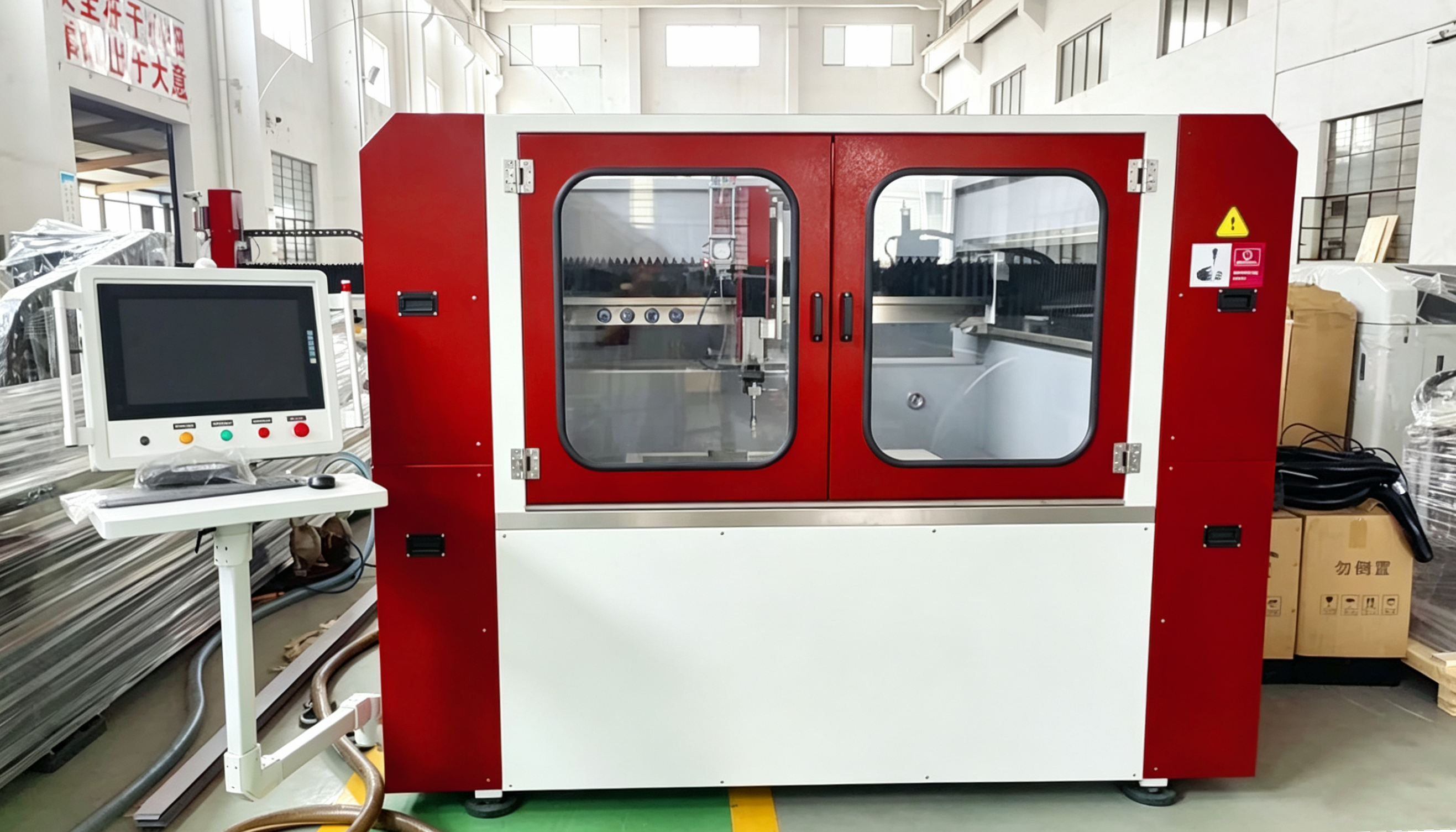
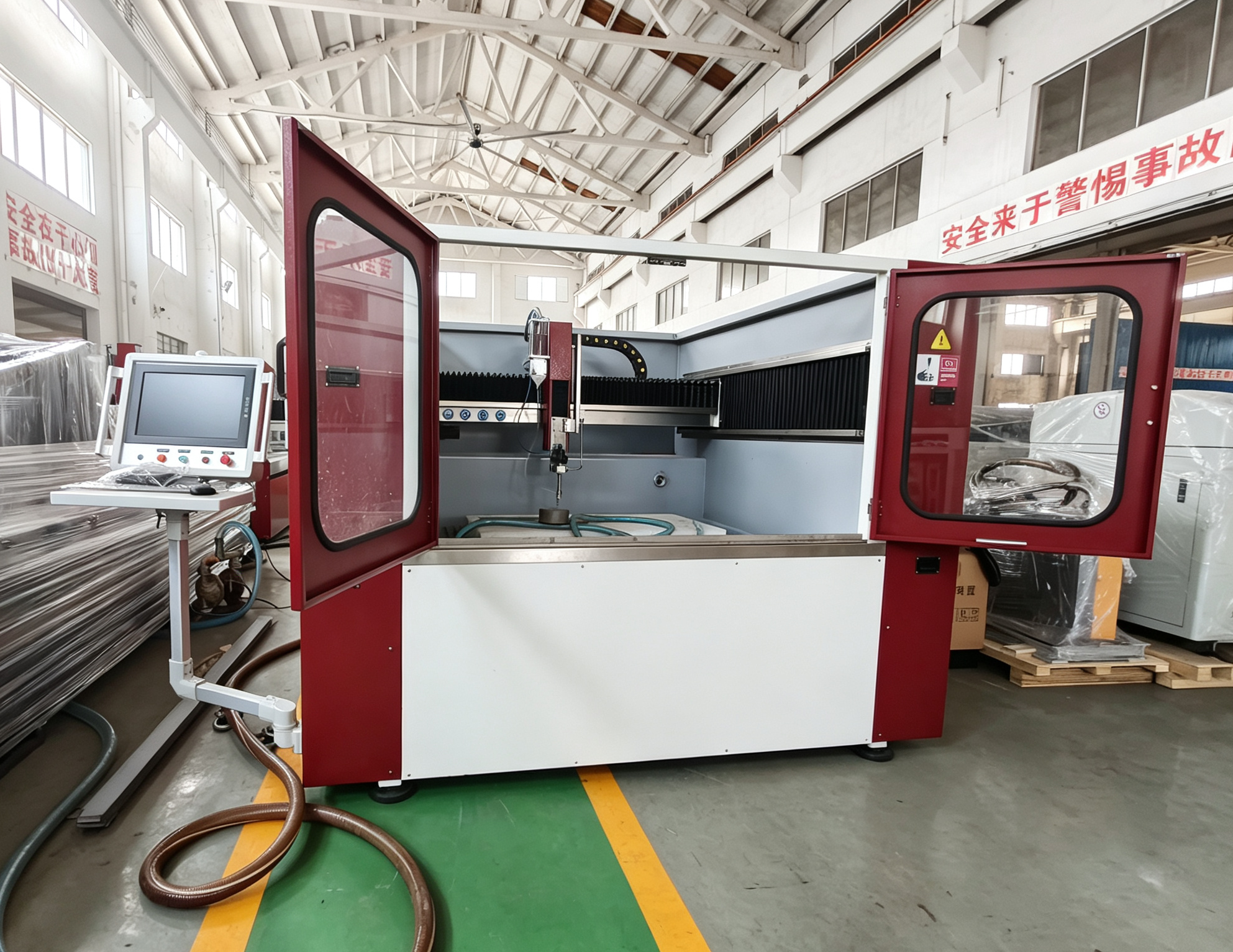
Flowcut waterjet systems represent the intersection of hydraulic engineering, motion control and software intelligence, and Taizhou Chuang Yuan Machine Tool Co., Ltd. has refined that intersection since 2003. Our factory in Taizhou City, Jiangsu Province, integrates research and development, production and sales of precision machine tools, and every flowcut waterjet passes through a staged build and verification flow before shipment. Production begins with the structural frame, where heavily ribbed steel weldments are stress-relieved and then machined on our own machining centers to ensure flatness within 0.05 mm per meter. The gantry and guide rails are installed in a temperature-controlled assembly bay, and laser interferometry verifies positioning accuracy on each axis before the intensifier pump, accumulator and high-pressure plumbing are mounted. Each flowcut waterjet then moves to a live water test stand, where it is run at 3,800 to 6,200 bar for a minimum of 8 hours; engineers record pump pressure stability, nozzle alignment, abrasive flow consistency and cutting speed on standardized test coupons. Only machines that hold a kerf tolerance of +/-0.1 mm and pass a 100 mm stainless single-pass cut are released for packing. The process controls draw on data from more than 20 export markets, where different climates, water quality and operator habits reveal real-world reliability requirements. For example, customers in humid coastal regions receive upgraded electrical enclosures and marine-grade fasteners, while inland installations in hard-water areas receive dual-stage water softening as standard. Our flowcut waterjet uses an intensifier design with a ceramic plunger and a hydraulic circuit that limits oil temperature rise, which extends seal life and keeps cutting speed steady through long unattended shifts. Abrasive delivery is regulated by a closed-loop hopper and metering valve so garnet consumption stays predictable; on typical 20 mm steel work, measured abrasive use is 320 to 380 grams per meter of cut. The control system stores up to 10,000 nested part programs, supports DXF import and automatic path sequencing, and allows operators to compensate for taper and jet lag without external CAM software. Global application data shows how versatile this platform is: in Germany, flowcut waterjet machines finish 30 mm aluminum plate for electric vehicle battery trays; in Vietnam, they cut 25 mm stainless flanges for chemical plants; in the United States, job shops use them for 6 mm AR500 wear plate in agricultural equipment; and in the UAE, they carve 40 mm granite for architectural facades. Across these markets, customers report average material utilization improvements of 12% to 18% after adopting automated nesting, and 24-hour unattended runs are common because the flowcut waterjet requires no heat input and creates no fire risk, an important factor in workshops handling plastics, foam and composite laminates. Serviceability was designed from the start: the crankshaft and plunger assemblies are accessible through side panels, high-pressure seals can be replaced in under 30 minutes, and consumable kits ship from regional warehouses to shorten downtime. Training materials are offered in English, Spanish, Russian and Arabic, and remote support lets our engineers view machine logs and guide local technicians step by step. For manufacturers comparing cutting technologies, the flowcut waterjet offers a rare combination of material independence, cold-cutting quality and dependable throughput, making it a practical investment for shops that cut multiple materials on one floor and cannot afford thermal distortion or secondary operations. By aligning hydraulic power, precise motion and operator-friendly software, we help customers turn raw plate, stone and composites into finished components with less waste, faster cycles and predictable operating costs.