EN
EN

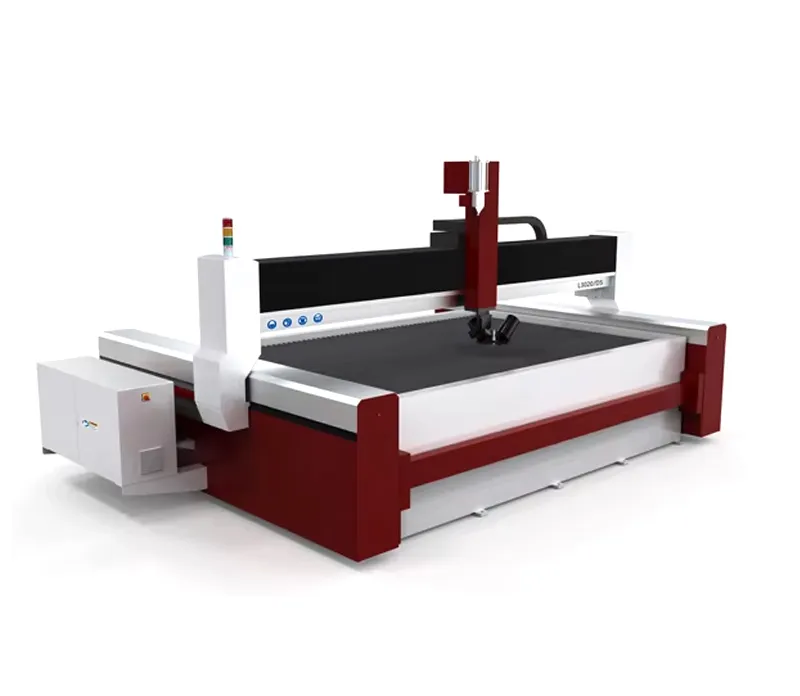
The Science of Cold Cutting: How a Waterjet Cutting Machine Eliminates Thermal Stress
Kinetic energy vs. thermal energy: Why waterjet cutting generates negligible heat
A waterjet cutting machine erodes material through high-velocity impact—not melting or burning. It relies entirely on kinetic energy: a narrow, supersonic stream of water—often mixed with fine abrasive particles—strikes the workpiece, dislodging microscopic fragments via mechanical shear. Because energy transfer is purely mechanical, the cutting zone remains fundamentally cold. Any minimal frictional heating is instantly absorbed and carried away by the water itself, which acts as an integrated coolant. Unlike laser or plasma systems that raise material temperatures into the thousands of degrees, waterjet cutting induces negligible thermal input. Local temperature rise during cutting rarely exceeds 50 °C above ambient—and dissipates before thermal expansion or phase change can occur. This absence of thermal energy preserves the material’s original chemical composition, grain structure, hardness, and corrosion resistance. The result is a cut defined by erosion, not heat-induced transformation.
Zero heat-affected zone (HAZ) — and why that prevents microstructural distortion
The heat-affected zone (HAZ) is the region adjacent to a cut where thermal exposure alters the material’s microstructure—causing grain growth, phase transformations, or precipitation of brittle secondary phases. Thermal processes like laser or plasma cutting inevitably create a HAZ, degrading strength, fatigue resistance, and dimensional stability. In contrast, the waterjet’s cold, mechanical action eliminates the HAZ entirely. With no thermal cycle imposed and continuous water-based cooling at the kerf, metals such as austenitic stainless steel and titanium retain their native microstructure from core to edge. There is no risk of quench cracking, decarburization, or intermetallic formation. This zero-HAZ condition is essential for precision components requiring tight tolerances and long-term structural integrity—eliminating the need for post-cut annealing, stress relief, or corrective machining.
Material Integrity Across Critical Alloys: Stainless Steel, Aluminum, and Titanium
Preserved grain structure and hardness in austenitic stainless steel (per ASTM E112)
Waterjet cutting uses cold, high-pressure abrasive slurry to erode metal without raising surface temperature above ~70 °C. As a result, the austenitic grain structure of grades like 304 and 316L remains identical to the parent plate. ASTM E112 grain-size measurements confirm this stability: waterjet-cut edges show less than ±0.5 ASTM number deviation from bulk material, while laser-cut edges often exhibit coarsened grains 2–3 ASTM numbers larger. Micro-hardness data further validates integrity—a 2023 production study recorded 196 HV on the cut face of 304 stainless, matching the base metal exactly. By contrast, plasma cutting can reduce hardness in the HAZ by 15–20%. With no recrystallization or carbide precipitation, waterjet-cut parts retain full corrosion resistance and mechanical performance—no post-cut annealing required.
No intermetallic formation or phase segregation in aluminum-titanium assemblies
In multi-metal assemblies—such as aluminum-titanium aerospace brackets or medical implants—thermal cutting risks diffusion-driven intermetallic formation at the interface. Temperatures above 350 °C promote brittle phases like TiAl₃, which can reduce joint ductility by over 40%. Waterjet cutting avoids this entirely: its cold process prevents interfacial heating, preserving chemical homogeneity across the bond line. No Kirkendall voids, intermetallic needles, or phase segregation occur. This eliminates the need for costly post-cut inspection, ultrasonic testing, or rework—reducing downstream processing costs by an average of 18% compared to laser-cut assemblies, according to industry benchmarks.
Cold Cutting Advantage: Waterjet Cutting Machine vs. Laser and Plasma Alternatives
HAZ comparison: 0 mm (waterjet) vs. 0.5–2.3 mm (laser/plasma) in 6-mm stainless steel
The defining metric of cold cutting is the heat-affected zone (HAZ). A waterjet cutting machine uses kinetic energy—not thermal input—to erode material, keeping localized temperature rise below 50 °C. Consequently, the HAZ measures 0 mm: the parent metal’s microstructure, hardness, and corrosion resistance remain unchanged right up to the cut edge. In contrast, thermal processes inherently generate heat. On 6-mm-thick austenitic stainless steel, a fiber laser typically produces a HAZ between 0.5 mm and 1.5 mm, while plasma cutting—using a hotter, less focused arc—can extend it to 2.3 mm or more. Within that zone, rapid heating and cooling cause grain coarsening, chromium carbide precipitation, and residual tensile stresses—degrading fatigue life, accelerating intergranular corrosion, and compromising dimensional stability. Because waterjet cutting imposes no thermal damage, engineers can design to final specifications without adding sacrificial allowances.
Downstream cost savings: Eliminating post-cut stress relief and rework
Removing the HAZ eliminates multiple costly downstream operations. Waterjet-cut edges are free of micro-cracks, oxide scale, and softened zones—so stress-relief heat treatment, edge grinding, and chemical pickling become unnecessary. For a batch of 6-mm stainless steel components, skipping post-cut annealing alone saves 2–4 hours of furnace time, along with associated energy and labor costs. More significantly, parts arrive at assembly without warping or edge degradation—ensuring first-time fit and reducing scrap. One heavy-plate fabrication study found that switching from plasma to waterjet for critical structural brackets eliminated secondary machining on 18% of parts and cut total labor per piece by nearly half. When factoring in avoided heat treatment, reduced consumable use (e.g., grinding media), and fewer rejected units, the total cost advantage often offsets waterjet’s higher hourly rate—making cold cutting the economically rational choice for high-integrity metal fabrication.
FAQs
What is the primary difference between waterjet cutting and thermal cutting processes?
Waterjet cutting relies on high-velocity water and abrasive particles to erode material using kinetic energy, rather than the intense heat generated by thermal processes like laser or plasma cutting.
Why is there no heat-affected zone (HAZ) in waterjet cutting?
Since waterjet cutting uses a cold mechanical process with integrated water cooling, it eliminates thermal exposure, thus preventing any microstructural distortion or degraded material properties near the cut zone.
How does waterjet cutting benefit stainless steel and titanium parts?
Waterjet cutting preserves the original grain structure, hardness, and corrosion resistance of metals like stainless steel and titanium by preventing thermal damage and carbide precipitation.
Can waterjet cutting prevent intermetallic formation in multi-metal assemblies?
Yes, waterjet cutting maintains chemical homogeneity and prevents brittle intermetallic phases because it does not heat the material, unlike thermal cutting processes.
Does waterjet cutting reduce downstream processing costs?
Absolutely! By eliminating the need for post-cut stress relief, edge grinding, or rework due to thermal damage, waterjet cutting significantly lowers processing costs for high-integrity components.
Table of Contents
- The Science of Cold Cutting: How a Waterjet Cutting Machine Eliminates Thermal Stress
- Material Integrity Across Critical Alloys: Stainless Steel, Aluminum, and Titanium
- Cold Cutting Advantage: Waterjet Cutting Machine vs. Laser and Plasma Alternatives
-
FAQs
- What is the primary difference between waterjet cutting and thermal cutting processes?
- Why is there no heat-affected zone (HAZ) in waterjet cutting?
- How does waterjet cutting benefit stainless steel and titanium parts?
- Can waterjet cutting prevent intermetallic formation in multi-metal assemblies?
- Does waterjet cutting reduce downstream processing costs?