EN

Achieving Sub-Micron Precision for ISO 13485-Compliant Medical Molds
How wire EDM equipment delivers ±0.0001" tolerances and repeatable cavity geometry
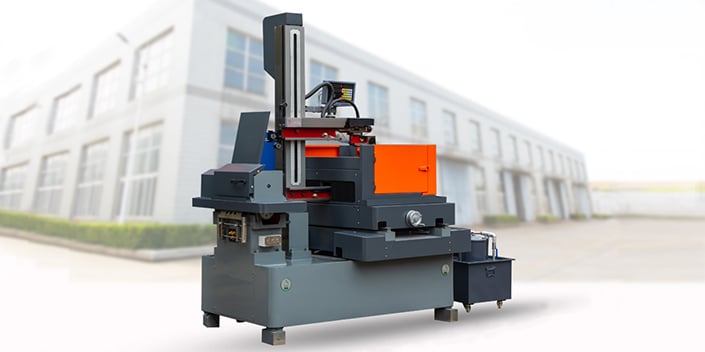
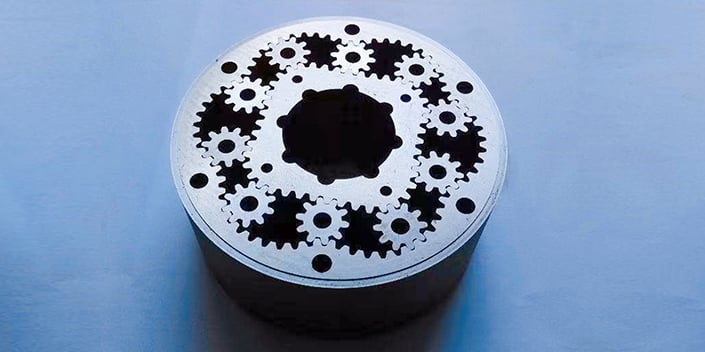
Achieving ISO 13485 certification requires documented precision and a risk-based approach to every manufacturing process. Wire EDM meets this demand by generating spark erosion between a continuously traveling wire and the workpiece—eliminating mechanical cutting forces that cause deflection. The thermal process vaporizes material in a controlled gap, enabling consistent cavity geometry across production runs. A leading contract manufacturer confirms that such non-contact machining routinely holds tolerances within ±0.0001 inches, a threshold vital for surgical instrument molds and implantable device tooling. Independent audits show that even minor geometric deviations in multi-cavity medical molds can shift fill patterns and raise scrap rates by over 15% (iSixSigma 2022). Wire EDM circumvents this risk through adaptive servo control that maintains a constant spark gap regardless of electrode wear. In practice, shops report less than 2 µm variation in cavity-to-cavity distance after 500 cycles. The process also cuts hardened steels exceeding 60 HRC without inducing stress, preserving flatness for tight-shutoff surfaces. Traditional grinding often struggles with intricate core pins and sharp internal corners—but wire EDM achieves sub-micron corner radii through programmed skim cuts. This repeatable accuracy supports full lot traceability mandated by ISO 13485.
Nano interpolation, adaptive AI pulse control, and thermal drift mitigation in real-time
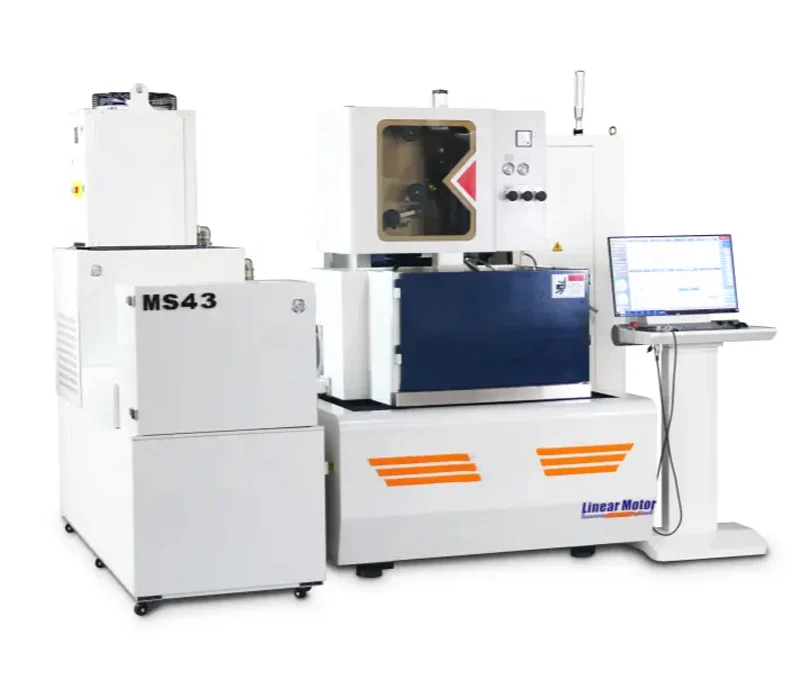
Modern wire EDM systems use nano interpolation algorithms that break down complex toolpaths into motion increments as fine as 0.1 µm. Instead of approximating arcs with linear segments, the control computes geometries directly from NURBS curves—translating CAD models into smooth, precise electrode movement. This eliminates faceting errors on contoured mold surfaces like those found in orthopedic implant housings. Concurrently, adaptive AI pulse control monitors gap conditions at megahertz rates and adjusts discharge energy cycle-by-cycle. The system distinguishes between normal sparking, short circuits, and contamination, optimizing material removal while preventing wire breaks. Such intelligence proves critical when machining delicate features thinner than 0.1 mm, where a single aberrant pulse could destroy the workpiece. Thermal drift poses an equally serious threat: temperature fluctuations in the work zone, dielectric fluid, and machine structure can shift axis positions by several microns over an hour. Leading systems counter this through multi-point sensors and feedback loops that maintain fluid temperature within ±0.5°C. Active cooling of ball screws and glass scale encoders further isolates measurement from ambient shop changes. Together, these technologies enable medical mold makers to execute 50-hour unattended runs with positional drift below 0.001 mm—a capability that validates first-article inspection reports with exceptional confidence.
Machining Hard, Biocompatible Alloys Without Compromising Integrity
Wire EDM equipment cutting hardened titanium-6Al-4V and 17-4PH stainless steel without microcracking or heat-affected zones
Conventional machining of titanium-6Al-4V and 17-4PH stainless steel introduces intense mechanical stress and heat. Titanium’s poor thermal conductivity (k ≈ 7 W/m·K) traps heat at the cutting edge, often causing built-up edge, work hardening, and subsurface microcracks. 17-4PH, despite its hardness and corrosion resistance, experiences grain distortion and heat-affected zones during milling or grinding—alterations that compromise biocompatibility, especially the passive oxide layer on titanium essential for preventing adverse tissue reactions.
Wire EDM eliminates direct tool contact. The spark-erosion process uses a thin brass or coated wire to thermally remove material in a dielectric-flooded gap. Each pulse melts a microscopic volume while the dielectric fluid immediately quenches the surface, restricting the heat-affected zone to just a few microns. Because no cutting forces press against the workpiece, the risk of microcracking or surface residual stress is virtually zero—preserving the full hardness of hardened 17-4PH and the fatigue strength of titanium-6Al-4V.
Leading medical mold manufacturers rely on this method for cavity inserts requiring pristine surface integrity. Post-EDM, surfaces show no recast layer thicker than 1 µm after fine-trim passes, preserving the alloys’ chemical inertness and sterilizability. The result is a mold that delivers consistent part quality without compromising structural or biological safety.
Enabling Zero-Contact, Low-Stress Fabrication of Ultra-Thin-Walled Molds
Distortion-free machining of catheter hub and implant housing molds (≤0.1 mm wall thickness)
The zero-contact nature of wire EDM eliminates all mechanical cutting forces—making it the preferred method for fabricating catheter hub and implant housing molds with wall thicknesses down to 0.1 mm. Traditional milling imparts tool pressure that can easily distort fragile, thin-walled geometries, but spark erosion applies no physical force, ensuring cavities retain their designed contour without bending or micro-fractures. This becomes critical for high-aspect-ratio mold features used in vascular access ports or orthopedic implant components, where even micron-level warpage can compromise mating surfaces and lead to leakage or assembly failure. Advanced generators use short-duration, high-frequency pulses to further minimize the heat-affected zone, preserving the homogeneity of specialized stainless steel or titanium alloys. By precisely controlling spark energy and employing submersible flushing, the process maintains a consistent spark gap even in deep, narrow cavities—preventing wire vibration that could mar side walls. The result is repeatable, sub-micron accuracy that meets ISO 13485 quality demands, enabling medical device manufacturers to produce consistent, leak-proof parts while avoiding the scrap typically associated with conventional machining stress. This capability supports the growing demand for micro-molds in drug delivery devices where feature sizes approach 50 microns.
Driving Cost Efficiency and Reliability in High-Mix, Low-Volume Medical Mold Shops
Auto-threading, unattended operation, and 37% labor reduction vs. conventional milling — validated by 2023 AMT benchmarks
For high-mix, low-volume medical mold production, wire EDM slashes per-part cost without sacrificing quality. Automated wire threading and adaptive spark control enable lights-out operation across multiple jobs, significantly reducing direct labor demands. According to 2023 AMT benchmarks, shops leveraging advanced wire EDM recorded a 37% reduction in labor hours compared to conventional milling workflows—a shift that collapses setup and changeover bottlenecks.
By eliminating tooling-wear concerns and geometric drift, wire EDM ensures first-pass cavity accuracy—even on complex, small-batch designs. This repeatability reduces scrap and rework, further compressing total manufacturing cost. For mold shops juggling dozens of unique geometries, the ability to switch from a catheter hub mold to an implant housing component in minutes—without recalibration—translates directly into higher machine utilization and steady on-time deliveries. The result is a lean, resilient process that makes low-volume production economically viable while meeting ISO 13485 traceability requirements.
FAQ
What is the significance of ±0.0001-inch tolerances in medical mold manufacturing?
Such tolerances ensure exceptional precision and consistency, which are critical for medical molds where even minor geometric deviations can impact fill patterns and product quality.
How does wire EDM maintain sub-micron accuracy during long production runs?
Wire EDM uses adaptive servo control, AI pulse monitoring, and thermal drift mitigation to ensure consistent accuracy throughout extended operation, even for unattended runs.
What alloys can be processed using wire EDM without compromising their integrity?
Wire EDM effectively processes materials like titanium-6Al-4V and 17-4PH stainless steel, avoiding heat-affected zones, microcracks, or surface stress that could compromise their biocompatibility.
How does wire EDM enable distortion-free machining of ultra-thin-walled molds?
By eliminating mechanical cutting forces, wire EDM ensures delicate geometries retain their exact dimensions without warping, even for molds with wall thicknesses of ≤0.1 mm.
What are the cost-saving benefits of wire EDM for medical mold shops?
Wire EDM reduces labor by 37% through automation and unattended operation, minimizes scrap and rework through high precision, and enables quick changeovers for diverse production needs.
Table of Contents
- Achieving Sub-Micron Precision for ISO 13485-Compliant Medical Molds
- Machining Hard, Biocompatible Alloys Without Compromising Integrity
- Enabling Zero-Contact, Low-Stress Fabrication of Ultra-Thin-Walled Molds
- Driving Cost Efficiency and Reliability in High-Mix, Low-Volume Medical Mold Shops
-
FAQ
- What is the significance of ±0.0001-inch tolerances in medical mold manufacturing?
- How does wire EDM maintain sub-micron accuracy during long production runs?
- What alloys can be processed using wire EDM without compromising their integrity?
- How does wire EDM enable distortion-free machining of ultra-thin-walled molds?
- What are the cost-saving benefits of wire EDM for medical mold shops?