EN

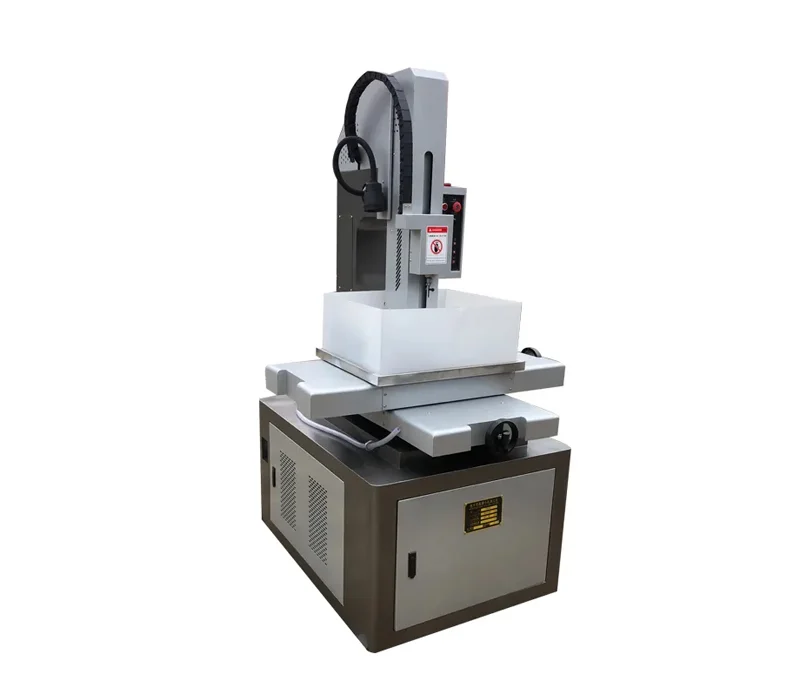
Why Thermal Management Limits EDM Drilling Machine Uptime
An EDM drilling machine removes material by converting electrical energy into intense, localized heat—spark temperatures reach 8,000–12,000°C, instantly melting and vaporizing the workpiece. This thermal process is efficient only when the dielectric fluid rapidly carries heat and debris away from the spark gap. If cooling falters, fluid temperature rises, its insulating capability degrades, and the risk of unstable DC arcing increases. The result is accelerated electrode wear, dimensional drift, and surface imperfections. To compensate, the machine must frequently pause for the dielectric to cool or for operator recalibration. Even a temperature deviation of ±1°C in the coolant shifts spark-gap dynamics enough to reduce machining precision and trigger unscheduled stops. Over a shift, these thermal-induced interruptions commonly slash actual cutting time by 15–30%, eroding productivity and driving up per-part cost. Without precise, continuous thermal control, the EDM drilling machine cannot sustain long, unattended runs—making heat management the single biggest bottleneck to uptime.
High-Performance Coolant Circulation Upgrades for EDM Drilling Machines
Effective thermal management is the cornerstone of extending the continuous working time of an EDM drilling machine. Two critical upgrades—precision closed-loop chillers and dual-pump circulation systems—work together to eliminate heat-related downtime and maintain stable dielectric performance.
Precision closed-loop chillers with ±0.3°C stability for consistent dielectric performance
Fluctuations in dielectric temperature cause thermal expansion of the electrode and workpiece, directly harming positional accuracy. A closed-loop chiller actively removes process heat and recirculates the fluid at a setpoint held within ±0.3°C of the target. This tight control prevents spark-gap resistance shifts that accelerate electrode wear. High-efficiency compressors and advanced PID regulation deliver rapid responses to sudden heat loads, keeping the fluid’s insulating properties constant over many hours. Stable viscosity also ensures uniform flushing pressure, improving debris evacuation from the cutting zone. The result is far fewer interruptions from over-temperature alarms or dielectric breakdown events. Shops that have adopted such chillers routinely report electrode life gains of 12–15% and an extra two to three hours of unattended operation per shift, particularly when drilling deep, small-diameter holes in exotic alloys.
Dual-pump circulation systems enabling simultaneous high-velocity flushing and stable immersion cooling
A single-pump design forces a compromise between aggressive flushing and gentle immersion cooling. A dual-pump system removes this bottleneck. One pump delivers high-pressure dielectric jets straight into the hole to blast out chips and eroded particles, while the second pump sustains a low-turbulence flow bath around the workpiece. Separate circuits let operators tune flushing pressure for deep or narrow bores without disturbing the cooling loop. This simultaneous action prevents hot spots that could warp the part or cause localized dielectric vaporization, and the redundant layout allows limited operation if one pump fails. Field experience shows that dual-pump setups add up to 20% more uninterrupted drilling time in challenging materials such as Inconel and titanium. Together, these circulation upgrades create a robust thermal base that directly boosts daily throughput on any EDM drilling machine.
Smart Adaptive Cooling Control in Modern EDM Drilling Machines
Real-time thermal monitoring using embedded PT100 sensors and IR feedback loops
Continuous thermal mapping now underpins stable operation for an EDM drilling machine. Embedded PT100 resistance temperature detectors (RTDs) monitor the dielectric fluid, workpiece, and electrode holder with millisecond response. These wired sensors are paired with infrared (IR) feedback loops that scan the spark gap region for uneven heat distribution. When a hot spot emerges, the control unit instantly adjusts coolant flow or pauses the cycle. This dual-sensor fusion stops thermal drift before it distorts the electrode or expands the workpiece beyond tolerance. The result is consistent spark gap resistance and far fewer unscheduled stops. Operators report that real-time thermal oversight eliminates the traditional guesswork, keeping dielectric temperature within a ±0.3°C band and extending continuous drilling windows by up to 40% compared to manual coolant adjustments.
AI-driven coolant flow modulation based on electrode wear rate and spark gap resistance
Adaptive algorithms now interpret subtle changes in spark gap resistance and electrode wear rate to modulate coolant delivery. As the electrode erodes, its effective length shortens, altering the electrical signature. A machine-learning model trained on historical cycle data correlates these shifts with optimal flushing velocity. The system then varies pump speed and nozzle orientation in real time, increasing flow when gap resistance spikes—indicating debris buildup—and softening it during steady-state burn. This predictive modulation prevents micro-arcing and thermal pitting on the electrode surface. Over thousands of holes, the AI refines its strategy, reducing average electrode consumption by 15–20% and cutting unplanned downtime from cooling-related faults nearly in half. Such autonomous thermal management allows a modern EDM drilling machine to run unmonitored through night shifts, directly boosting throughput without sacrificing precision.
FAQ
Why is thermal management important for EDM drilling machines?
Thermal management is crucial because it maintains stable operation, prevents dimensional inaccuracies, and reduces electrode wear and unscheduled downtimes due to overheating issues.
What are the benefits of using precision closed-loop chillers?
Precision closed-loop chillers provide tight temperature control (±0.3°C), improving positional accuracy, electrode lifespan, and uninterrupted drilling time.
How do dual-pump circulation systems improve EDM performance?
Dual-pump systems allow for simultaneous high-pressure flushing and low-turbulence cooling, preventing hot spots, enhancing cooling efficiency, and ensuring uninterrupted operation.
What role does AI play in modern EDM machines?
AI helps adapt coolant flow by interpreting real-time electrode wear and spark gap resistance, optimizing thermal management, reducing electrode consumption, and minimizing downtime.
What kind of sensors are used for real-time thermal monitoring?
Embedded PT100 resistance temperature sensors and IR feedback loops are used to monitor and manage temperature differentials in EDM machines effectively.