EN
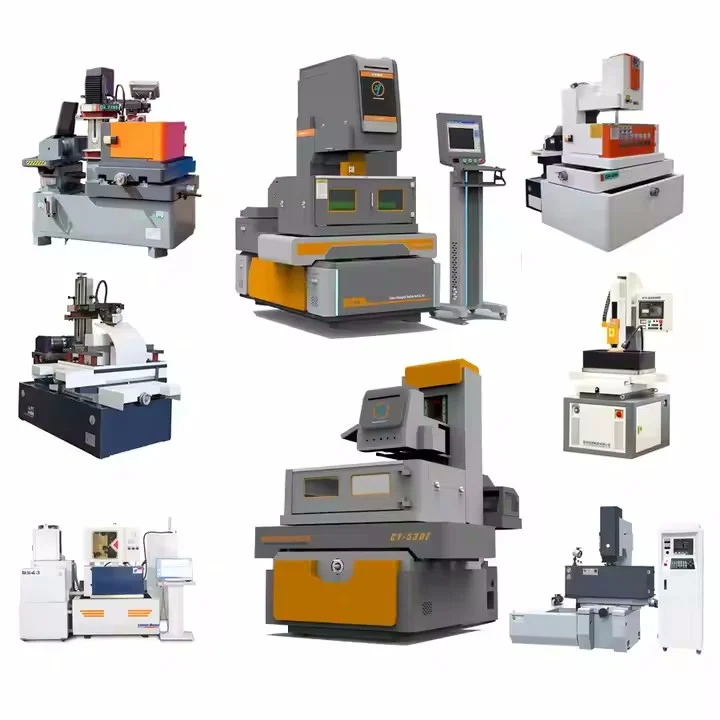
Non-Contact, Force-Free Material Removal for Sub-Micron Accuracy
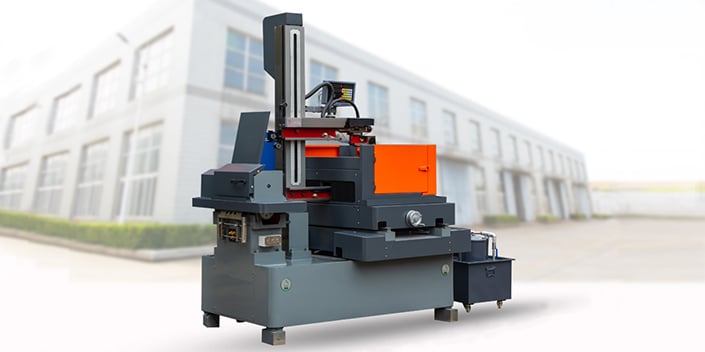
An EDM spark erosion machine relies on a non-contact, force-free material removal process that enables sub-micron precision. By generating rapid, controlled electrical discharges between an electrode and the workpiece, Electrical Discharge Machining (EDM) erodes conductive materials without applying any mechanical load. Each spark generates a plasma channel with temperatures exceeding 8,000°C, instantly vaporizing a microscopic volume of material. This vaporization dynamic is the cornerstone of crater control at sub-micron scales.
Vaporization Dynamics and Crater Control at Sub-Micron Discharge Zones
During spark erosion, a single discharge lasts only a few microseconds. The energy per pulse—typically adjustable from 0.1 to 500 microjoules—determines the resulting crater diameter and depth. Lower discharge energies produce craters as small as 1 µm in diameter and 0.1 µm in depth, enabling true sub-micron feature resolution. Advanced generators shape the current waveform to confine the plasma channel and minimize the heat-affected zone. As a result, manufacturers can precisely target a crater array and achieve a uniform surface texture without inducing grain growth or micro-cracking. Closed-loop monitoring of gap voltage and discharge timing further refines this control, suppressing erratic pulses that could degrade accuracy. In practice, this means that an EDM spark erosion machine can reliably produce features with position tolerances within ±0.5 µm across dozens of identical parts. The deterministic relationship between discharge parameters and crater size allows process engineers to model the erosion footprint and program tool paths that maintain sub-micron geometry even on complex 3D contours—making EDM a viable route for microfabrication of fuel injector nozzles, inkjet printer heads, and other components demanding nanoscale consistency.
Elimination of Mechanical Stress Preserves Dimensional Integrity in Brittle or Thin-Walled Geometries
Unlike conventional cutting processes that impose significant lateral forces, EDM spark erosion is inherently force-free. A milling tool, for instance, exerts up to 200 N of cutting pressure, which can elastically deform thin-walled parts or crack brittle ceramics. Because the electrode never contacts the workpiece, no stress is transferred. This eliminates burr formation, work hardening, and micro-fractures that compromise the dimensional integrity of delicate components such as thin-walled heat exchanger plates or sensor diaphragms. For materials like monocrystalline silicon, sintered carbides, or heat-treated tool steels, the absence of mechanical stress is critical. Thin-walled tubes with wall thicknesses below 0.3 mm, aerospace fuel swirlers, and medical implant features retain their as-designed geometry without the need for stress-relief annealing or secondary finishing. Moreover, discharge energy is confined to a sub-surface depth of less than 2 µm, so the bulk material remains unaffected. This low-stress attribute, combined with precise discharge control, enables the production of high-aspect-ratio micro-holes in brittle conductive materials—a task impossible by drilling or milling. Such process characteristics translate directly into higher production yields for industries where component failure is not an option.
EDM Spark Erosion Machine Achieves ±0.5 µm Repeatability and Superior Surface Integrity
Consistent thermal stability and closed-loop monitoring enabling production-grade repeatability
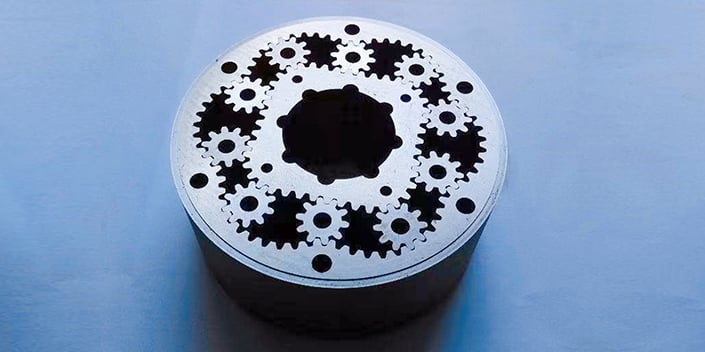
Achieving ±0.5 µm repeatability hinges on precise thermal management and real-time adaptive control. Dielectric fluid temperature is regulated to within ±1 °C to prevent thermal drift of both the workpiece and machine structure. Closed-loop monitoring measures discharge gap conditions thousands of times per second, dynamically adjusting spark energy and pulse duration to maintain consistent material removal. This tight feedback loop compensates for electrode wear and minor variations in material properties, ensuring every part in a production batch meets the same tight tolerance. Such stability supports unattended operation across extended runs, with dimensional scatter well below 1 µm—making it viable for high-value components like fuel injector nozzles and micro-gears.
Ra 0.1–0.4 µm surface finish on finished parts—eliminating post-polishing for medical and optical components
Modern spark erosion delivers surface finishes directly to Ra 0.1–0.4 µm by using low discharge energy and controlled pulse shapes. In medical implants or optical cavity molds, this quality eliminates the need for manual polishing, which risks introducing geometric errors and contamination. The spark crater size can be reduced to sub-micron diameters through fine-finish parameters, and the resulting surface is composed of overlapping craters that average into a predictable texture. For example, die-sinking electrodes with carefully selected materials and orbital motion produce mirror-like surfaces on hardened stainless steel. This capability shortens lead times while maintaining exact form accuracy—meeting stringent requirements for Class II medical devices or high-precision sensor housings without post-processing.
Precision Machining of Ultra-Hard Conductive Alloys with Zero Tool Wear
Reliable erosion of tungsten carbide, Inconel, and titanium without microcracking or heat-affected zone degradation
The defining advantage of EDM spark erosion is its ability to shape materials that defeat conventional cutting tools. Material hardness—which is a critical barrier for mechanical milling or turning—is irrelevant to the electro-thermal erosion process. This makes EDM the primary method for reliably machining ultra-hard conductive alloys such as tungsten carbide, Inconel, and titanium. Each discharge creates a localized plasma channel with temperatures reaching 8,000 °C to 12,000 °C, instantly vaporizing material on a microscopic scale.
The critical factor in preserving structural integrity is heat-affected zone (HAZ) management. Uncontrolled energy delivery can create a recast layer, induce tensile stress, and form microcracks—failure points in high-integrity applications. Modern generators counteract this by digitally tailoring each discharge pulse’s duration and current. Short-duration, high-frequency pulses minimize thermal penetration, keeping the HAZ in many finishing operations to less than 1 µm. Deionized water serves a dual purpose: quenching microscopic debris and cooling the work zone after each spark, preventing cumulative heat buildup. This controlled micro-erosion cycle is so precise that it allows for machining tungsten carbide injection molds to a mirror finish—without the edge chipping typical of grinding. The result is a process where the tool never contacts the part, and the bulk material’s hardness, temper, and dimensional stability remain completely uncompromised.
Fine-Feature Wire EDM Integration: Kerf, Taper, and Aspect Ratio Control
Sub-15 µm kerf width and <0.005°/mm taper accuracy for deep, high-aspect-ratio features (>50:1)
Advanced wire EDM integration now reliably delivers sub-15 µm kerf widths and taper accuracy below 0.005°/mm, making it practical to machine deep features with aspect ratios exceeding 50:1. This performance is achieved through precision wire guides, adaptive servo control of the spark gap, and high-pressure dielectric flushing that prevents wire deflection and recast buildup. These capabilities allow manufacturers to produce micro-slots, thin fins, and complex internal contours without subsequent polishing—preserving ultra-fine dimensional integrity in medical, aerospace, and tooling components where even a few microns of taper or kerf variation would compromise function. By combining sub-micron wire positioning with real-time kerf monitoring, the process holds tolerances that were once unattainable.
FAQ
What is EDM spark erosion?
EDM spark erosion is a non-contact machining process that removes material using controlled electrical discharges between an electrode and a conductive workpiece. This method allows for precise, force-free material removal.
How does EDM achieve sub-micron accuracy?
EDM achieves sub-micron accuracy by controlling discharge energy and timing, shaping the current waveform, and monitoring gap conditions in real time. This enables precise crater control at microscopic scales.
What materials are compatible with EDM?
EDM can machine any conductive material, including ultra-hard alloys like tungsten carbide, Inconel, and titanium. It is also effective on brittle or thin-walled geometries.
Can EDM achieve mirror-like surface finishes?
Yes, with fine-finish parameters, EDM can achieve surface finishes in the range of Ra 0.1–0.4 µm, often eliminating the need for post-processing such as manual polishing.
Why is EDM considered force-free?
In EDM, the electrode does not come into physical contact with the workpiece, meaning no mechanical forces are transferred. This eliminates deformation, micro-cracking, and residual stresses.
What industries benefit most from EDM?
Industries like aerospace, medical, automotive, and tooling benefit greatly from EDM, especially for components requiring sub-micron accuracy and superior surface integrity.
Table of Contents
- Non-Contact, Force-Free Material Removal for Sub-Micron Accuracy
- EDM Spark Erosion Machine Achieves ±0.5 µm Repeatability and Superior Surface Integrity
- Precision Machining of Ultra-Hard Conductive Alloys with Zero Tool Wear
- Fine-Feature Wire EDM Integration: Kerf, Taper, and Aspect Ratio Control
- FAQ