EN

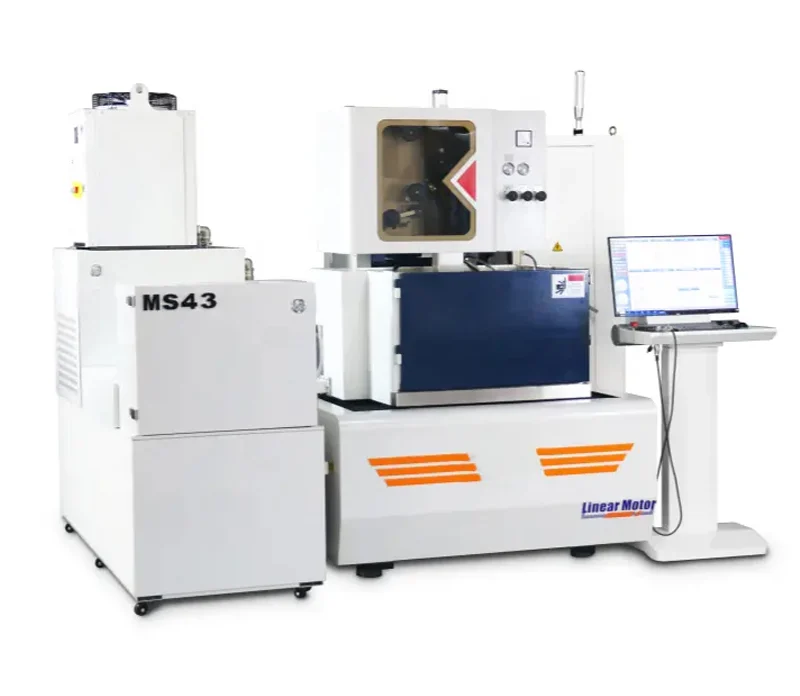
Foundational Wire EDM Equipment Setup and Alignment
Stable wire EDM equipment operation begins with meticulous workpiece positioning and wire system readiness. Minor misalignments can escalate into accuracy drift and increased wire breakage—making these foundational skills critical for any operator.
Precise Workpiece Positioning: Edge, Center, and Corner Pickup Methods
Edge pickup is the most common technique, wherein the wire makes electrical contact with a reference surface to establish zero coordinates. For critical parts, operators perform multiple touch-offs and average the results to eliminate electrical noise. Center pickup locates the exact middle of a round feature or slot by contacting opposing sides; the machine calculates the geometric center. Corner pickup—essential for re-cutting operations—uses two perpendicular edges to define a precise origin. All methods rely on a clean, conductive workpiece surface free of oils or oxide layers. Before pickup, confirm the workpiece is securely grounded and that starter holes are deburred and round, as rough entry points can deflect the wire and compromise the touch-off signal. Fixturing must be rigid: even 0.0001-inch deflection can alter pickup accuracy by 0.0005 inch. Use low-power touch settings to prevent wire indentation on soft materials. A 2023 industry survey noted that shops implementing formal positioning checklists reduced setup errors by 40%, underscoring the value of disciplined procedures.
Wire Alignment, Tension Calibration, and Threading Best Practices
Wire alignment ensures the electrode travels vertically through both guides, preventing taper errors. Operators should perform a vertical alignment routine daily using a dial indicator or a built-in camera system. Tension calibration directly impacts cutting stability: brass wire diameters of 0.010 inch typically require 800–1200 grams of tension; for harder zinc-coated wires, a 10–15% higher value may be necessary. Under-tension causes wire vibration and poor surface finish, while over-tension increases breakage risk. Automatic wire threading (AWT) systems can cut setup time by up to 50% compared to manual threading—but only if the wire path is clean and diamond guides are free of debris. After threading, anneal the wire in the lower head to eliminate curl. Finally, verify smooth wire feed through all rollers and brakes to avoid intermittent sparking. Regular inspection of upper and lower guides for wear is essential—even a 0.0002-inch worn guide can offset wire position and degrade part accuracy. Consistent attention to these details enables long, unattended burn cycles with minimal intervention.
Real-Time Process Control for Stable Wire EDM Equipment Performance
Achieving stability with wire EDM equipment hinges on mastering process control. The machining gap is inherently stochastic; research shows that active micro-control using real-time feedback can improve both feedrate and surface roughness by more than 5% (Int J Adv Manuf Technol, 2015). This demands vigilant monitoring and immediate reaction to the dynamic conditions of the spark gap.
Dynamic Parameter Adjustment to Maintain Burn Stability
A stable electrical discharge must be actively maintained to prevent wire breakage and geometric errors. Modern wire EDM equipment achieves this through intelligent adaptive servo control systems that continuously sample the gap voltage. When an operator monitors these systems, they’re overseeing a control loop that fine-tunes off-time and servo voltage hundreds of times per second. This immediate response counteracts instability caused by progressively deteriorating flushing conditions in a deepening cut. The primary goal is to manage the ratio of normal discharges to harmful arcs and short circuits. By optimizing feed rate based on this ratio, the system sustains uniform spark intensity across the entire profile—ensuring consistent accuracy and surface finish on straight cuts and tight radii without manual intervention.
Mitigating Thermal Expansion and Mechanical Drift During Cutting
The intense localized heat from controlled sparks creates a thermal gradient that can cause the workpiece to expand, leading directly to size and position errors. An operator must therefore act as a process thermal manager. The primary strategy is ensuring robust dielectric fluid delivery, as the fluid not only removes debris but also serves as a critical coolant, stabilizing bulk material temperature. This involves confirming optimal flush pressure and nozzle positioning—especially in tall workpieces where unsupported wire is prone to vibration-induced drift. Pre-machining strategies are also crucial: up to five light roughing cuts or “skim passes” are often programmed to incrementally relieve internal stresses, preventing warping upon final release. This planned stress management remains the most effective defense against post-cut measurement drift.
Troubleshooting Common Wire EDM Equipment Instability Issues
Diagnosing Speed Loss, Accuracy Drift, and Unstable Machining Behavior
Speed loss in wire EDM equipment frequently points to mechanical wear or fluid contamination. Worn wire guides or clogged filter cartridges reduce flushing pressure, slowing the cut. Accuracy drift—where part dimensions deviate—typically results from ceramic guide debris buildup, causing wire vibration and misalignment. Unstable machining, such as intermittent arcing, often stems from worn power feed contacts or inconsistent dielectric fluid conductivity due to exhausted deionization resin.
A quick diagnosis follows three checks. First, measure dielectric conductivity; a rise above 10 µS/cm signals resin replacement is needed. Second, inspect rollers and guides for residue—weekly cleaning prevents wire slip and interruptions ranging from 20 minutes to several hours. Third, verify tension and contact condition. Early identification prevents scrap and machine damage, sustaining stable wire EDM equipment operation.
Preventative Maintenance Skills to Ensure Long-Term Wire EDM Equipment Reliability
Inspection and Care of Critical Components: Flush Systems, Guides, Rollers, and Wire Transport
A structured inspection routine preserves wire EDM equipment accuracy and avoids costly unplanned downtime. Flush systems demand daily checks: clogged nozzles or weak dielectric flow can skew thermal stability and leave recast layers on the workpiece. Replace filters at pressure differential thresholds—not on a fixed calendar—a 2024 uptime analysis found that condition-based filter swaps reduced wire break frequency by over 20%. Wire guides and rollers require scrutiny at least weekly; minute wear grooves can alter wire alignment, feeding irregularity into the spark gap. Gently run a clean, dry swab along the guide surfaces to catch burrs or contamination. The wire transport mechanism—including pinch rollers and tensioners—must stay free of metallic sludge and arcing residue. Monthly cleaning with non-abrasive solvents and verifying tension calibration against the manufacturer’s baseline ensures consistent wire delivery; tension drift of just a few grams can degrade corner geometry in micro-machined profiles. Consistent log-keeping of these checks transforms routine care into predictive maintenance, significantly extending machine service life.
FAQ Section
What is edge pickup in wire EDM setup?
Edge pickup involves establishing zero coordinates by making electrical contact between the wire and a reference surface. Operators often perform multiple touch-offs to minimize electrical noise.
Why is wire tension calibration important?
Proper tension calibration stabilizes cutting. Incorrect tension can cause wire vibrations, leading to poor surface finishes, or excessive tension, increasing wire breakage.
How can thermal expansion affect wire EDM accuracy?
Localized heat during the EDM process can cause the workpiece to expand, creating size and position errors. Robust dielectric fluid flow and pre-machining strategies help mitigate this.
What are common causes of speed loss in wire EDM?
Speed loss is often caused by mechanical wear, such as worn wire guides, or fluid contamination, like clogged filter cartridges that reduce flushing pressure.
How can preventative maintenance improve EDM equipment longevity?
Regular inspections of flush systems, guides, and wire transport, along with condition-based filter replacements and accurate tension calibrations, can significantly extend machine life and reduce downtime.