EN
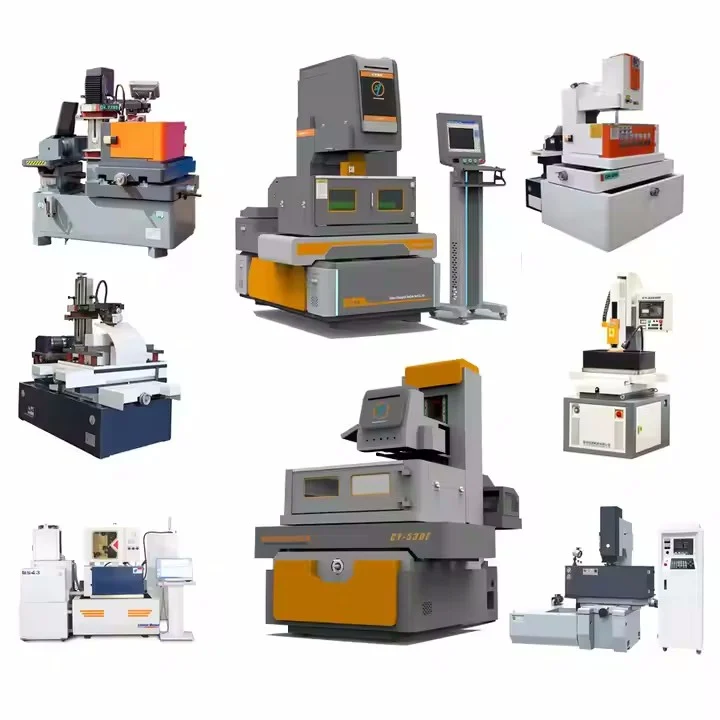
Understanding Electrode Wear Mechanisms in EDM Spark Erosion Machine Operation
Electrode wear determines both precision and process cost in every EDM spark erosion machine. The section below details the thermal, electrical, and mechanical forces driving material loss, followed by the critical role of polarity in asymmetric erosion.
Thermal, Electrical, and Mechanical Drivers of Electrode Degradation
Electrical Discharge Machining (EDM) removes material through a series of controlled, high-energy sparks. At the point of discharge, plasma channels reach temperatures of 8 000–12 000 °C—instantly melting and vaporizing microscopic volumes from both workpiece and electrode. The electrode endures rapid heating and quenching cycles that generate steep thermal gradients, inducing surface micro-cracks and fatigue. Research attributes the majority of electrode wear to these thermal effects, though electrical parameters intensify the process: higher peak current enlarges the melt pool on the electrode, accelerating mass loss. Mechanical factors contribute secondarily—flushing pressure and debris-laden dielectric fluid erode thermally weakened surfaces, while servo-system oscillations can cause intermittent contact that mechanically abrades the electrode tip. Together, thermal load primes the material for loss, and mechanical action dislodges it.
Anode vs. Cathode Polarity Effects on Erosion Asymmetry and Material Removal
Polarity fundamentally governs how erosion distributes between electrode and workpiece. When the workpiece is the anode (positive), electrons strike its surface—delivering higher thermal energy and boosting material removal rate—but the cathode-electrode absorbs residual energy and back-bombardment from positive ions, increasing its wear. Reversing polarity makes the electrode the anode, shifting erosion predominantly to the tool—a configuration rarely used in sinking EDM but standard in wire EDM for controlled wire consumption. Pulse duration further refines this asymmetry: very short pulses (a few microseconds) favor cathode wear; longer pulses (tens to hundreds of microseconds) concentrate erosion on the anode. For finish-cut operations, electrode-negative polarity reduces wear and helps preserve geometric fidelity. Balancing polarity with pulse width and current allows operators to direct erosion strategically—extending electrode life while meeting accuracy requirements.
Optimizing Electrode Material Selection for Longevity and Performance
Graphite, Copper-Impregnated Graphite, Brass, and Cu-W: Thermal Conductivity, Melting Point, and Wear Resistance Trade-offs
Selecting the optimal electrode is foundational to balancing productivity and tool life. The following table highlights critical property contrasts that directly influence performance on an EDM spark erosion machine:
| Material | Thermal Conductivity (W/m·K) | Melting Point (°C) | Wear Resistance | Primary Suitability |
|---|---|---|---|---|
| Graphite | 100–200 | ~3,650 (sublimes) | Excellent | Complex shapes, high-speed roughing |
| Copper‑impregnated graphite | 80–150 | ~3,650 / 1,085 (composite) | Very good | Mixed-mode jobs requiring thermal stability |
| Brass | ~120 | ~930 | Moderate | Simple through-holes, low-cost roughing |
| Copper‑tungsten (Cu‑W) | 160–230 | 3,422 (tungsten phase) | Exceptional | Micro-features, fine details, long-run precision |
Graphite’s ability to withstand extreme temperatures without melting gives it a decisive edge in long-cycle operations, while copper-tungsten composites deliver the lowest wear rates for intricate geometries. Electrode density also plays a pivotal role: higher densities minimize dimensional loss per unit volume removed, preserving geometric fidelity over time. Choosing based solely on conductivity ignores the interplay of thermal fatigue resistance and spark-erosion stability.
Matching Electrode Material to Application: Roughing vs. Finishing, Geometry Complexity, and MRR Requirements
Application demands dictate the ideal material. Graphite supports high material removal rates (MRR) during aggressive roughing and minimizes wear—making it the first choice for deep cavities and complex 3D forms. Copper, with its uniform electrical discharge, excels in finishing passes where surface integrity and fine detail are non-negotiable. Brass, though less durable, offers a cost-effective option for simple drilling or low-precision roughing where electrode consumption is acceptable.
Optimizing electrode life means aligning material properties to the machining strategy. For parts requiring both high MRR and tight tolerances, copper-tungsten often pays for itself by reducing tool changes and scrap. When geometry complexity increases, graphite’s ability to hold sharp corners without rapid edge erosion outperforms copper. Ultimately, the electrode must match the thermal and mechanical stress of the specific job—balancing initial cost against overall cost-per-part through extended service life.
Precision EDM Parameter Tuning to Minimize Wear on EDM Spark Erosion Machine
Precise control of an EDM spark erosion machine’s electrical parameters directly dictates electrode degradation rates. Even small adjustments to pulse timing, current delivery, and gap dynamics can shift the process from stable sparking to destructive arcing—drastically reducing electrode life. The goal is to harmonize material removal speed with tool preservation by tailoring settings to the specific electrode-workpiece pair and machining phase.
Pulse Duration, Peak Current, and Polarity Optimization for Balanced Speed and Electrode Preservation
Shortening the pulse-on time limits thermal energy per spark, significantly reducing electrode wear—especially in finishing operations where tool geometry must remain sharp. Conversely, longer pulses and higher peak currents accelerate material removal but concentrate heat at the electrode tip, causing faster erosion. Polarity selection is equally critical: running the electrode as the cathode generally produces lower wear in hydrocarbon-based dielectrics because electron bombardment heats the workpiece more than the tool. For roughing with graphite electrodes on steel, positive polarity (electrode as anode) may increase metal removal rates, but wear can rise by up to 40% compared to negative polarity. A multi-stage approach—switching polarity and progressively shortening pulse width as final dimensions are approached—preserves the electrode while meeting productivity demands.
Servo Control Stability and Gap Voltage Management to Prevent Arcing and Excessive Wear
A stable spark gap maintained by responsive servo control is the first line of defense against uncontrolled wear. If the electrode feeds too quickly and gap voltage collapses, short circuits and sustained arcs can melt the electrode surface—causing local pitting and premature failure. Modern EDM machines use adaptive gap voltage monitoring to detect imminent arcing and momentarily retract the electrode, extinguishing the arc before damage occurs. Maintaining an optimal gap voltage—typically 20–30 V for fine finishing—ensures clean, discrete discharges that transfer energy primarily to the workpiece. Equally important is servo gain: too high a gain induces oscillation and excessive retractions that slow the process; too low a gain risks contact and wear spikes. Fine-tuning these controls keeps the electrode operating in its most efficient zone, consistently extending service life.
Dielectric Fluid Management and Flushing Efficiency for Sustained Electrode Life
In an EDM spark erosion machine, dielectric fluid is far more than a coolant—it acts as an insulator, debris carrier, and spark stabilizer. Poorly managed dielectric quickly degrades electrode life by enabling short circuits, arcing, and uneven erosion. Key fluid properties—dielectric strength, viscosity, and thermal conductivity—govern heat transfer and particle evacuation. Hydrocarbon oils with high flash points deliver stable discharge for sinker EDM; deionized water’s low viscosity enables superior flushing in wire EDM. For micro-EDM, synthetic dielectrics with precisely controlled conductivity help reduce tool wear. Filtration systems must continuously remove metal fines and carbon buildup, as sludge accumulation raises conductivity and triggers destructive arcs. Flushing pressure and flow path must also be optimized: high-pressure injection through the electrode or workpiece efficiently sweeps away erosion debris, preventing recast layers and thermal damage on the electrode tip. Routine monitoring of fluid temperature, oxidation, and contamination levels is equally critical—overheated or degraded fluid loses insulating capacity, accelerating wear. A disciplined maintenance schedule—daily checks, timely fluid replacement, and filter changes—stabilizes the spark gap, extends electrode service life, and maintains consistent machining accuracy.
Advanced Wear Compensation and Multi-Electrode Strategies
Undersizing Protocols, Real-Time Servo-Based Offset Adjustment, and Pitch Diameter Control
Undersizing protocols pre-compensate for electrode wear by manufacturing the electrode smaller than the target feature, relying on an automated offset value in the EDM machine’s servo control. Real-time servo-based offset adjustment dynamically refines this parameter by monitoring gap voltage and axial displacement, applying micro-increments to maintain sparking distance as the electrode erodes. For internal threads and fine-bore features, pitch diameter control combines these methods with periodic probing: the machine measures the machined diameter mid-process and adjusts offset and flushing parameters to hold the specified tolerance band—often within ±2 µm over batch runs.
FAQ
What is electrode wear, and why is it significant in EDM spark erosion machines?
Electrode wear refers to the material loss experienced by the electrode during the EDM process. It is significant because it impacts machining precision and process costs, requiring proper optimization to reduce wear and extend electrode life.
What are the main factors contributing to electrode wear?
The primary factors are thermal effects (high temperatures during discharge), electrical parameters (e.g., peak current), mechanical actions (flushing pressure and debris impact), and polarity settings during the EDM process.
How does polarity affect electrode and workpiece erosion?
Polarity determines how the erosion is distributed. When the workpiece is an anode, its material removal rate increases, but the electrode faces more wear. When the electrode is the anode, erosion shifts predominantly to the tool.
What are the benefits of using graphite as an electrode material?
Graphite has excellent heat resistance, low wear rates, and is suitable for high MRR applications and intricate geometries. It performs particularly well in deep cavities and complex 3D forms.
How can EDM parameters like pulse duration and current be optimized?
Shortening the pulse duration reduces thermal energy per spark and minimizes wear. Longer pulses and higher peak currents enhance material removal rates but may accelerate electrode wear. Polarity and the specific application are important considerations.
Why is dielectric fluid management critical in EDM?
Dielectric fluid acts as a coolant, debris carrier, and spark stabilizer. Poor management can reduce performance, leading to short circuits, arcing, and increased wear. Regular monitoring, filtering, and replacing of dielectric fluid is crucial for maintaining efficiency.
Table of Contents
- Understanding Electrode Wear Mechanisms in EDM Spark Erosion Machine Operation
- Optimizing Electrode Material Selection for Longevity and Performance
- Precision EDM Parameter Tuning to Minimize Wear on EDM Spark Erosion Machine
- Dielectric Fluid Management and Flushing Efficiency for Sustained Electrode Life
- Advanced Wear Compensation and Multi-Electrode Strategies
-
FAQ
- What is electrode wear, and why is it significant in EDM spark erosion machines?
- What are the main factors contributing to electrode wear?
- How does polarity affect electrode and workpiece erosion?
- What are the benefits of using graphite as an electrode material?
- How can EDM parameters like pulse duration and current be optimized?
- Why is dielectric fluid management critical in EDM?