Turning Milling Lathe: Cut Cycle Time by 58% [Case Studies]

All Categories

Get a Free Quote

Our representative will contact you soon.
Email
Mobile/WhatsApp
WeChat
Linkedin
Name
Company Name
Message
0/1000
Attachment
Please upload at least an attachment
Up to 3 files,more 30mb,suppor jpg、jpeg、png、pdf、doc、docx、xls、xlsx、csv、txt
Turning Milling Lathe Solutions Engineered For Precision, Uptime And Global Production Demands

Turning Milling Lathe Solutions Engineered For Precision, Uptime And Global Production Demands

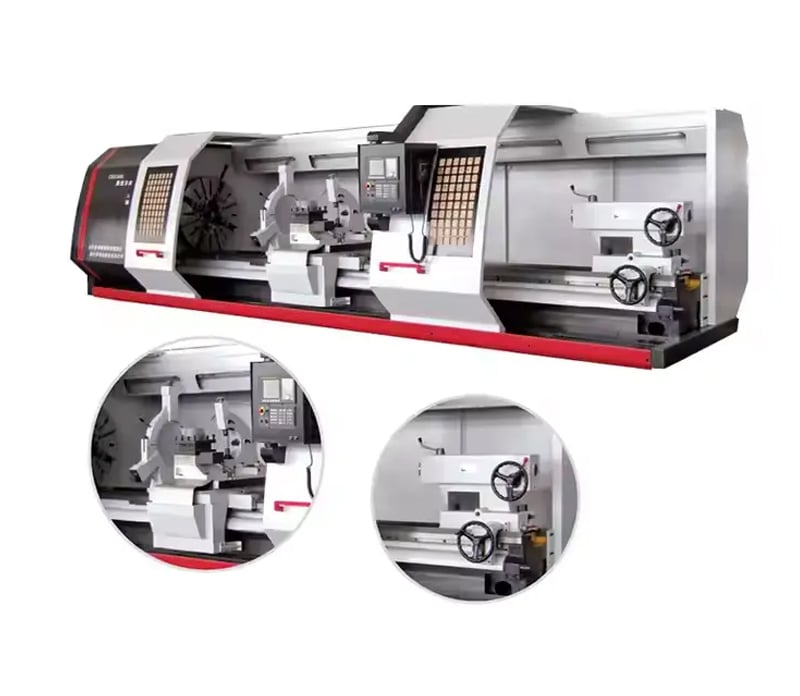
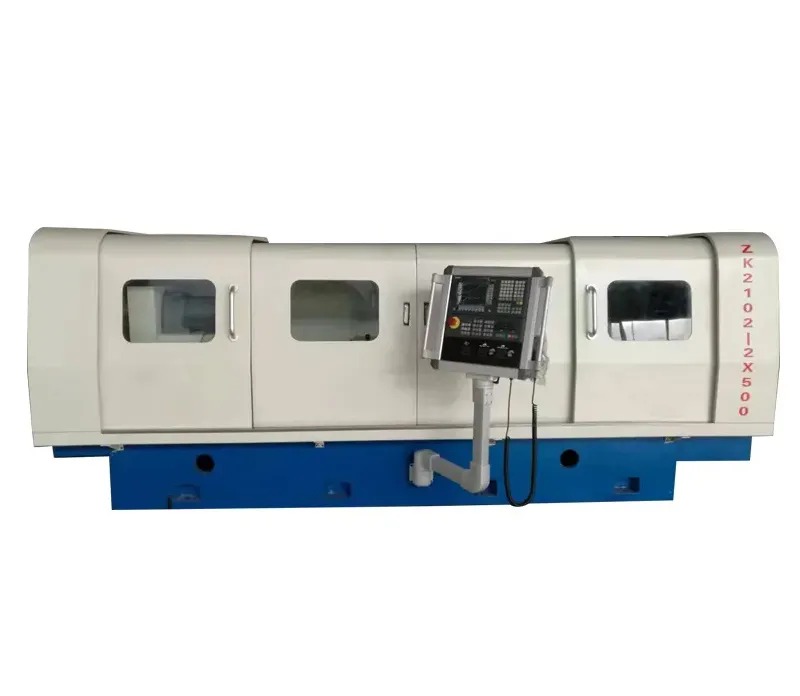
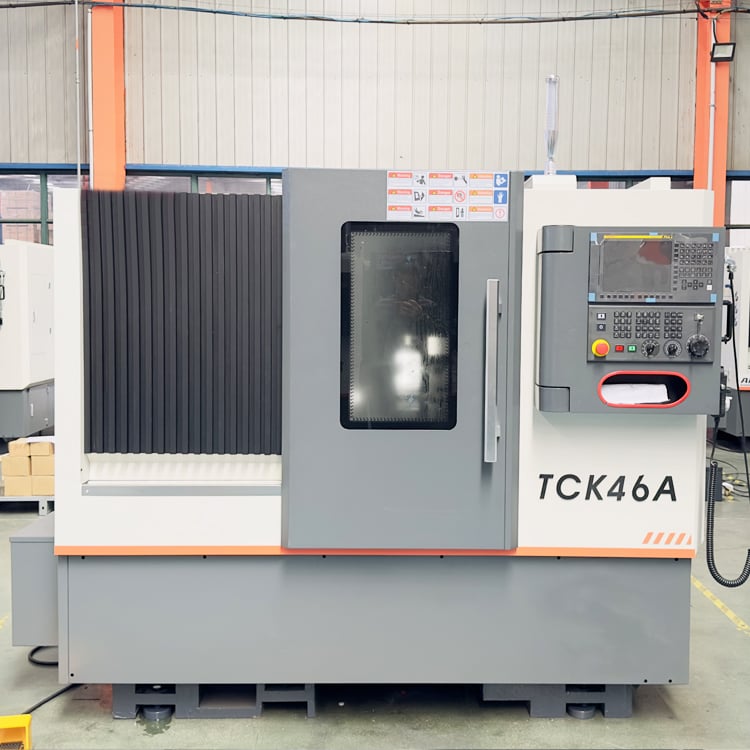
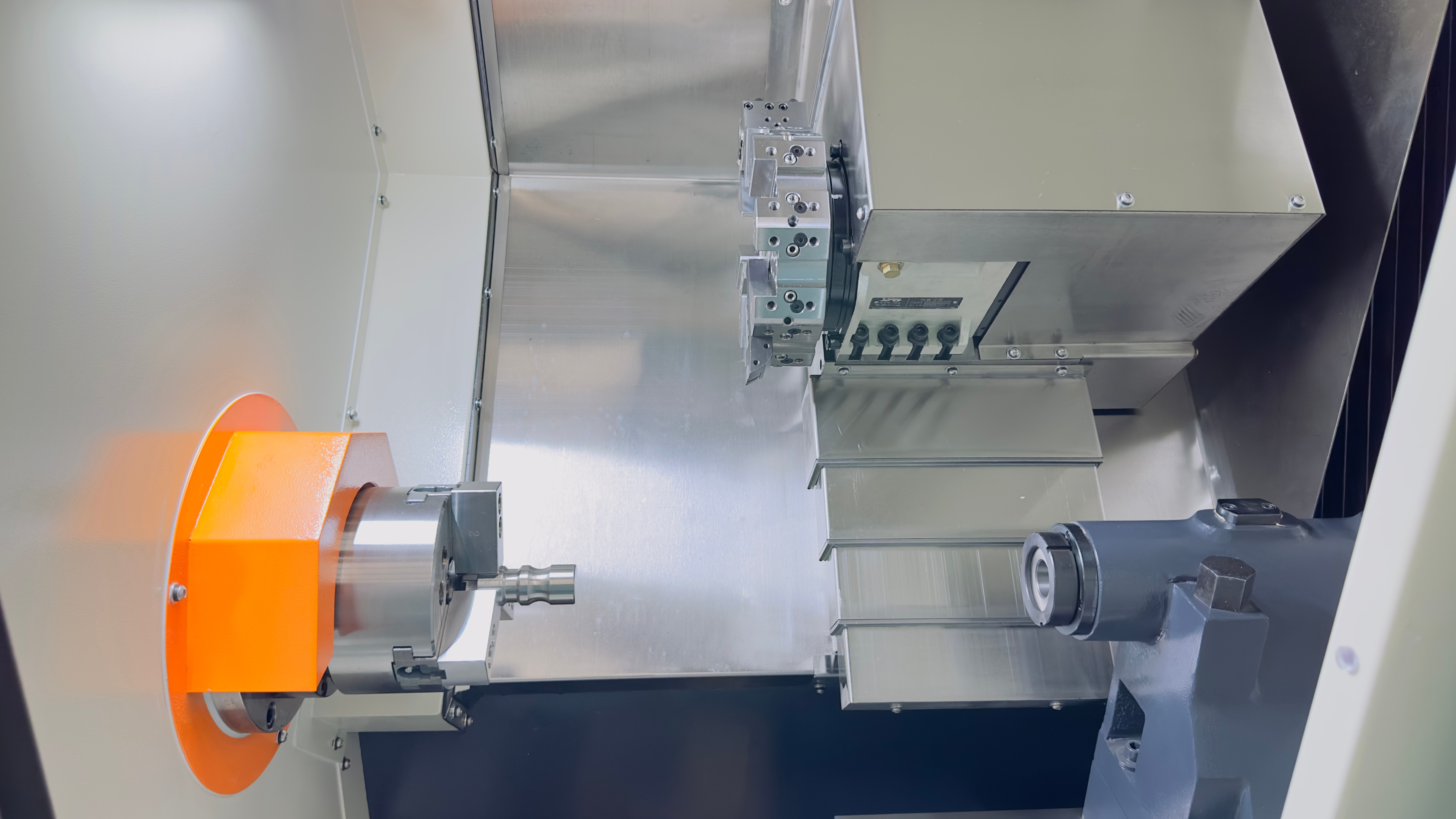
Taizhou Chuang Yuan Machine Tool Co., Ltd. has manufactured Turning Milling Lathe platforms since 2003, combining turning and milling in one rigid machine base so job shops, automotive suppliers and energy OEMs cut setups and floor-to-floor time. Typical turning milling lathe configurations we build include live tooling turrets with 12 stations, C-axis interpolation of 0.001 degrees, spindle speeds from 3,000 to 6,000 rpm and positioning accuracy of plus or minus 0.005 mm, so aerospace brackets, hydraulic manifolds and medical housings are finished in a single clamping. In practice, a European subcontractor running valve bodies on a turning milling lathe instead of two separate machines reduced setup operations from five to two, compressed cycle time from 22 minutes to 9 minutes and improved concentricity to within 0.01 mm. Our turning milling lathe range covers chuck sizes 6 to 15 inches.
Get A Quote

Case Study

Turning Milling Lathe Cuts Automotive Steering Knuckle Cycle Time By 58 Percent

A Tier-2 automotive supplier in Northern Mexico produced steering knuckles on two standalone lathes and a vertical mill, which created three setups, accumulated tolerance stack-up and a scrap rate of 4.2 percent. We supplied a turning milling lathe with a 12-station live tooling turret, 10-inch chuck, 4,500 rpm spindle and C-axis indexing of 0.001 degrees. Programming transferred the cross-drilled holes and face slots to the same clamping, eliminating two setups entirely. Cycle time dropped from 19 minutes to 8 minutes per part, scrap fell to 0.9 percent and the customer now runs 1,800 knuckles per week on a single turning milling lathe, freeing one operator for another cell. Geometric accuracy held within 0.01 mm over a 24-hour test run.

Turning Milling Lathe Raises Hydraulic Manifold Output For A German Job Shop

A family-run job shop near Stuttgart machines hydraulic manifolds from 42CrMo4 billet, with cross ports and sealing faces requiring tight perpendicularity. Their existing process needed four operations and averaged 34 minutes per manifold. Our turning milling lathe with Y-axis travel of plus or minus 50 mm, 15-inch chuck and 3,000 rpm spindle combined turning, face milling and cross drilling in one cycle. The shop reported a cycle time of 13 minutes, a 62 percent reduction, and perpendicularity of 0.008 mm, better than the 0.02 mm drawing requirement. Output climbed from 220 to 560 manifolds per week, and the turning milling lathe paid for itself in 14 months based on labor and fixture savings alone.

Turning Milling Lathe Secures Aerospace Bracket Tolerances For A Canadian Manufacturer

A Canadian aerospace subcontractor needed 7075 aluminum brackets with bores and slotted flanges held to plus or minus 0.01 mm. Their milling center required three fixtures and produced 38 parts per shift. We delivered a turning milling lathe with 6,000 rpm spindle, live tooling, thermal compensation and a bar feeder. One clamping now completes boring, facing and slotting, and first-article inspection confirmed 0.007 mm true position. Output rose to 72 parts per shift, inspection time fell by 40 percent and the customer passed a NADCAP audit with the turning milling lathe listed as a controlled process asset. Products Title: Turning Milling Lathe Models Built To Match Your Chuck Size, Axis Configuration And Production Volume

Related products

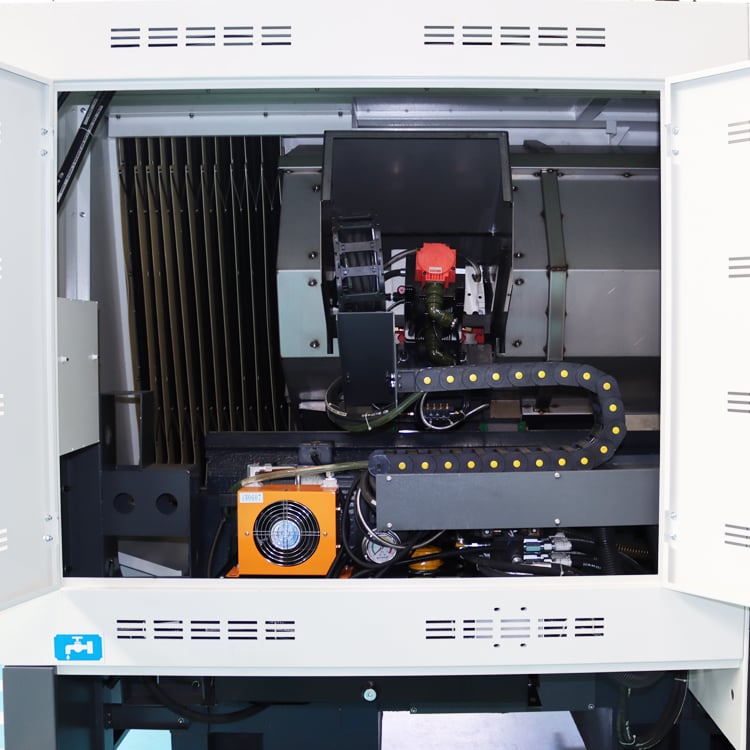
A turning milling lathe is not simply a lathe with a drill bolted to the turret. It is a complete process strategy that decides how many times a part is handled, how much floor space a shop consumes and how quickly a quotation becomes a delivered order. Taizhou Chuang Yuan Machine Tool Co., Ltd. has refined that strategy since 2003, integrating research, development, production and sales under one roof in Taizhou City, Jiangsu Province. Our turning milling lathe program begins with application engineering. We review part drawings, annual volumes, material grades and tolerance callouts, then recommend a configuration: 6 to 15 inch chuck, bar capacity to 80 mm, live tooling stations from 8 to 12, C-axis resolution of 0.001 degrees, spindle speeds of 3,000 to 6,000 rpm and optional Y-axis travel of plus or minus 50 mm. On the production floor, each turning milling lathe base is cast, aged and machined in-house, then assembled on temperature-controlled lines. Spindle assemblies are balanced to G1.0, ballscrews are pre-tensioned and laser interferometry verifies positioning accuracy of plus or minus 0.005 mm and repeatability of 0.003 mm before shipment.

Control selection reflects the reality of global manufacturing. Customers in North America often specify Fanuc with G-code, European buyers lean toward Siemens with ShopTurn, and Southeast Asian distributors frequently choose Syntec for cost efficiency and local service depth. Every turning milling lathe can be delivered with conversational programming, tool life management, chip conveyor, bar feeder, automatic door, and documentation in English, Spanish, Russian or Arabic. This flexibility matters because a turning milling lathe that fits the operator is more productive than a technically superior machine that nobody can program. We validate that fit with a 48-point Factory Acceptance Test covering geometric accuracy, spindle runout, turret repeatability, coolant flow and a 24-hour continuous cutting cycle. Customers receive the test report, laser calibration chart and vibration analysis before the turning milling lathe leaves our facility.

The results appear in the field. A Mexican automotive supplier cut steering knuckle cycle time by 58 percent and reduced scrap from 4.2 to 0.9 percent after moving to a turning milling lathe. A German job shop lifted hydraulic manifold output from 220 to 560 pieces per week and achieved 0.008 mm perpendicularity. A Canadian aerospace subcontractor increased bracket output from 38 to 72 parts per shift while holding true position at 0.007 mm. Behind those numbers sit shared capabilities: fewer setups, single-clamping accuracy, reduced work-in-progress and lower labor per part. In markets where skilled operators are scarce, a turning milling lathe lets one machinist run what previously required three machines and two helpers.

We support more than 20 export markets with a 24-month warranty, remote diagnostics, English-language service manuals and a spare parts kit dispatched within 72 hours. Distributors receive marketing files, training videos and configuration guides so they can sell the turning milling lathe confidently. For end users, our engineers assist with fixture design, cutting parameters and first-part prove-out by video or on site. Whether you machine valve bodies in batches of 50 or brackets in batches of 5,000, the turning milling lathe platform scales with you, protecting accuracy, throughput and margin as your order book grows.

Frequently Asked Questions

What Is A Turning Milling Lathe And How Does It Differ From A Standard Lathe?

A turning milling lathe combines a turning spindle with driven tools and often a C-axis or Y-axis, so it can turn, drill, mill, tap and slot in one clamping. A standard lathe can only turn and bore with static tools, which forces secondary operations onto a milling machine and adds setups, fixtures and tolerance stack-up. With a turning milling lathe, cross holes, flats and slots are produced without re-chucking, holding concentricity within 0.01 mm and cutting cycle time by 40 to 60 percent in typical job shop work.
Our turning milling lathe handles carbon steel, stainless steel, aluminum, brass, cast iron and engineering plastics. Common users include automotive Tier-1 and Tier-2 suppliers, hydraulic and pneumatic component makers, aerospace subcontractors, medical device machinists and general job shops. If your part needs a turned diameter plus cross drilling, milling or slotting, a turning milling lathe removes a second machine from the routing.
Every turning milling lathe completes a 48-point Factory Acceptance Test. We measure positioning accuracy to plus or minus 0.005 mm, repeatability to 0.003 mm, spindle runout below 0.005 mm and turret repeatability below 0.01 mm using laser interferometry and dial indicators, then run a 24-hour continuous cutting cycle. The test report, calibration chart and vibration analysis travel with the machine, and buyers may attend the test in person or by live video.
Each turning milling lathe carries a 24-month warranty covering mechanical and control components. We provide remote diagnostics, English service manuals, operator training videos and a recommended spare parts kit shipped within 72 hours. Our 30-engineer team supports more than 20 export markets and can assist with fixture design, cutting parameters and first-part prove-out by video conference or on-site visits where required.

Related Articles

What after sales service should reliable edm drilling machine suppliers provide

14

Jul

What after sales service should reliable edm drilling machine suppliers provide

The Evolution of Flexible Manufacturing Through Modular Architecture Modern industrial landscapes demand a high degree of adaptability, where the ability to transition production configurations quickly defines a facility’s operational rhythm....
View More
Why multi functional edm machine meets mixed mold and part production factory demands

14

Aug

Why multi functional edm machine meets mixed mold and part production factory demands

Navigating the Complexities of High-Mix Manufacturing Environments Running a modern industrial production plant often feels like juggling a dozen spinning plates at once, especially when dealing with high-mix, low-volume manufacturing schedules. Pl...
View More
How to reduce drill bit wear during continuous deep hole machine processing tasks

03

Aug

How to reduce drill bit wear during continuous deep hole machine processing tasks

Understanding the Mechanics of Deep Hole Thermal Stress Executing continuous boring and high-depth machining tasks on industrial production lines presents severe thermal and mechanical challenges that routinely test the limits of cutting tooling. W...
View More
What output benefits enterprises gain by updating old edm spark erosion machine equipment

03

Aug

What output benefits enterprises gain by updating old edm spark erosion machine equipment

Identifying Legacy Constraints in Spark Erosion Production Operating mature, decades-old equipment on high-precision manufacturing shop floors often creates hidden operational penalties that quietly erode profit margins over time. When production f...
View More

Customer Testimonials

Daniel Whitfield
Turning Milling Lathe Cut Our Setup Time And Scrap Rate In Half

We replaced two lathes and a mill with one turning milling lathe from Chuang Yuan. Cycle time on our stainless valve bodies dropped from 21 minutes to 9 minutes, and scrap fell from 3.8 percent to 1.2 percent within the first month. The FAT report matched the machine exactly, and the remote support team answered programming questions in under four hours. Two years in, spindle runout is still within 0.004 mm.

Marta Kowalski
Reliable Turning Milling Lathe And Fast Spare Parts Delivery

Our turning milling lathe has run two shifts daily for 18 months machining aluminum housings, holding true position at 0.012 mm. Output rose from 340 to 620 parts per week with one operator. When we needed a replacement tool holder, the spare parts kit arrived in three days, which kept downtime under one shift. Documentation and labels in Spanish made training straightforward for our team.

Get a Free Quote

Our representative will contact you soon.
Email
Name
Company Name
Message
0/1000
Single-Clamping Turning Milling Lathe Accuracy That Protects Tight Tolerances

Single-Clamping Turning Milling Lathe Accuracy That Protects Tight Tolerances

A turning milling lathe earns its place on the floor when it holds tolerance across long production runs, not just on a first article. Our machines are built on aged cast bases, with pre-tensioned ballscrews, balanced spindles and thermal compensation that keeps dimensions stable through a full shift. Positioning accuracy is verified to plus or minus 0.005 mm and repeatability to 0.003 mm, while C-axis resolution reaches 0.001 degrees for precise cross drilling and slotting. In a Canadian aerospace application, our turning milling lathe held true position at 0.007 mm against a 0.01 mm specification and lifted output from 38 to 72 parts per shift. A German job shop achieved 0.008 mm perpendicularity on hydraulic manifolds, better than the 0.02 mm drawing requirement, and raised weekly output from 220 to 560 pieces. Those results come from geometry, not luck: laser interferometry, ballbar testing and a 24-hour cutting cycle are completed before shipment.
Turning Milling Lathe Flexibility Across Controls, Materials And Production Volumes

Turning Milling Lathe Flexibility Across Controls, Materials And Production Volumes

Global buyers do not share one specification, so our turning milling lathe platform is configurable from 6 to 15 inch chuck, bar capacity to 80 mm, 8 to 12 live tooling stations, spindle speeds from 3,000 to 6,000 rpm and optional Y-axis travel of plus or minus 50 mm. Control choice includes Fanuc, Siemens and Syntec, with conversational or G-code programming, so operators in different markets use the interface they already know. This flexibility lets one turning milling lathe machine carbon steel, stainless, aluminum, brass, cast iron and plastics without a second machine investment. A Mexican automotive supplier used a 10-inch chuck model to cut knuckle cycle time from 19 to 8 minutes and lift weekly output to 1,800 parts. A Polish manufacturer ran aluminum housings two shifts daily for 18 months, raising weekly output from 340 to 620 pieces with a single operator. Options such as bar feeders, chip conveyors, automatic doors and tool life management extend unattended running.
WhatsApp WhatsApp Email Email Mobile Mobile TopTop