EN
EN
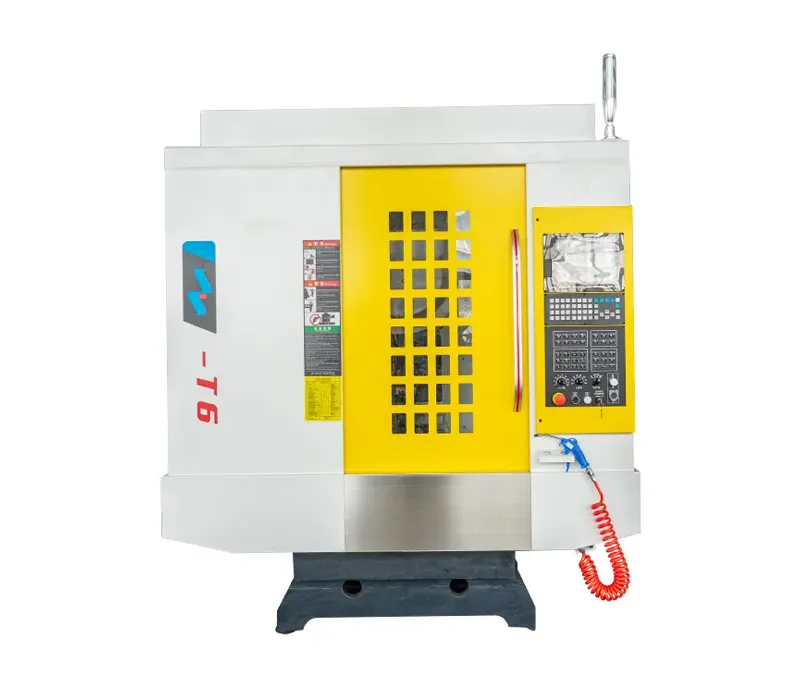
How a Wire EDM Machine Works: Principles of Spark Erosion and Core Components
What Is Wire EDM and How It Works: The Basics of Spark Erosion
Wire EDM machines cut through conductive metals by creating controlled electrical sparks between a fine brass wire about 0.02 to 0.3 mm thick and whatever metal piece needs shaping. The actual sparks get incredibly hot, over 12,000 degrees Fahrenheit, which melts away tiny bits of material without any physical touching involved. What makes this method so special is how precisely it can cut, sometimes within just one micron of accuracy. Because of this extreme precision, many manufacturers prefer wire EDM when working with tough materials like hardened steel or those specialty alloys that are really hard to machine any other way.
The Role of Dielectric Fluid in the Wire Electrical Discharge Machining Process
Deionized water serves dual critical functions: it acts as an insulator to concentrate spark energy and flushes eroded particles from the 0.02–0.1 mm kerf. By continuously filtering conductivity to 1–20 µS/cm, the fluid prevents arcing and stabilizes the spark gap, directly impacting surface finishes below Ra 0.2 µm.
Core Components of a Wire EDM Machine: Wire Electrode, Power Supply, and CNC Control System
- Wire Electrode: Zinc-coated brass variants improve cutting speed (up to 15 mm²/min) and reduce breakage during intricate profiles.
- Pulsed Power Supply: Regulates discharge duration (50 ns–5 µs) and current (1–32 A) to balance speed and surface quality.
- CNC System: Translates CAD/CAM designs into synchronized X/Y/U/V-axis motions, achieving angular accuracies of ±0.001°.
Precision and Surface Quality: Key Advantages of the Wire EDM Machine
Wire EDM Tolerances and Accuracy: Achieving Sub-Micron Precision
Modern wire EDM machines achieve dimensional tolerances as tight as ±0.001 mm (0.00004 in), rivaling grinding processes while eliminating mechanical distortion. This precision stems from the non-contact spark erosion process, which removes material in controlled increments as small as 0.1 µm per discharge pulse.
| Tolerance Class | Metric | Imperial | Application Example |
|---|---|---|---|
| Standard | ±0.005mm | ±0.0002" | Tool & die components |
| High Precision | ±0.001mm | ±0.00004" | Aerospace fuel nozzles |
| Ultra-Precision | ±0.0005mm | ±0.00002" | Medical micro-implants |
Surface Finish Quality in Wire EDM: From Mirror-Like to Functional Finishes
Wire EDM produces surface roughness values between Ra 0.1–1.6 µm depending on power settings and wire type. Multi-pass finishing modes can achieve mirror-like surfaces (Ra ≤0.4 µm), reducing post-processing needs by up to 80% compared to milling (Ponemon 2023).
No Mechanical Stress or Tool Pressure During Cutting: Ideal for Delicate Parts
The thermal erosion process eliminates tool-to-workpiece contact, enabling machining of ultra-thin (<0.5mm) features in hardened materials (60+ HRC) with zero deformation risk. This advantage drives adoption in surgical blade blanks and satellite sensor mounts where structural integrity is non-negotiable.
Ultra-Fine Wire Electrodes and Micro-Scale Cutting for High-Detail Applications
Diameters as small as 0.02mm (0.0008") allow the wire EDM machine to produce features narrower than human hair, essential for semiconductor lead frames and watch movement components. Recent advancements in zinc-coated brass wires improve spark stability during micro-cutting by 40% (IMTS 2024).
Debunking the Speed vs. Precision Myth: Can Wire EDM Compete with Traditional Machining?
Milling machines definitely have their advantages, running about three to five times faster when it comes to basic cutting speed. But when dealing with intricate shapes and designs, wire EDM takes the lead. This method cuts down on those extra steps needed after initial machining, avoids problems with holding delicate components during processing, and saves money on tools that would otherwise wear out quickly when working with tough materials like hardened steel. Recent research from last year actually found something pretty interesting - wire EDM cut down overall manufacturing time by nearly 30% compared to traditional milling techniques when making those super precise titanium brackets used in aircraft construction, where tolerances need to be within just 0.005 millimeters either way.
Technological Integration in Modern Wire EDM Machines: CNC, Multi-Axis Capabilities, and Materials
CNC Control Systems and CAD/CAM Integration for Automated Programming
Today's wire EDM machines come equipped with sophisticated CNC controls that can handle intricate shapes within just a hair's breadth tolerance, around plus or minus 0.0001 inches. When manufacturers integrate their CAD/CAM software directly into these systems, they save tons of time converting those pretty 3D designs into actual machine instructions. According to the latest numbers from Precision Machining Report (they did a study last year), this setup cuts down on programming mistakes by almost two thirds compared to old school methods. What makes these machines really shine is their smart brains inside. They constantly tweak things like how fast the wire moves through the material and the tiny gap between electrode and workpiece during cutting. This means shops can tackle tough jobs in hardened steel without worrying about messing up the whole part because the machine basically thinks for itself while it works.
Dielectric Fluid Management: Filtration and Process Stability
High-purity dielectric fluid systems remove microscopic debris through multi-stage filtration, maintaining electrical resistivity above 106 Ω·cm. Real-time conductivity sensors trigger automated fluid exchanges when particle concentrations exceed 2 ppm, eliminating arc discharges that compromise surface finishes.
Material Compatibility and Coated Wire Electrodes: Enhancing Performance with Zinc-Coated Brass
Zinc-coated brass electrodes improve cutting speeds by 22% in titanium alloys compared to uncoated wires, while reducing wire breakage in conductive ceramics. This coating creates a vapor layer during sparking, stabilizing erosion rates across materials ranging from aluminum (30 HRC) to tungsten carbide (92 HRA).
Multi-Axis Wire EDM Machining: 4-Axis and 5-Axis Capabilities for Complex Geometries
4-axis systems tilt the wire ±15° to create tapered surfaces like turbine blade roots, while 5-axis configurations rotate the workpiece during cutting for helical gears and medical implant threads. These capabilities enable single-setup machining of components with 0.002" wall thicknesses, achieving angular accuracies within 15 arc-seconds.
Critical Industry Applications of the Wire EDM Machine
The wire EDM machine has become indispensable across industries requiring micron-level precision, repeatability, and stress-free cutting. Its ability to handle complex geometries in hardened materials makes it a cornerstone technology in three critical sectors.
Aerospace Industry: Precision Components for Turbines and Engine Systems
Aerospace manufacturers rely on wire EDM to produce turbine blades, fuel system components, and engine housing parts from nickel alloys and titanium. The process’s lack of mechanical force prevents micro-cracking in these safety-critical parts, while sub-±0.0004" tolerances ensure proper fit in high-vibration environments.
Medical Device Manufacturing: Intricate Cuts in Implants and Surgical Tools
In medical applications, wire EDM creates surgical blade edges with 3–5 micron Ra surface finishes and bone implant lattice structures with 100–300 µm pore sizes. The non-contact method eliminates contamination risks during the machining of biocompatible materials like cobalt-chrome and stainless steel.
Automotive Sector: Prototyping and Production of High-Performance Parts
Automakers use wire EDM machines for rapid prototyping of transmission gears and mass production of fuel injector nozzles with 0.1 mm diameter orifices. The technology’s ability to cut hardened tool steels reduces post-heat treatment distortion, critical for maintaining durability in engine components under cyclic loading.
While these sectors account for 62% of industrial wire EDM use (Modern Machine Shop 2023), the technology continues expanding into energy, defense, and microelectronics–always where extreme precision meets material challenges.
Innovation and Automation: The Future of the Wire EDM Machine
The latest wire EDM machines come equipped with AI features that really boost accuracy and cut down on wasted material. These systems have real time monitoring capabilities that pick up on tiny changes in wire tension and spark gap measurements. When something looks off, the machine makes automatic adjustments during cutting operations before mistakes happen. According to research published in the Precision Manufacturing Review last year, shops implementing these smart systems saw their scrap rates drop around 17% when working with tough materials like titanium for aerospace parts. That kind of improvement adds up fast in manufacturing environments where every percentage point counts.
AI and Smart Features in Wire EDM: Real-Time Monitoring and Error Diagnosis
Advanced machine learning algorithms analyze terabytes of historical cutting data to predict optimal feed rates and voltage settings for new materials. This reduces trial-and-error setups by 40%, allowing operators to focus on quality validation rather than manual adjustments.
Automatic Wire Threading: Reducing Downtime and Maximizing Uptime
New wire EDM machines employ fail-safe threading systems that reload electrodes in under 15 seconds–15x faster than manual methods. Combined with automated debris removal, this innovation enables 2,200+ hours/year of unattended operation for high-volume production cycles.
Balancing Full Automation with Skilled Operator Oversight: An Industry Paradox
While automation handles repetitive tasks, human expertise remains critical for programming complex geometries and validating AI recommendations. Leading manufacturers report a 28% efficiency gain when pairing automated systems with certified operators who refine toolpaths and material-specific strategies.
FAQs
- What materials can Wire EDM cut? Wire EDM is capable of cutting any conductive material, including metals like hardened steel, titanium, tungsten carbide, nickel alloys, and conductive ceramics.
- How does Wire EDM ensure precision? Wire EDM achieves precision through non-contact spark erosion, which allows for material removal in controlled increments without mechanical stress.
- Is Wire EDM suitable for delicate parts? Yes, as Wire EDM does not exert mechanical force, it is ideal for machining delicate parts with no risk of deformation.
- Can Wire EDM compete with traditional machining speeds? Although Wire EDM is slower in basic cutting speed than traditional machining, it excels in precision and can reduce overall manufacturing time by tackling intricate designs and minimizing post-processing.
- What industries benefit from Wire EDM technology? Key industries include aerospace, medical device manufacturing, and automotive sectors, where precision, quality, and material compatibility are critical.
Table of Contents
- How a Wire EDM Machine Works: Principles of Spark Erosion and Core Components
-
Precision and Surface Quality: Key Advantages of the Wire EDM Machine
- Wire EDM Tolerances and Accuracy: Achieving Sub-Micron Precision
- Surface Finish Quality in Wire EDM: From Mirror-Like to Functional Finishes
- No Mechanical Stress or Tool Pressure During Cutting: Ideal for Delicate Parts
- Ultra-Fine Wire Electrodes and Micro-Scale Cutting for High-Detail Applications
- Debunking the Speed vs. Precision Myth: Can Wire EDM Compete with Traditional Machining?
-
Technological Integration in Modern Wire EDM Machines: CNC, Multi-Axis Capabilities, and Materials
- CNC Control Systems and CAD/CAM Integration for Automated Programming
- Dielectric Fluid Management: Filtration and Process Stability
- Material Compatibility and Coated Wire Electrodes: Enhancing Performance with Zinc-Coated Brass
- Multi-Axis Wire EDM Machining: 4-Axis and 5-Axis Capabilities for Complex Geometries
- Critical Industry Applications of the Wire EDM Machine
- Innovation and Automation: The Future of the Wire EDM Machine