EN
EN

Understanding EDM Machines and Their Role in Micro-Machining
What Is an EDM Machine? Fundamentals of Electrical Discharge Machining
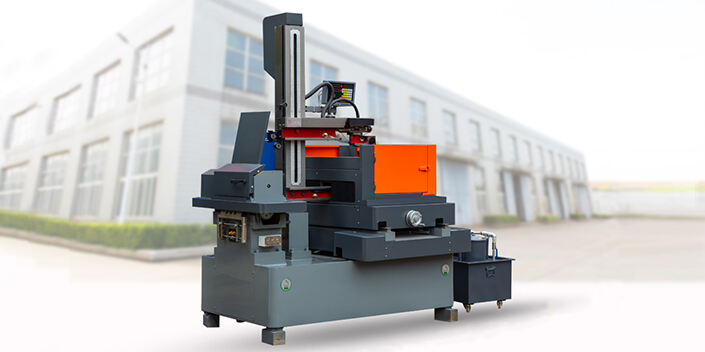
EDM machines, short for Electrical Discharge Machining, work by sending controlled electrical sparks between an electrode and a conductive material. This sparks away at the material bit by bit until it reaches extremely fine details. What makes EDM different from regular cutting methods is that there's no actual contact between the tool and the workpiece. Instead, it basically burns away tiny bits of metal through repeated electrical discharges. These days, EDM can get really precise too – talking about plus or minus 0.001 millimeters accuracy when working with tough stuff like titanium or hardened steel. That kind of precision matters a lot in industries where even the smallest error could be catastrophic, such as making parts for airplanes or surgical implants.
The Evolution of EDM Technology in Precision Manufacturing
EDM technology started becoming commercially available back in the 1960s, but it was nothing like what we see today. Back then, operators had to manually adjust electrodes during the process, which really limited how accurate they could get - around plus or minus 0.1 mm at best. Fast forward to modern times, and things have changed dramatically. Adaptive control systems work alongside those nano-second pulse generators to automatically correct tool paths as needed. This means positional errors are way down now, about 85% less than what machines were doing back in 2005. The improvements have opened up new possibilities for creating complex 3D micro structures in manufacturing, where some parts can achieve aspect ratios over 20 to 1. Pretty impressive stuff when you think about it.
Why EDM Machines Excel in Micro-Scale Fabrication
EDM outperforms mechanical methods in micro-fabrication due to three key factors:
- Zero tool pressure: Eliminates workpiece distortion during machining
- Material versatility: Processes ultra-hard alloys (>60 HRC) unreachable by conventional milling
- Thermal precision: Localized discharges prevent heat-affected zones below 5 μm depth
This combination makes EDM indispensable for micro-hole drilling in fuel injectors and micro-channel creation for lab-on-a-chip devices.
Core Principles Behind Micro-EDM: Achieving Sub-Micron Accuracy
How Micro-EDM Works: Physics of Material Removal at the Micro Scale
The Micro-EDM technique works by creating tiny electrical sparks between an extremely small electrode and whatever conductive material needs shaping. When the energy pulses stay under about 10^-6 joules, these sparks create little craters ranging from 0.1 to 5 micrometers across, all while keeping heat damage to a minimum. What makes this method so special is that it doesn't actually touch the material being worked on. Despite working with tough materials like tungsten carbide or ceramic composites, operators can still get positioning accuracy within plus or minus 1 micrometer. That level of control explains why manufacturers turn to Micro-EDM when they need to machine those intricate micro-fluidic channels used in lab-on-a-chip devices or the delicate surfaces required for high precision optics.
Key Performance Metrics: Material Removal Rate (MRR) and Surface Roughness (Ra)
Getting the most out of micro EDM means finding the sweet spot between material removal rate and surface finish quality. The best equipment can hit around 0.05 cubic millimeters per minute on stainless steel without compromising on those super smooth 0.1 micrometer Ra surfaces needed for things like medical implants where both processing speed and biological compatibility matter. Recent research indicates that pairing pulses under three micoseconds with smart dielectric flushing techniques boosts the overall efficiency ratio by roughly 23 percent according to findings published last year by Ponemon Institute. This kind of optimization makes all the difference in high precision manufacturing applications where every detail counts.
Pulse Generator Technology: Enabling Nanosecond-Level Control in EDM Machines
Modern EDM machines leverage transistor-controlled pulse generators to deliver 2–5 ns discharge pulses, 50× faster than conventional RC circuits. This nanosecond precision enables:
| Parameter | Conventional EDM | Advanced Micro-EDM |
|---|---|---|
| Minimum Feature Size | 100 μm | 5 μm |
| Surface Finish (Ra) | 0.8 μm | 0.12 μm |
| Positional Repeatability | ±5 μm | ±0.25 μm |
Such control allows fabrication of fuel injector nozzles with 8:1 aspect ratio holes in hardened tool steels, demonstrating micro-EDM's unique capability in high-precision manufacturing.
Optimizing Critical Process Parameters in Micro-EDM Operations
Voltage, Pulse Duration, and Capacitance: Tuning for Precision
In modern micro EDM work, getting down to under 10 microns of accuracy requires careful tuning of several key parameters. The discharge voltage typically ranges from about 50 to 120 volts, pulse durations fall between 2 and 100 microseconds, and capacitance values usually sit somewhere between 0.1 and 10 nanofarads. When working with Hastelloy C 276 micro holes, operators found that setting the pulse on time at around 115 microseconds cut taper errors by roughly 28 percent without sacrificing much in terms of material removal rate, which stayed steady at approximately 0.12 cubic millimeters per minute. For tungsten carbide machining, keeping capacitance below 5 nanofarads makes all the difference. This helps prevent those pesky thermal cracks from forming deeper than 2 microns, something confirmed through various response surface method studies conducted across different shops in the industry.
Real-Time Monitoring and Adaptive Control in Modern EDM Machines
Modern EDM systems now combine microsecond level spark gap monitoring with smart algorithms that adjust on their own. The system has twelve sensors working together to spot changes in plasma channels as fast as half a microsecond, which allows it to tweak power settings even before the discharge finishes. What does this mean in practice? These systems can keep within plus or minus 1.5 micrometers of accuracy over eight hour straight operation periods when drilling those tiny cooling holes in airplane turbine blades. According to actual shop floor testing, shops report about 40 percent fewer times they need to swap out electrodes when these predictive current controls are active instead of relying on fixed parameters. That kind of improvement adds up across production cycles.
Balancing High MRR with Surface Integrity: Overcoming Key Trade-offs
There's something of a catch-22 in micro EDM technology when it comes to getting good results. The challenge is finding ways to boost material removal rates beyond 0.15 mm cubed per minute without sacrificing surface quality below 0.2 microns roughness average. Researchers have turned to multi objective genetic algorithms as a solution, tweaking those tricky pulse intervals between 1:3 and 1:6 ratios. When tested on various titanium alloys, these methods actually improved surface finishes by nearly 20 percent even though material removal dropped about 15%. Pretty impressive stuff. And looking at recent developments, engineers are now working with nanosecond pulse trains that fire off around ten thousand pulses per second. These new techniques cut down recast layers by almost four fifths while still keeping cutting speeds well over 200 microns per second, which makes them really attractive for industrial applications where precision matters most.
Advanced Applications of EDM Machines in Micro-Fabrication
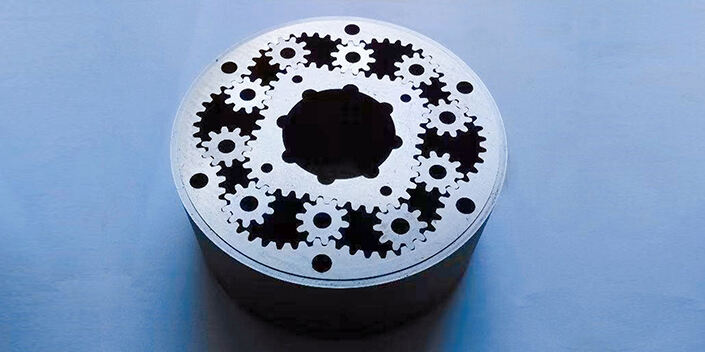
EDM machines enable groundbreaking micro-fabrication capabilities across industries by achieving sub-50 μm features in hardened steels, carbides, and superalloys. Their non-contact machining process eliminates tool deflection issues common in conventional methods, making them indispensable for high-value components requiring micron-level accuracy.
Micro-Hole Drilling: Precision Machining in Hard-to-Cut Materials
EDM machines today can drill cooling holes in turbine blades down to just 0.1 mm diameter while keeping position accuracy within about 2 micrometers. The aerospace industry relies heavily on this technology since their nickel-based superalloys need around 400 tiny holes per blade to handle the extreme heat of combustion chambers at over 1,500 degrees Celsius. Even though working with such tough materials is challenging, surface finish remains impressively smooth at under 0.4 micrometer Ra, which makes a big difference in component longevity and performance across demanding flight conditions.
Case Study: Manufacturing Fuel Injector Nozzles Using Micro-EDM
A leading automotive supplier reduced fuel droplet size by 35% using EDM-manufactured injectors with 72 perfectly aligned 80 μm holes. This precision contributed to a 12% improvement in combustion efficiency and compliance with Euro 7 emissions standards. The process maintained <1% diameter variation across 10,000 production units.
Micro-Channel Fabrication for Lab-on-a-Chip and Microfluidic Devices
EDM machines create 200 μm wide fluidic channels with 5 μm wall straightness in surgical implants and diagnostic chips. This precision enables flow rates controlled within ±0.5 μl/min—critical for drug delivery systems requiring 99.9% dosage accuracy. Recent advancements allow simultaneous machining of 64 parallel channels in 316L stainless steel substrates.
3D Micro-Milling: Building Complex Structures with High Aspect Ratios
The technology produces MEMS components with 15:1 aspect ratios and 2 μm feature resolution. Unlike traditional milling, EDM maintains <0.1% tool wear when creating 3D micro-cavities in tungsten carbide molds used for mass-producing optical lenses.
Ensuring Quality and Future Trends in EDM Machine Technology
Process Capability Analysis: Repeatability, Accuracy, and Statistical Control
Today's EDM machines can hit micron level accuracy thanks to thorough process capability checks. Most top manufacturers stick to Cp values of at least 1.67 and CpK around 1.33 to keep parts within those tight tolerances needed for things like airplane engines or surgical implants. The real magic happens with SPC systems that watch surface roughness numbers stay under 0.1 microns while still getting good cutting speeds over 3 cubic millimeters per minute even on tough hardened steel. These machines also come equipped with smart algorithms that compensate for tool wear as it happens, adjusting electrode paths automatically. This cuts down on dimensional errors by about 80% when compared to old school manual adjustments according to recent machining reports from last year.
The Future of EDM Machines: AI, IoT, and Predictive Maintenance
EDM technology is taking a big leap forward by integrating artificial intelligence for setting adjustments along with internet-connected performance monitoring. The machine learning algorithms look at more than 120 different factors during operation. These include things like how long the pulses pause between cuts and the conductivity levels in the dielectric fluid. Based on all this data, the system can suggest ideal parameters with around 94% accuracy. This means manufacturers spend far less time guessing what works best when setting up their machines. Another major improvement comes from predictive maintenance features that keep an eye on critical components such as spindle bearings and power supply units. According to recent findings from the Smart Manufacturing Report released last year, these systems help reduce unexpected equipment failures by about 37%. As companies adopt these new technologies, we're seeing real changes across manufacturing floors everywhere.
- 60% faster machining cycles through adaptive spark gap control
- 0.5 μm positional repeatability via neural network-calibrated stages
- 45% energy reduction using smart pulse generators
Hybrid systems combining additive manufacturing with micro-EDM are emerging, enabling direct fabrication of complex injection molds with 5:1 aspect ratio cooling channels—a 3X improvement over conventional methods.
FAQ
What is the advantage of using EDM machines over conventional machining methods?
EDM machines offer non-contact machining that prevents tool wear and distortion in the workpiece, making them ideal for producing precision components with micron-level accuracy.
How has EDM technology evolved over the years?
EDM technology has evolved from manual electrode adjustments to adaptive control systems and nanosecond pulse generators, greatly enhancing precision and reducing positional errors.
Why is Micro-EDM suitable for creating micro-fluidic channels?
Micro-EDM provides high precision and accuracy, allowing the creation of intricate micro-fluidic channels required in lab-on-a-chip devices due to its ability to minimize heat damage.
What future technologies are being integrated into EDM machines?
Future technologies in EDM machines include AI for setting adjustments and IoT-connected monitoring to optimize performance and maintenance; predictive maintenance features are reducing equipment failures significantly.
Table of Contents
- Understanding EDM Machines and Their Role in Micro-Machining
- Core Principles Behind Micro-EDM: Achieving Sub-Micron Accuracy
- Optimizing Critical Process Parameters in Micro-EDM Operations
- Advanced Applications of EDM Machines in Micro-Fabrication
- Ensuring Quality and Future Trends in EDM Machine Technology
- FAQ