EN
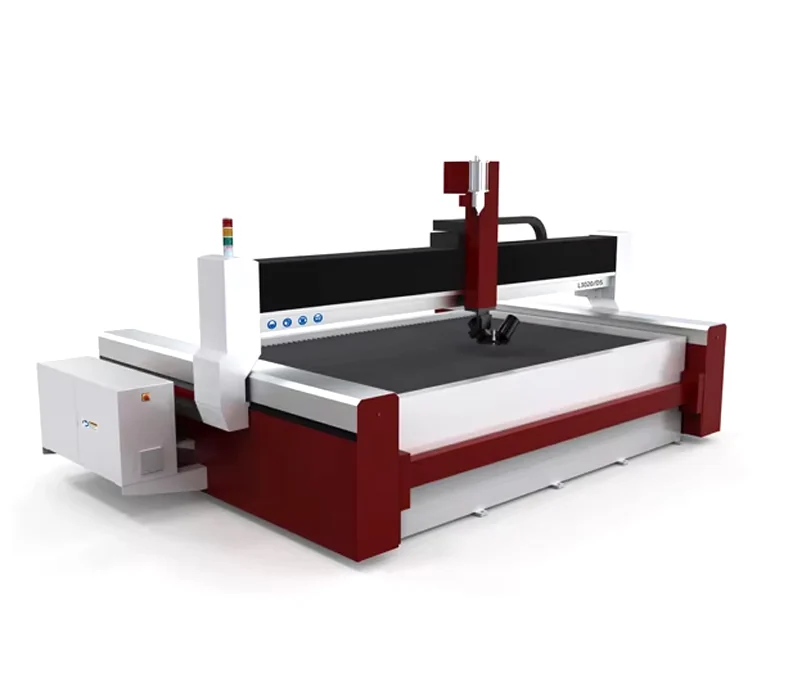
The Physics of Mechanical Erosion: How Waterjet Cutting Machines Overcome Material Hardness
Ultra-high pressure water stream (50,000–90,000 psi) and kinetic energy transfer
At the core of a waterjet cutting machine is a high-pressure pump that compresses water to 50,000–90,000 psi—converting potential energy into kinetic energy. The water passes through a small orifice (typically 0.1–0.3 mm in diameter), emerging as a narrow, high-velocity stream exceeding 700 m/s. Because kinetic energy scales with the square of velocity, even modest increases in speed dramatically raise cutting power. This concentrated energy density enables penetration of hard alloys without mechanical shearing. Unlike saw blades or milling tools, the waterjet does not need to be harder than the workpiece; it only requires sufficient kinetic energy per unit area to remove microscopic particles. High pressure also stabilizes the jet over short standoff distances (1–3 mm), preserving focused energy transfer. As a result, hardness ceases to be a limiting factor—making abrasive waterjet cutting effective on carbides, nickel alloys, and hardened tool steels.
Abrasive acceleration and impact dynamics: Why garnet erosion bypasses hardness limitations
In abrasive waterjet systems, garnet abrasive is introduced into the mixing chamber after the high-pressure water exits the orifice. The water accelerates each 80-mesh garnet particle to hundreds of meters per second. Though individually light, these particles carry enough kinetic energy to generate localized stresses exceeding the fracture strength of hard alloys. On impact, energy transfers across a tiny contact area, triggering brittle micro-fracture and material removal. This process is largely independent of workpiece hardness because it relies on impact-induced stress waves—not thermal softening or plastic deformation. Hardness, which measures resistance to indentation, becomes secondary when dynamic loading creates crack networks and spallation. Consequently, tungsten carbide, Inconel, and hardened tool steels are cut with minimal nozzle wear and no degradation of edge integrity—bypassing the conventional hardness-versus-hardness constraint of mechanical cutting.
Thermal-Neutral Precision: Why Waterjet Cutting Machines Preserve Integrity of Hard Alloys
Hard alloys such as tungsten carbide, Inconel, and hardened tool steels are valued for high hardness and heat resistance—but they are highly susceptible to thermal damage during conventional cutting. Waterjet cutting eliminates this risk by removing material through cold mechanical erosion rather than heat.
Absence of heat-affected zones (HAZ) in tungsten carbide, Inconel, and hardened tool steels
Thermal processes like laser and plasma cutting routinely produce heat-affected zones (HAZ) that alter microstructure, reduce surface hardness, and promote microcracking. Laser-cut hardened steel, for example, can exhibit HAZ depths of 0.1–0.5 mm. In contrast, waterjet cutting uses high-velocity abrasive erosion without melting or heating the workpiece. The cut zone remains well below tempering thresholds—preventing HAZ formation entirely in tungsten carbide, Inconel, and hardened tool steels. This thermal neutrality preserves edge hardness, dimensional stability, and fatigue resistance—properties that are costly and often impractical to restore via post-cut grinding.
No microcracking, recast layers, or phase transformation — critical for aerospace and medical alloys
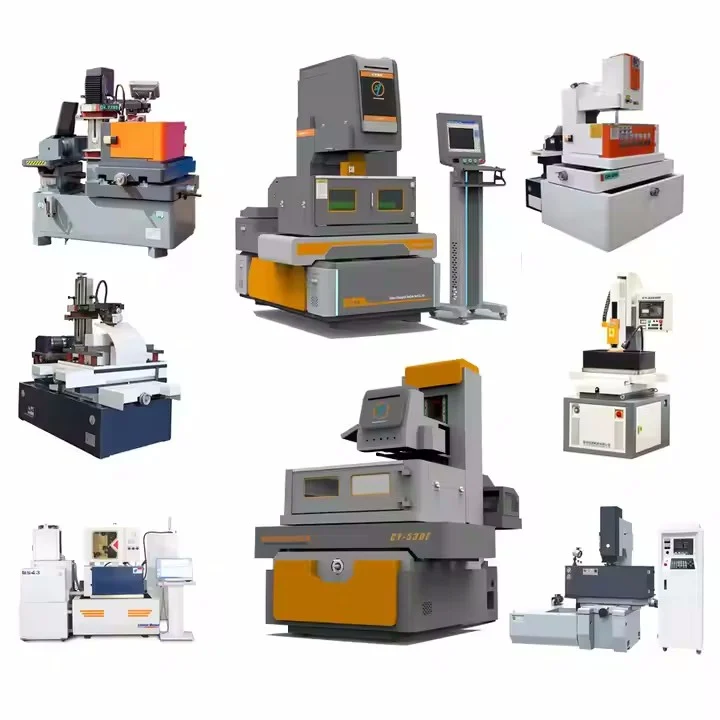
EDM and laser processing frequently leave behind recast layers, microcracks, or local phase transformations along the cut surface—side effects of rapid melt-solidification cycles. Waterjet cutting avoids all three because abrasive particles fracture material mechanically, without melting or re-solidifying the surface. Original grain structure, corrosion resistance, and mechanical properties remain intact. For aerospace-grade Inconel 718 and medical-grade cobalt-chromium or titanium alloys used in implants, this is non-negotiable: even subtle thermal distortion or a brittle recast layer can compromise fatigue life or biocompatibility. Waterjet cutting therefore supports strict metallurgical compliance—often eliminating secondary annealing, etching, or surface finishing steps required by thermal methods.
Universal Material Compatibility: From Steel to Superalloys and Ceramics
A single waterjet cutting machine processes a broader range of hard alloy materials than most thermal or contact-based methods. Its reliance on cold, high-velocity abrasive erosion—not melting or mechanical force—means material hardness, reflectivity, and thermal conductivity do not constrain performance. Plain carbon steels, stainless steels, hardened tool steels (>60 HRC), titanium alloys, nickel-based superalloys like Inconel 718, and technical ceramics such as alumina and silicon carbide are all cut on the same platform. Only four operational parameters change between materials: abrasive flow rate, water pressure, traverse speed, and standoff distance.
This universal compatibility reduces tooling changes and secondary finishing. A shop can transition from 15-5 PH stainless steel to tungsten carbide without switching heads or preheating the workpiece. Because no heat is introduced, edge oxidation and microstructural changes common in laser or plasma cutting are avoided. The result is a single, flexible platform capable of handling both ductile metals and extremely brittle ceramics—supporting lean manufacturing workflows and cross-industry adaptability.
Optimized Parameterization for Hard Alloy Materials on Industrial Waterjet Cutting Machines
Balancing pressure, abrasive flow rate, traverse speed, and standoff distance for carbides and nickel-based alloys
Effective processing of carbides and nickel-based alloys on industrial waterjet cutting machines depends on precise coordination among four interdependent variables: water pressure, abrasive flow rate, traverse speed, and standoff distance. Operators typically maintain ultra-high pressure (50,000–90,000 psi) to maximize garnet particle acceleration—but pressure alone does not ensure quality. Abrasive flow must be matched to nozzle geometry and pressure: too little starves the jet, while excess causes turbulence and reduces cutting efficiency. Traverse speed is the primary lever for edge quality—slower speeds increase impact density, which is essential for dense carbides and nickel alloys. However, excessively slow motion risks taper or wash. Standoff distance should remain tight (1–3 mm) to preserve jet coherence and energy concentration. Multi-criteria optimization studies on high-strength wear-resistant steels confirm that synchronized adjustment of traverse speed and abrasive flow yields lower surface roughness and improved dimensional stability—reducing brittle edge chipping, extending nozzle life, and ensuring consistent cut quality across long production runs.
Real-World Validation: Case Studies in High-Precision Hard Alloy Processing
Tungsten carbide inserts (12mm): Crack-free cutting with <±0.05 mm tolerance
Manufacturers historically face challenges cutting tungsten carbide without inducing microcracks or cobalt binder leaching. In a recent production validation, a waterjet cutting machine processed 12 mm tungsten carbide inserts with high positional accuracy. The cold erosion mechanism produced zero edge chipping or thermal stress. Final measurements held within ±0.05 mm tolerance across the full batch—confirming that abrasive waterjet machining can replace grinding for carbide insert profiling. Setup time and tool wear were reduced compared with conventional milling, and operators achieved repeatable geometry without post-process polishing. Critically, the absence of heat input prevented cobalt binder leaching along the kerf—a known failure mode in thermally stressed carbide components. These outcomes directly benefit tooling suppliers requiring tight tolerances, clean edges, and stable batch-to-batch performance.
Inconel 718 turbine components: No thermal distortion, full dimensional compliance per ASME Y14.5
A turbine component manufacturer adopted an optimized abrasive waterjet process for Inconel 718 airfoils and mounting flanges. The process eliminated the heat-affected zone typical of laser and plasma methods. Post-cut inspection revealed no thermal distortion, recast layer, or microstructural change near the kerf. All critical dimensions met ASME Y14.5 geometric dimensioning and tolerancing requirements—reducing rework and scrap in certified aerospace production. The cold cutting approach preserved the alloy’s native fatigue strength and corrosion resistance, and dimensional stability remained unchanged from first cut to final inspection. This consistency is vital for turbine components operating under extreme thermal and mechanical loads—and ensures certified material properties remain unaltered across production batches.
FAQ
What materials can be cut using waterjet machines?
Waterjet machines can cut a wide range of materials, including plain carbon steels, stainless steels, hardened tool steels, titanium alloys, nickel-based superalloys like Inconel 718, and technical ceramics such as alumina and silicon carbide.
How does waterjet cutting differ from thermal cutting methods?
Waterjet cutting uses cold mechanical erosion via high-pressure water and abrasive particles, avoiding heat-affected zones, oxidation, and material degradation common in laser or plasma cutting.
Why is waterjet cutting suitable for aerospace and medical applications?
Waterjet cutting maintains original grain structures without causing microcracks, recast layers, or phase transformations, preserving critical properties like fatigue strength and biocompatibility required in aerospace and medical-grade alloys.
What operational parameters are crucial for cutting hard alloys?
Effective cutting requires careful balancing of water pressure, abrasive flow rate, traverse speed, and standoff distance to optimize quality and maintain precision.
Does waterjet cutting produce heat-affected zones?
No, waterjet cutting is a thermal-neutral process that avoids heat-affected zones, preserving the material's integrity and dimensional stability.
Table of Contents
- The Physics of Mechanical Erosion: How Waterjet Cutting Machines Overcome Material Hardness
- Thermal-Neutral Precision: Why Waterjet Cutting Machines Preserve Integrity of Hard Alloys
- Universal Material Compatibility: From Steel to Superalloys and Ceramics
- Optimized Parameterization for Hard Alloy Materials on Industrial Waterjet Cutting Machines
- Real-World Validation: Case Studies in High-Precision Hard Alloy Processing
-
FAQ
- What materials can be cut using waterjet machines?
- How does waterjet cutting differ from thermal cutting methods?
- Why is waterjet cutting suitable for aerospace and medical applications?
- What operational parameters are crucial for cutting hard alloys?
- Does waterjet cutting produce heat-affected zones?