EN

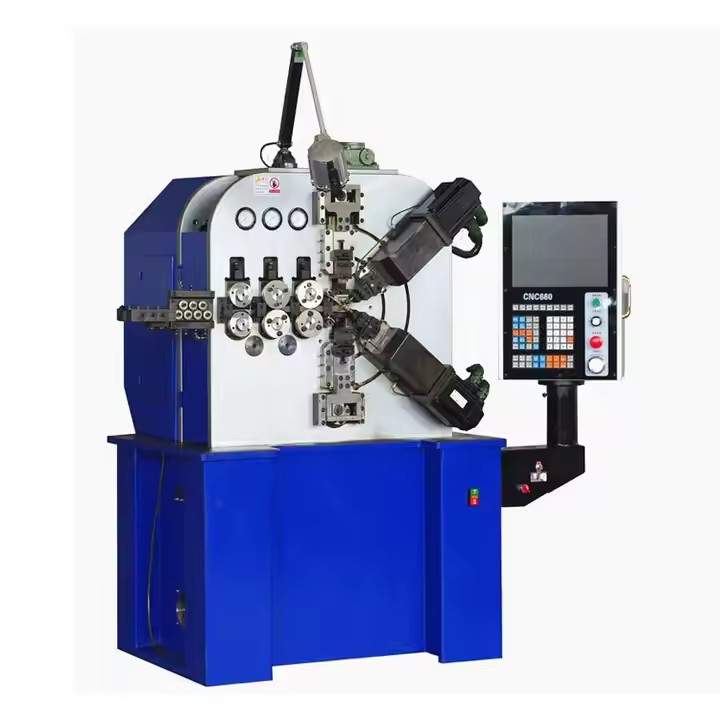
Why a Structured Spring Machine Maintenance Cycle Prevents Costly Downtime
Without a structured spring machine maintenance cycle, maintenance becomes reactive—teams scramble to fix breakdowns only after production halts. This approach inflates costs dramatically: unplanned downtime can cost manufacturers an average of $260,000 per hour (Aberdeen Strategy and Research 2023), and when delivery commitments slip, long-term client trust erodes. A defined cycle replaces emergency repairs with planned, scheduled tasks—mandating regular inspections, thorough lubrication, and timely replacement of wear parts such as wire guides and feed rollers. By catching deviations early, it prevents cascading failures that would otherwise ripple through coiling, grinding, and finishing operations. It also shifts work into controlled low-demand windows, protecting daily throughput. Beyond immediate disruption, a systematic rhythm extends the service life of critical components and reduces total cost of ownership. Ultimately, a well-documented maintenance cycle transforms spring machine reliability from a reactive gamble into a predictable, engineered asset that keeps production lines running and customers satisfied.
The Three-Tier Spring Machine Maintenance Framework: Daily, Weekly, and Quarterly Actions
A structured, multi-tiered spring machine maintenance cycle protects enterprise reliability by preventing failures before they occur. Organizations using tiered preventive maintenance reduce unplanned downtime by up to 35% over reactive strategies (Maintenance Technology Report 2024). The framework groups tasks by urgency and effort.
Daily Spring Machine Upkeep: Critical AM/PM Checks for Consistency
Daily checks are the foundation of a stable spring machine maintenance cycle. At the start of each shift, operators inspect wire feed guides, coiling points, and cutting tools for debris or misalignment. A damp cloth removes abrasive metal dust, while compressed air clears wire guide channels. Next, they apply a thin film of high-temperature grease to cam followers and pivot points—critical for machines running high-carbon ASTM A401 wire. During the PM routine, a final audit confirms no loose fasteners, consistent spring free-lengths, and smooth actuator movement. This discipline catches minor drift early. Plants with formal AM/PM spring machine maintenance protocols experienced 27% fewer unplanned stops (Reliabilityweb.com 2022). Even a ten-minute daily ritual preserves precision and extends die life.
Weekly and Quarterly Tasks: Calibration, Lubrication Deep-Cleans, and Die Inspection
Weekly tasks dive deeper into mechanical health while quarterly actions target long-term accuracy. Each week, technicians recalibrate feed rollers and coiling stations to within ±0.02 mm using a master gauge. They purge old grease from linear bearings and re-lubricate with a clean, EP-rated grease to prevent varnish buildup. Die sets receive a full visual scan for micro-cracks or rounded edges—especially important after processing abrasive wire. Quarterly, the spring machine undergoes a thorough deep-clean: disassembling the coiling head, flushing hydraulic circuits, and replacing worn seals and springs. All linear rails and ball screws are re-lubricated, and electrical cabinets are vacuumed. Finally, a full geometry validation of sample springs ensures tooling still meets blueprint specs. Deep-cleaning and quarterly die inspection prevent 40% of fatigue-related malfunctions in high-volume spring production (Society for Machinery Failure Prevention Technology, MFPT 2023). These cadences safeguard output quality and machine longevity.
Adapting the Spring Machine Maintenance Cycle to Production Demands and Material Variables
Adjusting Frequency Based on Coil Feed Rate, Wire Hardness (ASTM A227 vs. A401), and Shift Volume
A rigid maintenance calendar overlooks the physical realities of the shop floor. Coil feed rate directly dictates component fatigue; a machine producing 120 coils per minute wears tooling and guides 60% faster than one running at 75. Wire material amplifies this effect. The table below contrasts two common grades and their maintenance implications.
| Grade | Typical Hardness (HRC) | Tensile Strength (MPa) | Primary Maintenance Impact |
|---|---|---|---|
| ASTM A227 (Carbon Steel) | 40–48 | 1800–2200 | Moderate wear; standard lubrication intervals sufficient. |
| ASTM A401 (Chromium-Silicon) | 48–55 | 2000–2500 | Accelerated die and mandrel wear; requires halved greasing frequency. |
When running ASTM A401 wire, shift lubrication points from every 8 hours to every 4 hours and replace dies after 500,000 cycles instead of 800,000. Shift volume compounds these demands. A three-shift, continuous operation accumulates wear 24/7, demanding daily spindle and cam inspections. For lines exceeding 20,000 cycles per day, proactive checks reduce catastrophic failure risk by 37% compared to weekly schedules. Operators should log feed rate changes and shift hours in maintenance software to auto-adjust reminders. This dynamic approach keeps spring machine precision within tolerance without over-servicing low-volume periods.
Leveraging IoT Sensors for Data-Driven Spring Machine Maintenance Triggers
Traditional calendar-based maintenance guesses when components need attention. IoT sensors replace guesswork with real‑time condition data. Vibration sensors on the coiling head detect imbalance early; a sustained amplitude above 4.5 mm/s triggers an alert before bearing seizure. Temperature probes on drive motors track overheating trends, flagging a rise of 15°C above baseline as an immediate inspection signal. Sound spectrum analyzers identify irregular contact patterns invisible to the operator.
A leading spring manufacturer integrating these sensors across 45 coiling lines cut unplanned downtime by 22% and extended die life by 30%. Predictive algorithms analyze historical patterns to forecast optimal service windows, ensuring maintenance happens only when needed. This shift from reactive to condition‑based triggers eliminates unnecessary interventions while preventing sudden breakdowns. Operators receive mobile alerts with actionable steps, enabling rapid response. Adopting IoT transforms the spring machine maintenance cycle into a precise, cost‑saving strategy tailored to actual asset health.
FAQ
Why is a structured maintenance cycle important for spring machines?
It minimizes unplanned downtime, extends equipment service life, and reduces long-term costs by replacing emergency repairs with scheduled maintenance.
What are the key daily actions for spring machine maintenance?
Key actions include inspecting wire feed guides, coiling points, and cutting tools, cleaning abrasive debris, applying high-temperature grease, and confirming consistent actuator movement.
How do weekly and quarterly maintenance tasks enhance machine longevity?
Weekly tasks focus on recalibration, re-lubrication, and wear inspections, while quarterly tasks involve deep-cleaning, flushing circuits, and geometry validations for precision.
How does material type affect the maintenance schedule?
Harder materials like ASTM A401 induce faster wear and require more frequent lubrication and part replacements compared to softer materials like ASTM A227.
What role do IoT sensors play in spring machine maintenance?
IoT sensors provide real-time data on vibrations, temperature, and irregularities, enabling predictive and condition-based maintenance that reduces downtime and costs.