EN
EN

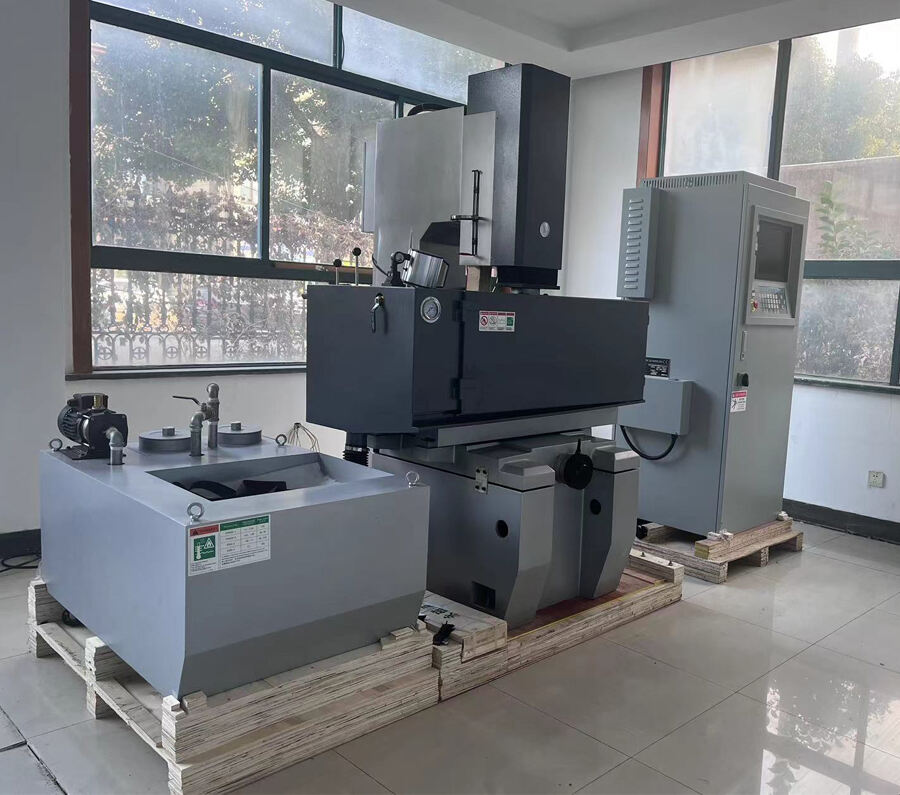
How EDM Die Sinking Machines Work: Core Principles of Spark Erosion in Mold Manufacturing
Sinker EDM Process Fundamentals: Controlled Spark Erosion for Non-Contact Machining
EDM die sinking works by removing material through spark erosion that's carefully managed. When we talk about EDM, what happens is pretty cool actually. The process involves putting a shaped electrode next to the metal part being worked on, both submerged in something called dielectric fluid, usually some kind of hydrocarbon oil. This fluid does triple duty - it keeps things insulated, helps cool down the area, and washes away all the little bits that get burned off during machining. What really makes this technique special is how it creates tiny sparks between the electrode and workpiece, about 0.01 to 0.5 mm apart. These sparks hit temperatures over 8,000 degrees Celsius, basically melting away material without any actual touching happening. Because there's no direct contact between tools and workpieces, we avoid those annoying issues with tool bending or extra stress on materials. This lets manufacturers create really detailed shapes even in super hard metals like H13 or D2 steel that are way beyond typical hardness levels. And let's not forget about that dielectric fluid again - it plays another important role by keeping sparks from going wild and maintaining consistent spacing between electrode and workpiece. All this adds up to incredible precision measurements around plus or minus 2 micrometers, which matters a lot when making molds for things like lenses where every detail counts.
Electrode Materials and Selection Criteria: Graphite vs. Copper vs. Copper-Tungsten for Mold-Specific Demands
Electrode selection balances machining speed, wear resistance, surface finish, and feature complexity. Each material serves distinct roles in a tiered EDM strategy:
| Material | Conductivity | Wear Resistance | Best For |
|---|---|---|---|
| Graphite | Moderate | Low | Roughing, complex geometries |
| Copper | High | Medium | Finishing, Ra 0.2 µm surfaces |
| Copper-Tungsten | Very High | Very High | Tungsten carbide, fine features <0.1 mm |
Graphite electrodes machine ~30% faster than copper but exhibit higher wear—making them ideal for initial bulk removal. Copper delivers superior surface integrity and tighter tolerances in finishing passes. Copper-tungsten excels where extreme hardness (e.g., tungsten carbide inserts) or ultra-fine detail demands minimal electrode wear and exceptional thermal stability.
Why EDM Die Sinking Excels Where Conventional Machining Fails: Physics of Hard Material Machining (Tungsten Carbide, Hardened Tool Steels)
Standard cutting tools tend to wear out pretty fast when working with materials harder than 50 HRC because of all the abrasion, heat generated during operation, and damage to the metal structure itself. EDM die sinking gets around all these problems completely since it works differently from traditional methods. Instead of relying on physical force, EDM uses heat to remove material bit by bit. The process creates tiny sparks that melt away small areas without putting stress on surrounding material or creating those pesky heat affected zones that can weaken parts. What makes this technique so valuable? It allows manufacturers to create incredibly clean slots as narrow as 0.1 mm in tough materials like D2 tool steel, plus intricate shapes inside sintered tungsten carbide components that would be impossible to achieve through regular milling or grinding techniques. When dealing with hardened steels specifically, many shops report their EDM machines complete jobs roughly twice as fast compared to precision grinding operations, yet still maintain extremely tight tolerances down to the micron level.
Design Flexibility and Precision: Tackling Complex Mold Geometries with Die Sinking EDM
Achieving Sharp Corners, Narrow Slots, and Deep Ribs Without Tool Deflection or Heat-Affected Zones
EDM die sinking uniquely supports mold design freedom by eliminating two fundamental constraints of mechanical machining: tool deflection and thermal distortion. Because erosion occurs without contact:
- True sharp corners are achieved with ±2 µm corner radius control—no rounding from tool engagement;
- Narrow slots and deep ribs (up to 20:1 aspect ratio) remain dimensionally stable thanks to dielectric flushing that evacuates debris from confined volumes;
-
No heat-affected zone ensures hardened steels like H13 retain their microstructure and fatigue resistance.
This capability delivers Ra 0.1–0.4 µm finishes directly in tungsten carbide molds, reducing or eliminating secondary polishing and cutting post-processing time by 40–60% compared to conventional workflows.
Electrode EDM for Complex 3D Shapes: From CAD Model to Electrode Path Optimization
Modern die sinking transforms digital designs into production-ready mold cavities through an integrated, simulation-driven workflow:
- CAD inversion: Complex 3D cavity models are inverted into electrode geometry using CAM software;
- Adaptive path planning: Spark gap compensation algorithms prevent undercutting and ensure uniform material removal;
-
Tiered erosion strategy: Roughing electrodes (often graphite) remove bulk material quickly, followed by finishing electrodes (copper or copper-tungsten) that deliver final form and surface integrity.
In automotive applications—such as headlight lens molds fabricated from nitrided P20 steel—this process consistently holds ±2 µm cavity tolerances, ensuring optical clarity and part-to-part consistency without reliance on manual correction.
Superior Surface Finish and Reduced Post-Processing in Precision Mold Production
Ra 0.1–0.4 µm Surface Finish Attainment and Residual Stress Minimization in Hardened Steel Molds
EDM die sinking gets those really smooth surface finishes around Ra 0.1 to 0.4 microns on hardened steel molds. That's actually better than what high speed milling can realistically achieve without causing problems. Plus it doesn't run into those pesky micro cracks that sometimes happen with laser or plasma methods. Because EDM works through non contact erosion that's focused on specific areas, there's no mechanical deformation going on here either. And best of all, no heat affected zones form during the process which keeps the metal properties intact as they should be. When manufacturers tweak things like electrode polarity settings, adjust how long each pulse lasts, and manage the dielectric fluid flow properly, they can cut down residual stresses by about 80 percent according to research from ASM International published back in 2023 in their Advanced Materials & Processes journal. All these improvements mean significantly less time spent on hand polishing after machining. Most shops report cutting post processing work by anywhere between half to three quarters. What this boils down to is parts that maintain their dimensions over time even when subjected to intense pressures and repeated cycles in injection molding operations.
Real-World Application: EDM Die Sinking in Automotive Injection Mold Manufacturing
From Electrode Design to Final Cavity Accuracy: Tolerance Control Within ±2 µm on P20 + Nitrided Steel
The automotive mold industry requires extremely accurate dimensions, particularly when making parts that affect vehicle safety such as fuel systems and dashboard air vents. EDM die sinking works well for nitrided P20 steel in the 45-52 HRC range because traditional cutting methods often cause warping from heat and produce unpredictable hardness results. By carefully designing electrodes, managing spark settings just right, and keeping track of gaps during operation, manufacturers can achieve cavity tolerances around plus or minus 2 microns even in large production runs. What makes this approach stand out is that it preserves surface quality so there's less need for post-processing polishing, which speeds up getting products ready for market while still maintaining durable parts that meet all quality standards.
Future of EDM in Mold Making: Smart Workflows and Hybrid Manufacturing Trends
Integration of Sinker EDM with Additive-Manufactured Electrodes and In-Process Metrology Feedback Loops
What's coming next for die sinking involves smart hybrid workflows that close the loop between different manufacturing processes. With additive manufacturing, we can now create graphite and copper-tungsten electrodes featuring those cool conformal cooling channels and lattice structures that look almost biological. This cuts down electrode fabrication time dramatically compared to old school milling and grinding methods, somewhere around two thirds to four fifths faster according to shop floor reports. The really neat part? These modern electrodes work perfectly with sinker EDM systems that have built-in metrology sensors monitoring things like how deep the cavities go, what radius corners develop, and whether surfaces stay within spec during machining. If readings drift beyond acceptable limits, say plus or minus 2 microns, the machine just tweaks parameters on its own adjusting pulse duration, current levels, or water pressure without needing someone to constantly check everything manually. When paired with AI that fine tunes process parameters based on historical data, this combination of sinker EDM technology, 3D printing capabilities, and real time feedback mechanisms is changing game expectations for mold makers who need both speed and rock solid precision in their high end tooling projects.
FAQ
What is EDM die sinking?
EDM die sinking is a manufacturing process that uses spark erosion to remove material from a workpiece without direct contact between the tool and the material.
Why choose graphite electrodes over copper-tungsten?
Graphite electrodes are faster for rough milling of bulk material but wear quicker, whereas copper-tungsten electrodes offer minimal wear and exceptional detail for intricate features.
Can EDM die sinking machine hardened materials?
Yes, EDM die sinking is effective on hard materials like tungsten carbide and tool steels without physical stress or heat affected zones.
How does EDM achieve precision in mold manufacturing?
By using spark erosion, EDM allows exact dimensional control and surface integrity even in complex geometries, eliminating tool deflection and thermal distortion.
How is EDM die sinking integrated with modern manufacturing technologies?
EDM die sinking integrates with additive manufacturing and smart workflows, allowing faster and more precise electrode production and real-time metrology feedback during machining.
Table of Contents
-
How EDM Die Sinking Machines Work: Core Principles of Spark Erosion in Mold Manufacturing
- Sinker EDM Process Fundamentals: Controlled Spark Erosion for Non-Contact Machining
- Electrode Materials and Selection Criteria: Graphite vs. Copper vs. Copper-Tungsten for Mold-Specific Demands
- Why EDM Die Sinking Excels Where Conventional Machining Fails: Physics of Hard Material Machining (Tungsten Carbide, Hardened Tool Steels)
- Design Flexibility and Precision: Tackling Complex Mold Geometries with Die Sinking EDM
- Superior Surface Finish and Reduced Post-Processing in Precision Mold Production
- Real-World Application: EDM Die Sinking in Automotive Injection Mold Manufacturing
- Future of EDM in Mold Making: Smart Workflows and Hybrid Manufacturing Trends
- FAQ